Philippines: Tocilog / Tosilog

Restaurant: Good Bites Cafe
City: Belmont, CA

A coworker and I went to Belmont to drop off a process controller at a distributor to get it modified, and we stopped by a restaurant for lunch.

Good Bites Cafe is a restaurant that specializes in Filipino and Greek food! It’s a weird combination, but all the dishes that we got were tasty! And this place is in Belmont, of all places! I don’t think there are as many Filipinos in the Peninsula as in East Bay and South Bay.

Orders were taken at the cashier before grabbing a table. My coworker got a Greek dish, and I got tocilog. We were served flat bread with a special hummus mix as soon as we were seated, as a complimentary appetizer.

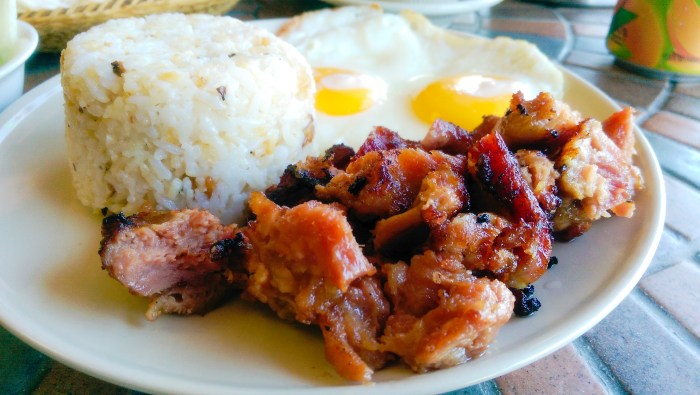
tocilog - 1

Sweet Bite’s tocilog came with sweet bacon with eggs, garlic rice, and salad. You could also opt for chicken instead of pork, and the eggs are also cooked according to your preference. I got pork (the true definition of bacon…) and had my eggs sunny side up.

tocilog - 2

The name ‘tocilog’ seems to be a shortened name of tocino, sinangag at itlog, which literally translates to ‘tocino, fried rice, and eggs’. Some places have ‘tocilog’ spelled as ‘tosilog’.

Read on for more info about tocilog/tosilog and tocino.

Philq8 Foods:

In Philippines, tocino is usually served with garlic rice (sinangag) and fried egg (itlog), Filipinos used to call this combination as tocilog and it is best when eaten during breakfast time.

The Aimless Cook:

Tocino is bacon in Spanish and is traditionally made with cured pork belly. In the Philippines, it’s made with either pork or chicken. Old school practice for tocino uses sugar, salt and saltpeter with maybe a little pineapple juice for tartness. It’s then left to cure for at least 3 days. In some regions, the meat is actually fermented at room temp to achieve a sour flavour to the meat.

Wikipedia:

Tocino is bacon in Spanish, typically made from the pork belly.

Preparation in the Philippines

The meat is sliced into thin strips. Anise wine, annatto, water, sugar, and salt are combined in a container. Each strip is then sprinkled with the mixture and stacked in a separate container, which is covered and kept refrigerated for about three days to cure.

Tocino is traditionally boiled in water (just enough water to cover the meat) or fried in oil, or is cooked over medium heat until the fat is rendered. The original tocino is marinated only with salt, sugar, and saltpeter, although pineapple juice may be added for a slightly tart flavor. Kapampangans who make tocino mix it for 4 to 6 hours in order to achieve the thickness and softness of the meat, then leave it overnight at room temperature before serving it, a dish they call burong babi (fermented pork).

Tocino is often eaten with garlic rice and fried egg in a dish called “Tosilog” (short for “tocino, sinangag at itlog”, referring to the dish’s three components).

Hawaii: Hawaiian Host’s Maui Caramacs

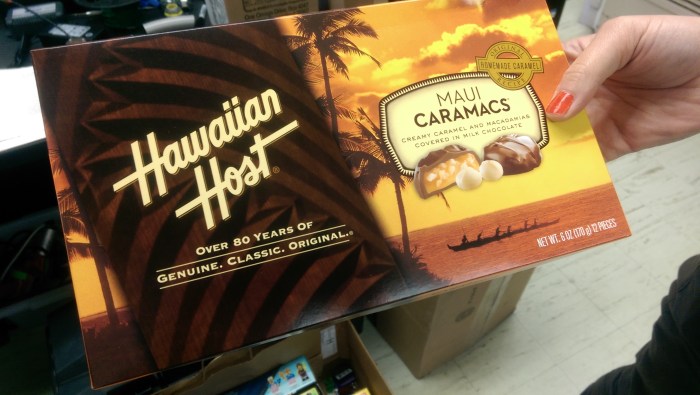
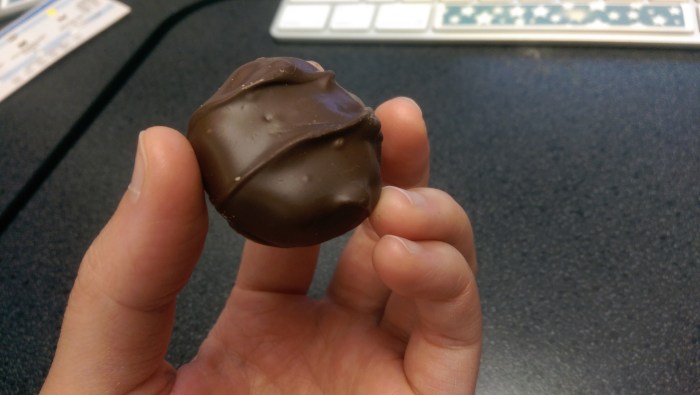
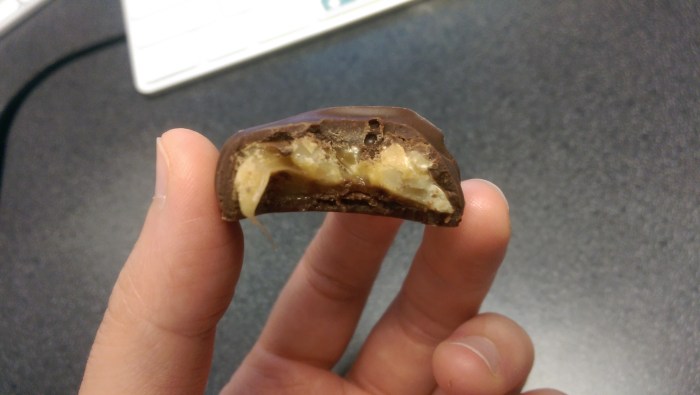
A coworker travelled to Hawaii and brought back a box of Hawaiian Host Maui Caramacs for the office! They’re macadamia nuts with caramel and covered with milk chocolate.

Here’s the info about this product from Hawaiian Host:

Maui is known as the “Magic Isle” and for good reason. Nothing tastes more decadent, more extraordinary, and more truly “magical” than biting into Maui Caramacs. One of the most popular tasting treats in the Islands, these delicate dry roasted macadamias are smothered in our exclusive house recipe caramel and covered with rich milk chocolate. Taste for yourself why Maui Caramacs no ka oi! (…are the best!)

2014-07-07 10.14.562014-07-07 10.15.402014-07-07 10.16.29

Hawaii is well known for their macadamia nuts. If you’re traveling to Hawaii, be sure to grab a box back home! It’s freakin’ good!

Taiwan: Xue Hua Bing (aka Snow Ice, Shaved Snow, or Taiwanese Shaved Ice)

Cafe: Sno-Crave (formerly Snowflake Teahouse)
City: Union City, CA

After dinner at Saigon Seafood Harbor Restaurant, I went with my sister to get shaved snow for dessert! And to meet up with some awesome friends!

Just three years ago, the closest place to get shaved snow was in Dublin and San Francisco. That’s not the case anymore…there’s been tons of shaved snow places popping up everywhere in the South Bay the past year or two!

Sno-Crave calls their xue hua bing as “Shaved Snow” and explains what it is:

Shaved Snow is a cross between ice cream and the traditional shaved ice desserts popular in Hawaii and Asia, snow ice features soft ribbons of flavored ice topped with fruit, nuts and other assorted goods.

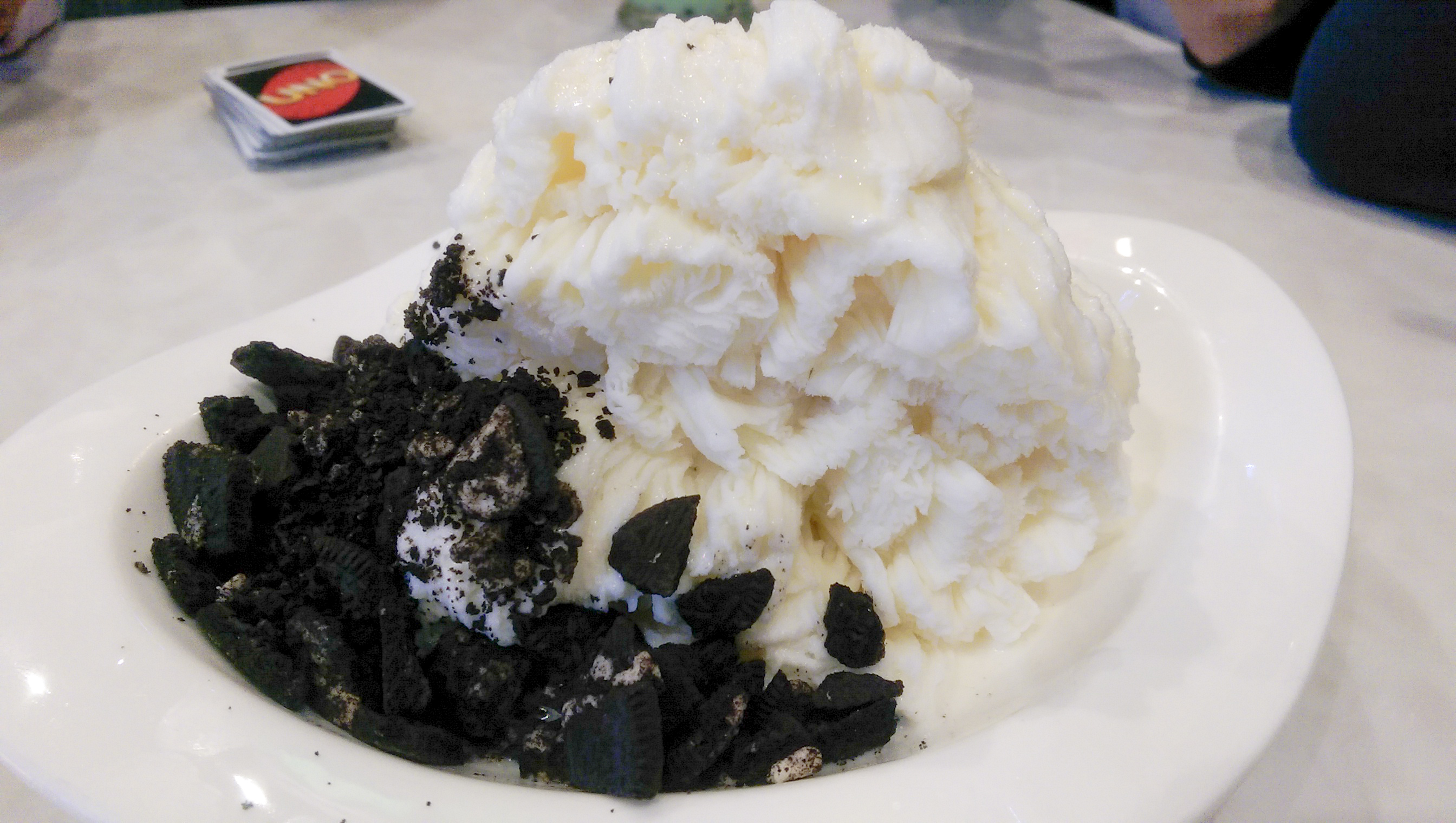
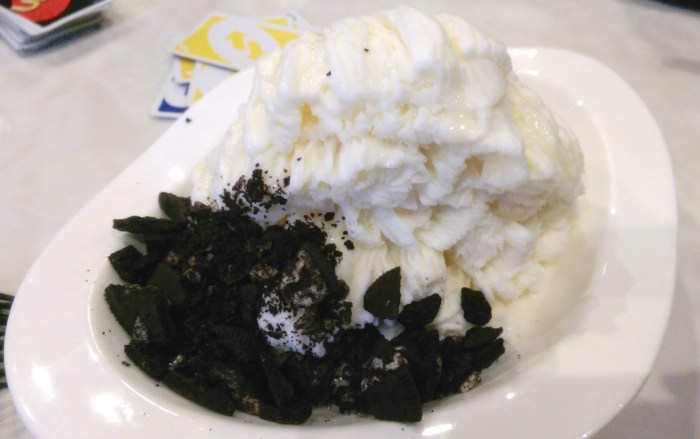
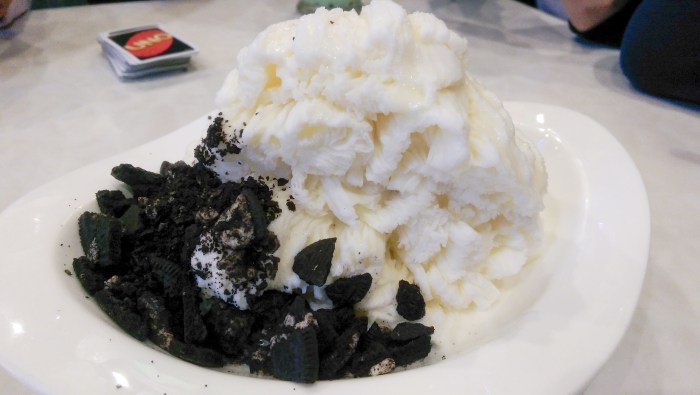
We got the yogurt shaved snow with condensed milk and Oreo topping. You may be thinking, “yogurt?!” My sister suspected that it was the Asian yogurt like the Yakult, and she was right.

xue hua bing - 1

Doesn’t that look yummy?! The Oreos went really well with the yogurt flavor. It felt like we were eating ice with cookies ‘n cream! Sno-Crave had a couple of board games; we played two rounds of Uno!

xue hua bing - 2

I’ve had green tea (matcha) shaved snow with azuki beans at the Fremont Sno-Crave location in the past, which was good too!

SF Gate did an article about the Taiwanese dessert two years ago:

The cold and creamy Taiwanese dessert, also known as shaved snow or xue hua bing, has been popping up on the food radars from San Francisco to Dublin over the past year.

A cross between ice cream and the traditional shaved ice desserts popular in Hawaii and Asia, snow ice features soft ribbons of flavored ice topped with fruit, nuts and other assorted goods.

But if you’re having a hard time picturing the unfamiliar dessert, don’t despair. You’re not alone.

“We have a poster outside our store, and people thought it was a crepe at first,” says Janice Kou, owner of the year-old Snowflake in Dublin. “The green-tea-flavored snow ice – they thought that was lettuce.”

Neither a crepe nor a vegetable, of course, snow ice is simply the next generation of Asian shaved-ice desserts.

Whereas traditional shaved ice is made by grinding ice, then flavoring it with fruit syrups or condensed milk, snow ice starts out closer to ice cream.

Flavorings such as green tea or chocolate are mixed into a base of milk and water, then frozen into cylindrical blocks that look like giant candles. The blocks are mounted onto an ice shaver, which slices it off in sheets – thin enough that they melt in the mouth, much like cotton candy.

Guangdong: Frog Legs

Restaurant: Saigon Seafood Harbor Restaurant
City: Newark, CA

I had dinner with my family and a family friend at a Cantonese restaurant near home. One of the dishes we ordered had frog legs!

If you’ve never had frog legs before, I suggest trying it! Frog leg tastes like chicken and has a fish-like texture.

Saigon Seafood Harbor’s frog leg dish also had green onion, ginger, and a rich sauce. The sauce helped make the frog legs juicy and moist.

2014-07-05 20.49.59

My Diet has some info on frog legs in Cantonese cuisine:

Cantonese frog legs are traditionally served on lotus leaves, though many chefs outside of China may substitute these leaves or eliminate them altogether. The common green frog that certainly ranges in the wild among lily pads is typically the frog of choice when it comes to frog legs worldwide.

Today, however, the Chinese have frog farms where they usually raise bullfrogs or even pig frogs in areas like Sichuan Province. Frog legs have been popularly eaten in China since the first century A.D. according to food historians, so groups like the Cantonese have literally been perfecting their recipes for centuries.

In many parts of China, not merely where Cantonese reigns supreme, frog legs are often stir fried along with a mixture of spices and herbs. Common flavors one tastes when dining on Cantonese frog legs are garlic, ginger and rice wine. Dark soy sauce or sometimes oyster sauce are added to taste or as a marinade .

In Cantonese cuisine, frog legs may also be stewed in a rich sauce or, alternatively, fried or even added to congee, a type of porridge made from rice. Cantonese frog legs may be eaten as a main course, but are also, today, served as a sort of appetizer.

Hainan: Wenchang Ji

Restaurant: Saigon Seafood Harbor Restaurant
City: Newark, CA

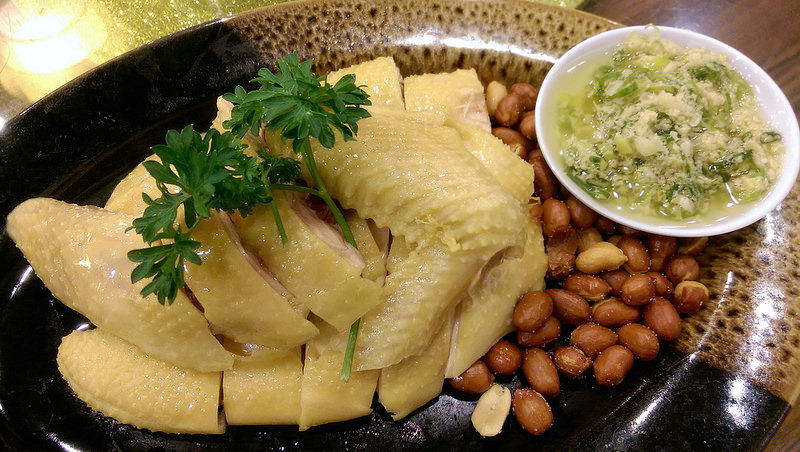
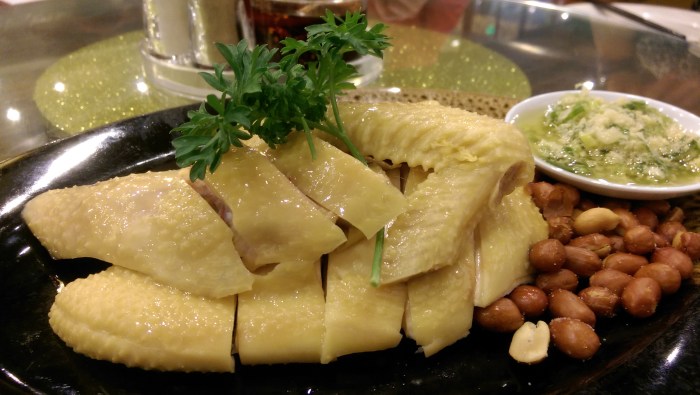
I had dinner with my family and a family friend at a Cantonese restaurant near home. One of the dishes we ordered was the famous chicken dish from Hainan.

You may know it as “Hainan Chicken Rice”, where the chicken is served with rice. However, the original name of the chicken dish itself sans rice is “Wenchang Ji” which literally means Wenchang chicken. Wenchang is a city in the northeast part of Hainan, China, where this chicken dish is from.

The yellow chicken is always served with a ginger scallion sauce, which is the highlight of the dish. The chicken must be eaten with the sauce.

Peanuts were served on our dish, as shown below, perhaps as Saigon Seafood Harbor’s way of elevating the dish.

hainan chicken2014-07-05 20.35.17

Hainan Tourism Development Commission explains how this dish is made:

Wenchang chicken is one of Hainan’s four specialties, and may be the most well known of them all. Not only popular in Hainan, has it also become a signature dish in Hong Kong and Southeast Asia, due to the nostalgia for their home of the Hainanese diaspora. The chickens are generally free range chickens. Wenchang chicken is normally boiled and then cut into pieces. It is then eaten by dipping the pieces in a mixture of spices including chopped ginger, garlic, salt, soy sauce, vinegar, and freshly squeezed citrus. The skin of Wenchang chicken is typically yellow, with an oily appearance, and the inner meat and bones are often red and raw looking, although in recent years the dish has been more thouroughly cooked due to bird flu fears.

Can you tell which ingredient makes the chicken yellow? It’s the ginger!

Here’s more info about the dish, from Wikipedia:

Wenchang chicken (simplified Chinese: 文昌鸡; traditional Chinese: 文昌雞; pinyin: Wénchāng Jī), is a type of chicken and a chicken dish from the Wenchang city area in Hainan, China.

This variety of small, fleshy free-range chicken is fed coconut and peanut bran. During the last two months before going to market, they are kept in coops above the ground.

Wenchang chicken is known throughout the province of Hainan. The most traditional way to prepare Wenchang Chicken is “white cutting” (Chinese : 白切), which involves immersing the chicken in almost boiling hot water and cooked to preserve its softness and tenderness. It is then eaten by dipping the pieces in a mixture of spices including chopped ginger and salt. The skin of Wenchang chicken is typically yellow, with an oily appearance, although the meat is somewhat drier and has more texture than battery chickens. This dish is also popular in mainland China, in Hong Kong, Taiwan, and other Southeast Asian countries.

Korea: Gogigui (Korean Barbecue)

Restaurant: To Bang (토방)
City: Santa Clara, CA

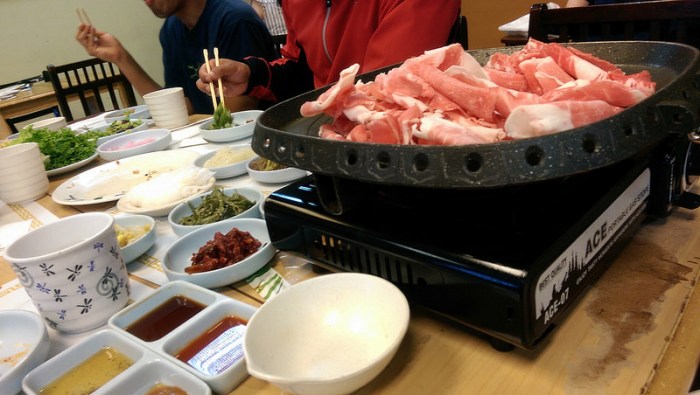
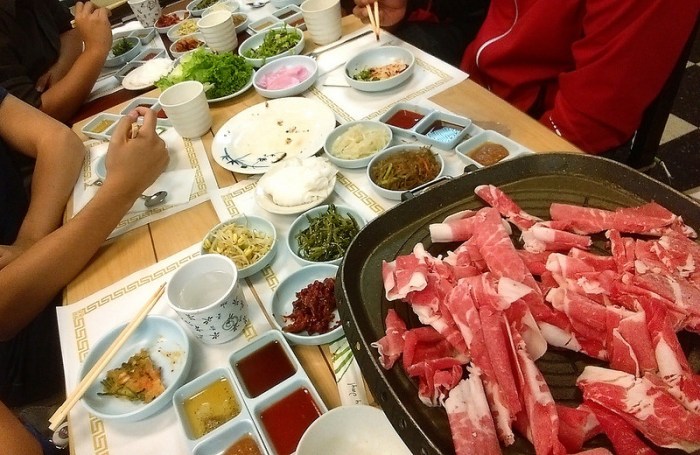
I had Korean BBQ (KBBQ) with a few buddies for dinner. We had one of their combos, where we had banchan, seafood pancake, several types of meat (beef and pork), kimchi fried rice, and yogurt soju.

I’ll focus on KBBQ here. This is what Wikipedia says of KBBQ:

Gogigui literally “meat + roasting”, or Korean barbecue refers to the Korean method of roasting beef, pork, chicken, or other types of meat. Such dishes are often prepared at the diner’s table on gas or charcoal grills that are built into the table itself. Some Korean restaurants that do not have built-in grills provide portable stoves for diners to use at their tables.

The most representative form of gogigui is bulgogi usually made from thickly sliced beef sirloin or tenderloin. Another popular form of it is galbi made from marinated beef short ribs. However, gogigui also includes many other kinds of marinated and non-marinated meat dishes, and can be divided into several categories. Korean barbecue is not only popular among Koreans, but has gained popularity internationally.

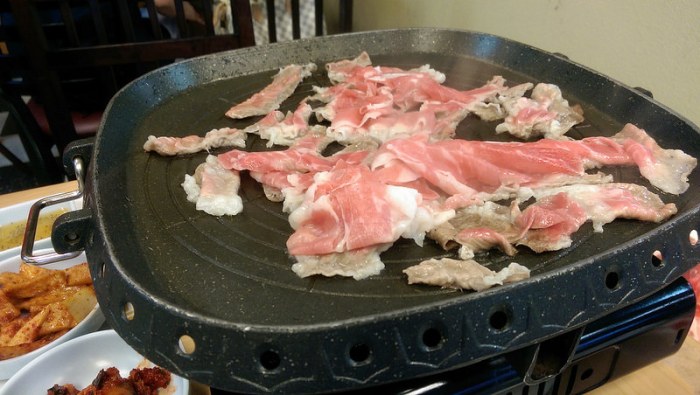
At To Bang, the waiters cook the meat on a portable grill next to our table. However, it was super busy when we ate, so we ended up grilling most of the meat ourselves because they’d get burned… :(

I ate the grilled meat with a lettuce wrap and banchan. Each person was also given a set of sauces to go with the meat. Here are some photos of our KBBQ!

kbbq-1kbbq-2kbbq-3

Gogigui comes with various banchan (side dishes), among which, green onion salad called Pajori and a fresh vegetable dish including lettuce, cucumbers, and peppers invariably accompanies meat dishes at restaurants. A popular way of eating Korean barbecue is to wrap the meat with lettuce and add condiments such as – pajori (spicy scallion salad) and ssamjang (a spicy paste made of doenjang mixed with gochujang).

In American culture, primarily the Southern California area, “all you can eat” (AYCE) Korean barbecue restaurants have been greatly popularized by the large influx of Korean immigrants and their children. Prices generally range from about $10 to $20 US dollars per adult. These places usually provide a menu of meats that usually feature a variety of thinly sliced meats such as chadol (beef brisket) as well as the traditional bulgogi and Galbi. Many people use these restaurants as social meeting places where they can enjoy food, long conversations, and soju, a native Korean distilled beverage.

In Southern California, the best area to get KBBQ is at Koreatown. In Northern California, the area with the most KBBQ places is in Santa Clara, along El Camino Real.

Liguria: Canestrelli

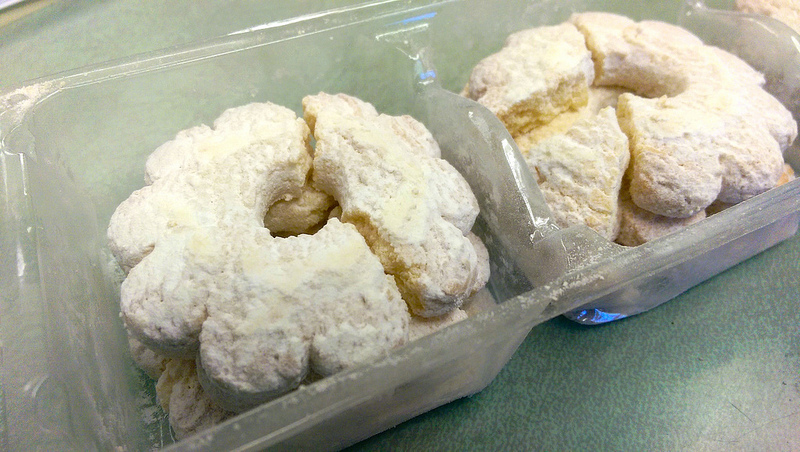
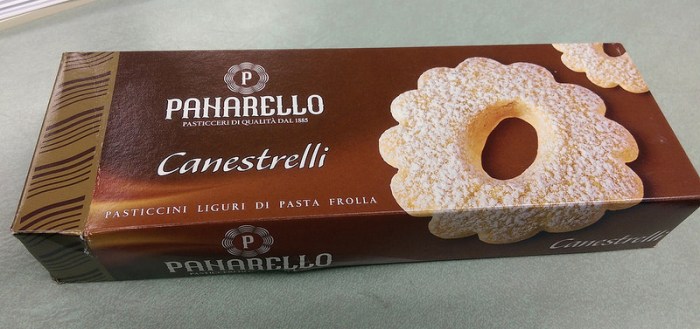
An Italian coworker went back to his hometown in Liguria for several days, and brought back a box of Italian biscuits!

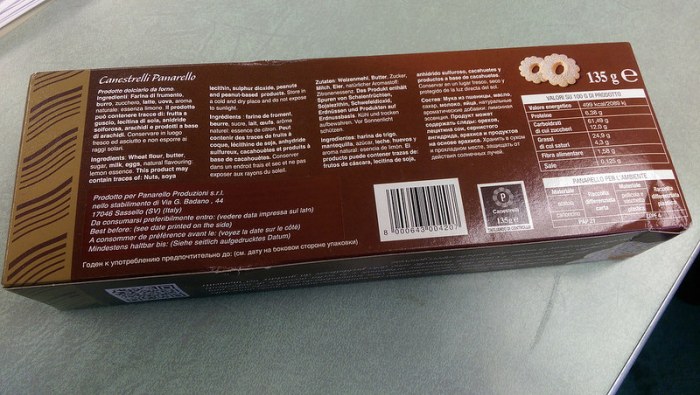
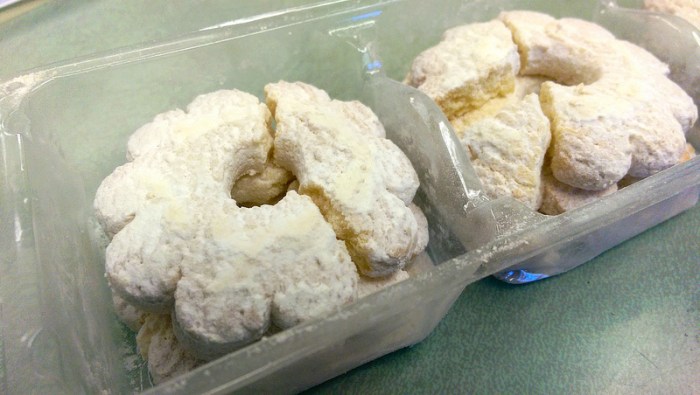
These biscuits are also from Liguria. The box lists wheat flour, butter, sugar, milk, eggs, and lemon essence flavoring as the ingredients.

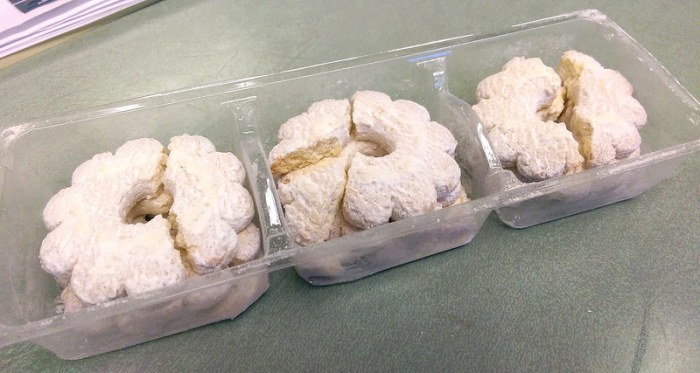
After I ate one biscuit, I concluded that they are simply very sweet biscuits with lots and lots of powdered sugar! I had enough after just one biscuit. ;)

canestrelli - 1canestrelli - 2

Please pardon the broken pieces of biscuit in the photos below; that’s what usually happens when you bring back food via plane!

canestrelli - 3canestrelli - 4

Here’s the info about these biscuits, from Wikipedia:

Canestrelli (“little baskets”) are a type of Italian biscuit. Originating in Monferrato, the biscuits are common in both Piedmont and Liguria.

Manu’s Menu has a recipe if you’re interested in making these. She also says:

Canestrelli are simple, buttery shortbread-like cookies, shaped like flowers and covered in icing sugar.

Southern Vietnam (Mekong Delta): Bún Mắm

Restaurant: Thien Long Restaurant
City: San Jose, CA

Another dish we had in addition to the grilled fish (Chả Cá Lã Vọng)  at Thien Long was a type of noodle soup that originated at the southernmost region of Vietnam, the Mekong Delta. We basically had dinner from two opposites of Vietnam, the north and south!

Thien Long described their bún mắm as thin noodles in fermented fish soup with pork, fish, eggplant, and shrimp. When we ate the dish, we discovered that there was actually fish in two ways – fish paste on a green chili pepper, and fish chunks (my dad suspected it was sole, the same type of fish we had in the grilled fish dish). We also noticed there was squid in the soup as well. The soup was spicy, salty, sweet, and sour at the same time!

bun mam - 1

They served a plate full of mung bean sprouts, cabbage, and banana blossom (or banana flower). We added those three ingredients to our bowl, as shown below. Doesn’t it look prettier?!
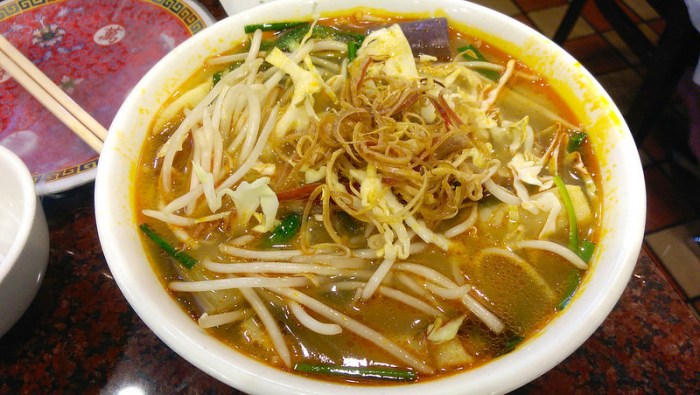
bun mam - 2

Vietnam Coracle explains this dish very well:

Bún mắm is a robust Vietnamese soup that’s packed with contrasting flavours, textures and colours. Pungent, fishy, sweet, sour, dark, vibrant, silky and crunchy, this is a soup that challenges your taste buds. There’s nothing subtle about bún mắm: it’s bold and confrontational – each flavour and texture is in a fight to dominate your palate. Such is the density of bún mắm, that you’ll discover something new each time you try it.

Bún mắm is a southern Vietnamese dish, thought to have originated in Sóc Trăng Province, in the Mekong Delta. This vast area, to the south of Saigon, is flat, flooded and fertile. A large quantity of all Vietnam’s rice, fish, fruit and vegetables are grown here. A bowl of bún mắm is a good cross-section of all this produce: in many ways, this soup represents the ‘Mekong in a bowl’.

I like to break bún mắm down into three main elements: 1. bún and mắm (the noodles and the broth) 2. the ‘chunky bits’ 3. the ‘greens’:

1. Bún and mắm:
The Mekong Delta is famous for being the rice basket of Vietnam, so it seems fitting that bún (a thin, white noodle made from rice flour) is one of the foundations of this soup. Second to rice, the Mekong Delta is famous for its fish. Mắm is a potent, fermented fish sauce that’s the other essential ingredient in this soup; it’s what gives the broth its pungent, fishy aroma: bún + mắm = bún mắm.

2. The Chunky Bits:
With the fundamental components of bún and mắm in place, early cooks looked around them for other ingredients to add body to their soup. This being the Mekong Delta, they were spoilt for choice. Into the broth went tamarind, spices, lemongrass and eggplant, while all sorts of goodies were dropped into the bowl to accompany the noodles: little fillets of white river fish, chunks of fish cake, squid, whole shrimp, slices of aubergine, and crispy cuts of roast pork belly. The latter may have been the influence of Chinese migrants in the Mekong region. In fact, many people speculate that the origins of bún mắm lie not in Vietnam but in neighbouring Cambodia, whose Khmer empire once ruled over what is now southern Vietnam. Even today, in the Mekong provinces of Sóc Trăng and Trà Vinh, there’s still a healthy population of Khmer and Chinese.

3. The Greens:
Even if this soup originated abroad or was influenced by foreign cuisines, today it’s a firm favourite in southern Vietnam. One of the things that southern Vietnamese dishes (especially soups) are famous for is the plethora of fresh greens that they are served with. Even by southern standards, bún mắm is accompanied by a jungle of leaves, storks, stems, flowers and herbs. These come on a separate plate, either uncooked or blanched in hot water. In amongst this forest of greens you’ll find the purple stems of water lilies, the yellow-white curls of banana blossom, bean shoots, a couple of varieties of ‘pond weed’ (there are so many kinds of pond weed that even locals have difficulty naming them), and a leaf popularly known in Vietnamese as giấp cá, which means ‘fish-smelling leaf’ (personally I don’t think it smells very fishy at all, and prefer to call it by one of its many other informal names, ‘heartleaf’).

Once all the three elements – bún and mắm, the chunky bits, and the greens – are mixed together in your bowl, there’s a war of flavours and textures going on in there. The broth is at once light, sweet and tangy, but also thick, heavy and pungent. The chunky bits are both delicate and hearty. The greens are crunchy and light, but also bitter and sharp. Your taste buds can get very confused: is it sweet, or is it savoury? The wonderful result of this ‘war’ is that no two mouthfuls are the same.

Bún mắm isn’t the easiest of Vietnamese soups to get into. But, as is so often the case with the very best Vietnamese dishes, the more challenging it is, the greater the reward. It’s a bit like jazz (for me, at least): I remember the first time I heard John Coltrane’s ‘Giant Steps’; it seemed like a big mess – where were the harmonies, the melodies? But each time I listened to it, I heard something new, and it started to make more and more sense, until it became one of my favourite albums – that’s what bún mắm is like.

Here’s also how a Chicago food critic described this type of dish, from Chicago Reader:

Bun mam, aka Vietnamese gumbo, a sour seafood soup not unlike Thai tom yam that originated in the Mekong Delta. It may not best the bowl you’d cool down with in the sweltering damp of Saigon’s Ben Thanh market—that one incorporates pork too—but it’s a solid one, brimming with eggplant, shrimp, squid, and silky, thinly sliced fish, accompanied by a heaping side of bean sprouts, cilantro, mint, and jalapeños.

Northern Vietnam: Chả Cá Lã Vọng

Restaurant: Thien Long Restaurant
City: San Jose, CA

I treated my parents to some delicious Northern Vietnamese dishes for their 32nd anniversary! (Happy anniversary, Mom & Dad!) My parents rarely venture out to San Jose so whenever we’re in town, I’ve gotta take them to a place with good eats!

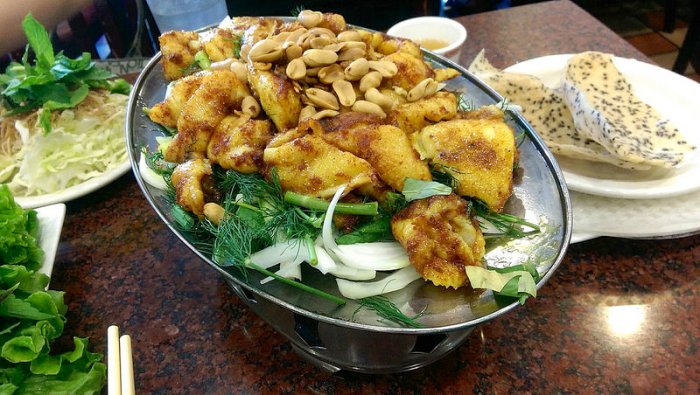
Thien Long is by Eastridge Mall, and they have a fantastic fish dish. Called “Bún Chả Cá Lã Vọng”, it is grilled fish with dill, onion, peanuts and served with thin noodle and vegetables. The dish is placed above a fire pit to stay hot. You also have the option of getting the rice paper (bánh tráng) to eat with the fish. It’s a quite big dish and serves 2 people, or 3 people if you order another dish for the table.

Chả Cá Lã VọngChả Cá Lã Vọng - side

Here’s a short history of the dish, from About.com:

Unlike pho and bun cha, this dish has no natural counterpart in the south – cha ca la vong is proudly homegrown by Hanoians, the brainchild of the Doan family, who continue to make it in a restaurant that serves only that one dish.

Cha ca la vong is redolent of dill, turmeric, and revolution: the dish was legendarily prepared to nourish North Vietnamese insurgents, and after reunification, the Doan family was allowed to make cha ca la vong on a street newly renamed after their product. (The street was formerly Hang Son, or “Paint Street”; the whole street is now called “Cha Ca”.)

The cha ca la vong experience is more theatrical than most other culinary treats in Hanoi. In cha ca la vong restaurants (there are more than one; in imitation-happy Hanoi, plenty of other copycats have followed in the Doans’ footsteps), guests sit at tables equipped with gas or charcoal burners. Marinated fish (preferably snakehead) are cooked right in front of the guests, first browned in oil, then enhanced with ginger, dill, green onions, and other herbs. The finished dish is served alongside rice noodles, coriander, fennel, peanuts, leeks, chili, and shrimp paste.

The original Cha Ca La Vong restaurant is still the best place to experience this fish and veg concoction; the interior is shabby and the servers are snippy with the guests, but it’s all part of the show. Eat it while it’s hot.

Northern Vietnam: Phở Gà

Restaurant: Pho Ga 69
City: Oakland, CA

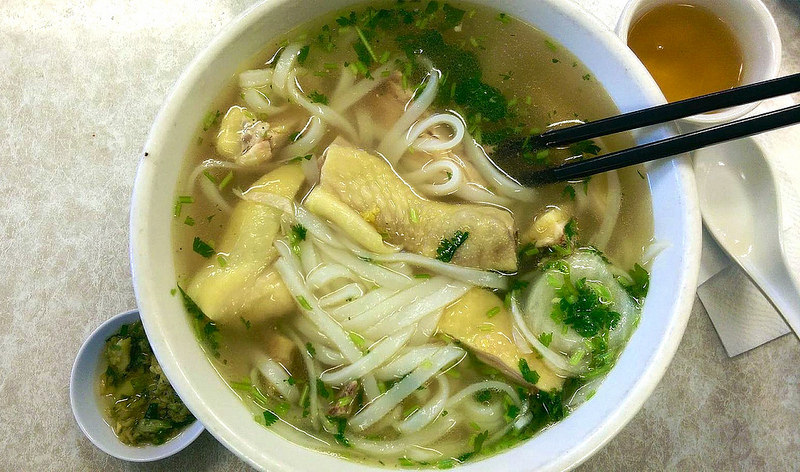
I had phở gà for lunch today! Phở gà translated into English is “chicken noodle soup”. It is also served with a ginger scallion sauce, which is minced ginger and green onion cooked with oil. This dish is very similar to Hainan chicken, in terms of the type of chicken (free-range) and sauce served with it.

pho ga

You can also order shredded chicken noodle soup (phở gà xé) at this place, which uses chicken breast instead, if you want to eat healthier or if you’re too lazy to eat the meat off the bones.

Phở gà can be found almost everywhere in Hanoi. If you’re in San Francisco or the North Bay, I’ve heard Turtle Tower serves excellent phở gà!

Viet World Kitchen has a good description of this dish:

If you’ve had the original beef phở then you’re bound to want to explore the chicken version, which is slightly lighter in flavor, but delicious still.

While beef phở may be the version that most people know and like, chicken phở is also excellent. In recent years, there has been a renewed interest in phở gà (pronounced “Fuh Gah”) within the Vietnamese American community, and a handful of restaurants are specializing in the delicate noodle soup. Some of them use free-range gà chạy or gà đi bộ (literally “jogging chicken” or “walking chicken”), yielding bowls full of meat that has a flavor and texture reminiscent of traditionally raised chickens in Vietnam.

Also, can you tell that the type of noodle is different from the southern phở?  Here’s the info, from Vietnam Online:

When eating a bowl of Pho in Hanoi, customers do not have options of noodles. They just have only one kind of noodles which is big in width and thin in depth. In Ho Chi Minh City, when having a Pho, they would ask what kind of noodle you would like to have: the primary one (like Hanoi’s Pho) or the thinner one both in width and in depth.