South Korea: Albap

Restaurant: Bowl’d
City: Albany, CA

I had Korean food for late lunch with my dad and a friend, and picked this dish!

albap

Fish roe rice bowl (알밥) – fish roe, vegetables, egg yolk over rice in hot stone bowl. There were four different colors of fish roe, in orange, red, green, and black color. As for the vegetables, there was red cabbage, soy bean sprouts, and pickled yellow radish/daikon (단무지, danmuji). Quinoa was also at the top, between the black and red fish roe. Underneath all those ingredients was mixed rice; you can choose either mixed or white rice. I also added red pepper paste and sesame oil to my bowl before mixing and eating.

The fish roe looked similar to tobiko (Japanese flying fish roe). When I mixed up all the ingredients in the stone bowl, it looked like I was eating sprinkes. It also smelled fishy, so don’t order albap if you cannot stand fishy smells. The stone bowl was still really hot when we finished eating and packed up the leftovers!

The name of Bibimbap is first mentioned in the Siuijeonseo, an anonymous Cookbook dating from the end of the 19th century. The variation of bibimbap called ‘dolsot bibimbap’ is served in a very hot stone bowl at the bottom of which is placed the rice with vegetables and meat atop. It is often covered with a raw or sunny-side up egg. The bowl is traditionally placed on a wooden base and served at the table this way. (196 Flavors)

Albap (알밥), also called Nalchi Albap (날치알밥), is another variation of the bibimbap. Steamed rice is served with spinach, mushrooms, beansprouts, seaweed, bellflower roots, daikon, cucumber and egg. As the name suggests, a generous portion of fish roe (알) is also added. Chili pepper paste is usually added to one’s own liking. Mix well before eating. (Seoul Bites)

According to one of my sister’s roommates, albap is usually found in coastal towns (in South Korea) and the variants based on the kinds of fish that are most common in the area.

France: Macaron

Bakery: Chantal Guillon
City: Palo Alto, CA

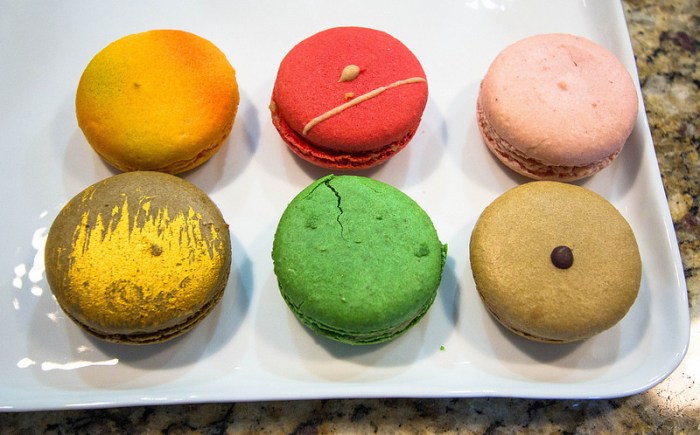
I picked up a couple of macarons for an afternoon French food party at a friend’s!

macarons - 1 macarons - 2 macarons - 3

The flavors I picked were (in last photo, left to right, top to bottom) mango, raspberry, rose, salted caramel, pistachio, and coffee.

Macarons are usually pretty expensive; at Chantal Guillon, it was $1.85 per macaron or $11 for a pack of six macarons.

Continue reading

Southern Vietnam: Bánh Tét

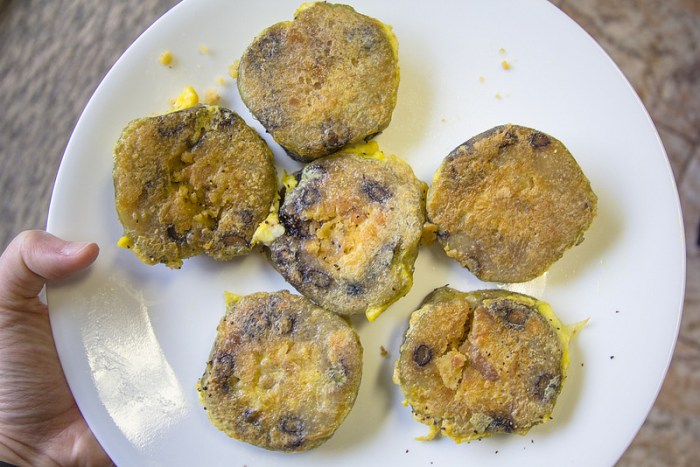
An elderly from my church made gave bánh tét for my family, and my mom pan fried ’em for breakfast!

[Edit] These were actually made by the elderly’s daughter in South Carolina, and shipped to her in East Bay!

banh tet - 1banh tet - 2banh tet - 3

Glutinous rice rolled with mung bean, pork, and red beans, wrapped with banana leaves. My mom pan fried the banh tet with scrambled egg. I topped each slice I ate with granulated sugar. Continue reading

Louisiana: Gumbo

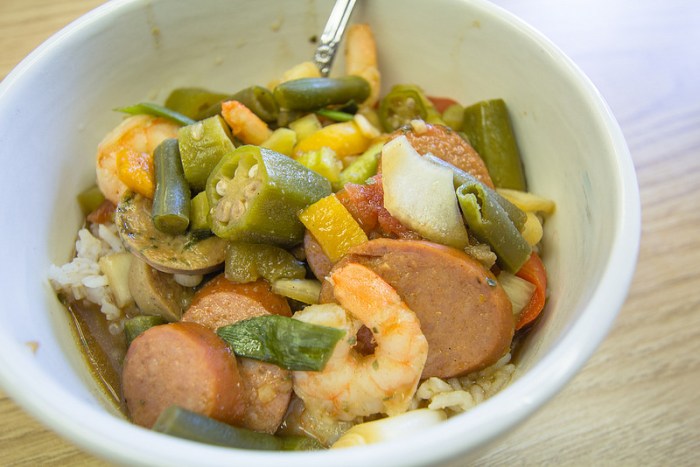
My coworkers and I made some gumbo for lunch! I brought a Louisiana Cajun gumbo mix that I got from Safeway. One of the coworkers brought a big crockpot. Each lunch participant brought an ingredient or two to add to the soup. That sounded pretty fun, yes? :)

gumbo

In our gumbo, we had andouille, chicken sausage, shrimp, okra, celery, bell pepper, onion, green onion, green beans, and kidney beans. We also had our gumbo over rice. Continue reading

Guangdong: Daikon Cake

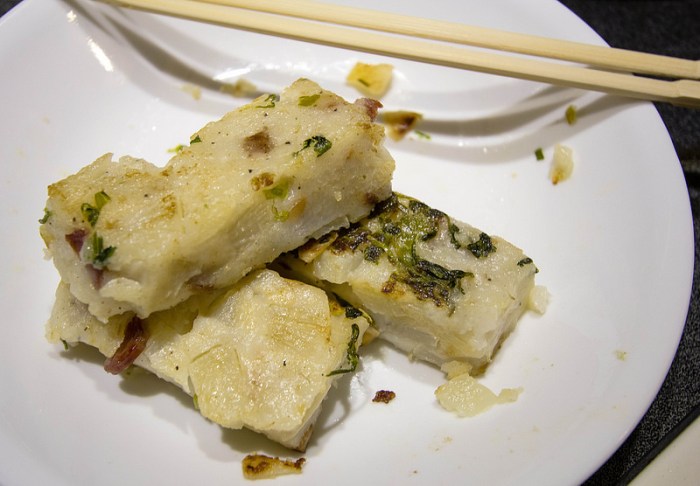
A family friend’s grandmother, whom I call “Ah-paw” (Cantonese for ‘grandma’), made daikon cake for my family, for Chinese New Year. My parents pan fried some of the daikon cake for dinner last night!

You can find daikon cake in several dim sum restaurants; they’re usually under a different name, turnip cake, but it’s essentially the same thing. Contrary to the name ‘turnip cake’, daikon is actually used, not turnip. I think it was named ‘turnip cake’ here because not many Westerners know what daikon is.

A similar Cantonese dish is taro cake, where taro is used instead of daikon. Whichever ingredient is used, the taro or daikon in the cake can be in chunky pieces, thin pieces, and/or in a paste with the rice flour. However, daikon cake is more elaborate to make than taro cake if Chinese sausage, dried mushroom, and dried shrimp are added. Taro and daikon cakes are also popular to make and eat during Chinese New Year.

daikon cake

The daikon cake I had consisted of Chinese sausage, dried shrimp, parsley, peanuts, and dried mushroom. I usually make my own sauce to go with the daikon cake, with Ajinimoto gyoza dipping sauce, sesame oil, and Sriracha or garlic chili sauce.

Daikon, mooli, or white radish (Raphanus sativus var. longipinnatus, also known by other names) is a mild-flavoured, very large, white East Asian radish with a wide variety of culinary uses. Despite often being associated with Japan, it was originally cultivated in continental Asia. White radishes are known by several names in English, most commonly daikon. Other names include mooli, Oriental radish, Japanese radish, Chinese radish, Korean radish, and lo bok. In many cases, several terms will coexist in the same locale, referring to different white radish varieties. The English name “daikon” derives from the Japanese daikon (大根), literally “large root” (usually rendered in Katakana as ダイコン) and is the most common name for the vegetable in North America. However, the greener, rounder Korean varieties are rarely called daikon and are instead usually referred to as “Korean radish”. Likewise, Chinese varieties are sometimes called “lo-bok” or “lo-bak” derived from the Cantonese lòhbaahk (蘿蔔). In the United Kingdom with its stronger South Asian influence, the name “mooli”, from Hindi mūlī (मूली), is used in addition to daikon. The name “chai tow” or “chai tau”, from Hokkien chhài-thâu (菜頭), is sometimes used in Singaporean and Malaysian English for the vegetable. Sometimes the Hokkien-derived term is back-translated as “carrot” because the word chai tow can also refer to a carrot (POJ: âng-chhài-thâu; literally “red radish”). This misnomer gave the title to a popular guidebook on Singapore’s street food, There’s No Carrot in Carrot Cake, which refers to chai tow kway, a savoury cake made of white radish. (Wikipedia)

Turnip cake (simplified Chinese: 萝卜糕; traditional Chinese: 蘿蔔糕; Jyutping: lo4 baak6 gou1) is a Chinese dim sum dish made of shredded radish (typically Chinese radish or daikon) and plain rice flour. The less commonly used daikon cake is a more accurate name, in that Western-style turnips are not used in the dish; it is sometimes also referred to as radish cake, and is traditionally called carrot cake in Singapore. It is commonly served in Cantonese yum cha and is usually cut into square-shaped slices and sometimes pan-fried before serving. Each pan-fried cake has a thin crunchy layer on the outside from frying, and soft on the inside. The non-fried version is soft overall. It is one of the standard dishes found in the dim sum cuisine of Hong Kong, China, and overseas Chinatown restaurants. It is also commonly eaten during Chinese New Year, since radish (菜頭, chhài-thâu) is a homophone for “good fortune” (好彩頭, hó-chhái-thâu) in Hokkien. In Taiwan, turnip cake is also commonly eaten as part of a breakfast. (Wikipedia)

Taiwan: Pearl Milk Tea

Restaurant: Sweetheart Cafe
City: Milpitas, CA

A college friend gave me a pearl milk tea when I dropped off some spam musubi. When I was in college, I’d get pearl/boba drinks frequently. It’s fun to drink milk tea while chewing on the tapioca pearls. :D

pearl milk tea - 1 pearl milk tea - 2

Here, we call them boba or pearl tea. My Canadian cousins call them bubble tea. They are typically in plastic containers with a plastic seal. You use the straw to stab or poke through the seal to drink it.

Many places have either good milk tea or good pearl, seldom both. I’d usually get a milk tea that’s either watered down or taste very powdery and have no taste of tea, but good pearls. Or I’d get pearl that is hard and not chewy, but good milk tea.. However, this place had good milk tea with soft and chewy pearls!

The following is a bit of information about pearl milk tea, from Wikipedia:

Bubble tea, also known as pearl milk tea or boba milk tea, is a Taiwanese tea-based drink invented in tea shops in Taichung, Taiwan, during the 1980s. The term “bubble” is an Anglicized imitative form derived from the Chinese bōbà (波霸) meaning “large breasts,” slang for the large, chewy tapioca balls commonly added to the drink. These are (粉圓, fěnyuán), also called “pearls” (珍珠, zhēnzhū). Continue reading

Hong Kong: Singapore Fried Vermicelli

Restaurant: Cafe 88
City: Oakland, CA

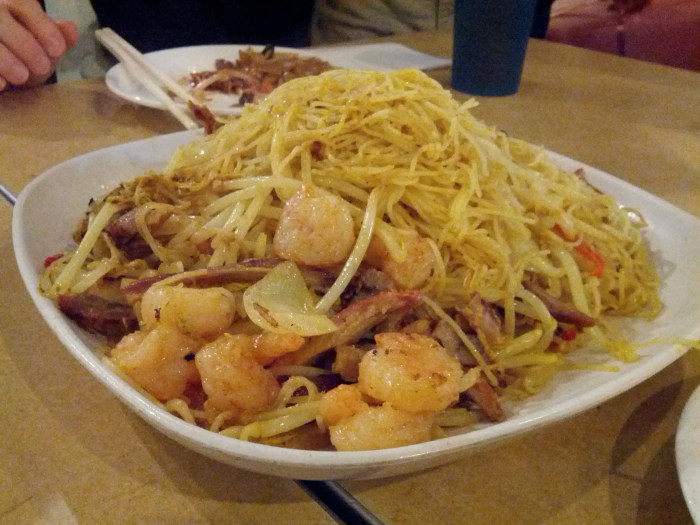
I had a family-style lunch with the family and a friend at Cafe 88, a Hong Kong style cafe. My dad picked this dish. I had originally planned to pick this dish, but then my dad ended up ordering this so I went with the beef chow fun.

I used to order this dish whenever I saw it in the menu back in high school… so my mom learned how to make it and cooked it pretty often… but cooking vermicelli on a wok verses a cooking pan makes a difference!

2014-02-09 13.49.14

From looking at the photo above, you can tell the noodles were on one side of the plate while the shrimp, onion, bean sprouts, bbq pork, and red bell pepper were on the other… it should have been served well mixed.

Contrary to its name, this dish did not originate in Singapore!

Singapore-style noodles (Chinese: 新洲米粉, 星洲炒米, 星洲米粉) is a dish of stir-fried rice vermicelli seasoned with curry powder, bean sprouts, pak choi, soy sauce, and sliced chilli peppers. It is served as a vegetarian dish or can be accompanied by small slices of chicken, beef, char siu pork, and/or prawns. The dish appears on the menu of almost all Chinese-style (mainly Cantonese-style) eateries in Hong Kong. (Wikipedia)

The Sing Chow Mai Fun (Chinese: 星洲炒米粉) in Malaysia does not come with curry! The sauce is completely different there. The Singapore fried rice noodles served in Penang is flavored with ketchup and a little chili sauce. (Rasa Malaysia)

Sin Chow (Singapore) Fried Meehoon, or simply Singapore noodles represents a dish containing rice noodles combined with fish cake, barbecued pork or ham chicken, as well as carrots and broccoli. The US version includes curry powder too, unlike the Malaysian one. Usually the dish is served topped with shrimps or prawns. The Sin Chow (Singapore) Fried Meehoon has the biggest popularity in Kuala Lumpur and the cities nearby. The interesting thing is that the receipt of the dish, despite its name, doesn’t originate from Singapore. (Mycitycuisine.org)

Guangdong: Beef Chow Fun

Restaurant: Cafe 88
City: Oakland, CA

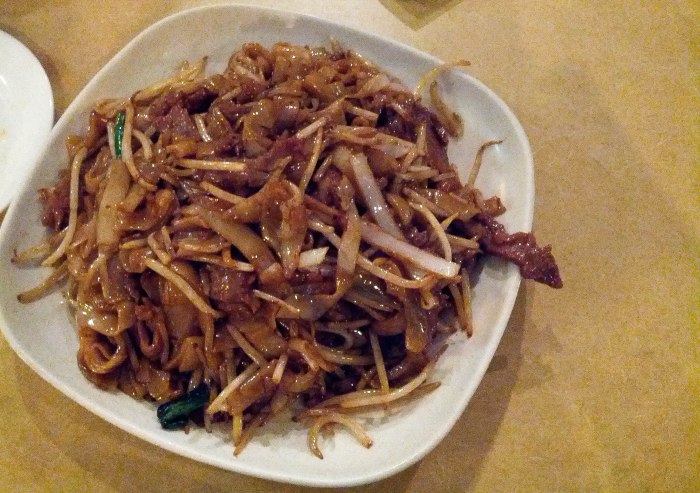
I had a family-style lunch with the family and a friend at Cafe 88, a Hong Kong style cafe. I picked beef chow fun, since it’s been a while since I last had it, and ho fun is one of my favorite type of noodles.

beef chow fun

Ho fun with beef, bean sprouts, and onion. My dad said ho fun is tricky to cook with; you don’t want to overcook it or have it drenched with sauce, and it’s best cooked using the wok. The ho fun here was cooked perfectly.

Beef chow fun is a staple Cantonese dish, made from stir-frying beef, hefen (wide rice noodles) and bean sprouts and is commonly found in yum cha restaurants in Guangdong, Hong Kong, and even overseas, as well as in cha chaan tengs (literally ‘tea restaurant’). The main ingredient of this dish is ho fun noodles, which is also known as Shahe fen, originating in the town of Shahe in Guangzhou. The most common methods of cooking ho fun are in soup or stir fried. Ho fun can be dry-fried (fried without sauce) or wet-fried (fried with a sauce). Dry-fried beef ho fun is made by first stir frying beef strips until they are half-cooked. Bean sprouts and onions are then fried in oil. The ho fun is added and stir fried very quickly, along with soy sauce and heated oil. Finally, the beef is added. An important factor in the making of this dish is “wok hei” (鑊氣). The cooking must be done over a high flame and the stirring must be done quickly. Not only must the ho fun be stirred quickly, it must not be handled too strongly or it will break into pieces. The amount of oil also needs to be controlled very well, or the extra oil or dry texture will ruin the flavor. Because of these factors, this dish is a major test for chefs in Cantonese cooking. (Wikipedia)

Hawaii: Spam Musubi

I went to a LAN party at Jamie and MG’s house, and made Spam musubi! Check out Jamie’s blog at jayscup.com! We played Borderlands 2 for ~8 hours. :D

The recipe I used is from Adventures in Bentomaking. I got the molds through eBay a few years ago. I also used wasabi fumi furikake, a Japanese rice seasoning consisting of seaweed, wasabi, and sesame seed. Instead of making 10 Spam musubis from one can of low sodium Spam, as stated in the recipe, I made 12 because I use less rice in each musubi than in the recipe. I dislike it when the Spam musubi is so thick that I can’t bite it!

spam musubi

Spam musubi is a popular snack and lunch food in Hawaii composed of a slice of grilled Spam on top of a block of rice, wrapped together with nori dried seaweed in the tradition of Japanese omusubi. Inexpensive and portable, Spam musubi are commonly found near cash registers in convenience stores all over Hawaii. Typical preparation begins with grilling slices of spam, sometimes with a light teriyaki flavor. An acrylic mold (often the shape of a slice of Spam) is then placed over a long, narrow piece of nori and rice is pressed into the mold. The grilled spam is placed over the rice before the mold is removed. The nori is then wrapped over the top and around the musubi. It is served sometimes with soy sauce or Japanese mayonnaise. Spam became a popular food in Hawaii after World War II. Spam was a main course for the troops during the war, and the large military presence in Hawaii led to Spam’s widespread local adoption. Local Japanese created the Spam musubi as a result. (Wikipedia)

Musubi (plural musubi or musubis) – A food made of a food such as meat tied to a block of rice with nori, differing from sushi in that the rice is not vinegared. (Wikipedia)

A favorite Hawaiian way to eat Spam is in the form of a musubi (pronounced moo-soo-bee, with no accent). It is a fried slice of spam on rice pressed together to form a small block, then wrapped with a strip of seaweed. The Spam musubi is eaten as a sandwich, and it is perhaps the Island’s favorite “to go” or snack food. Spam musubi is literally everywhere in Hawaii, including local convenience stores, grocery stores, school cafeterias, and even at the zoo. Eating a Spam musubi seems to serve as a rite of passage for newcomers anxious to attain “local” status. (What’s Cooking America)

Northern India: Samosa

Market: Dulhan Grocery
City: Fremont, CA

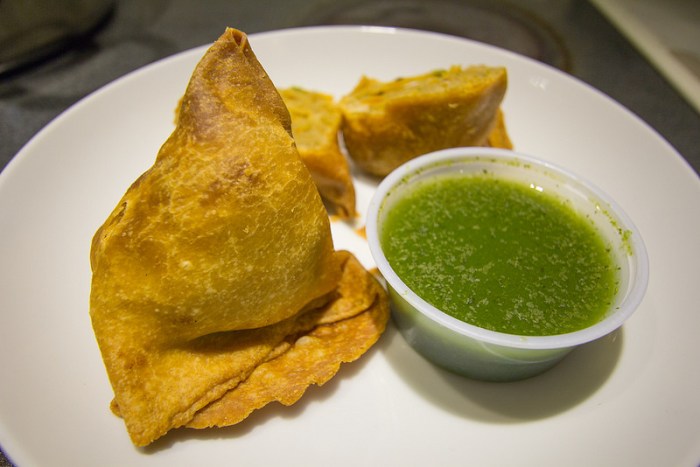
Last night I got home to a brown bag of samosas! My dad said:

They have a glass case behind the cashier to keep those Samosa warm. Whatever number you see inside the case, that all they have at the moment, unless they tell you how much longer you have to wait for more. I waited 10 minutes last night for 3 more. (They had only one inside when I walked in.)

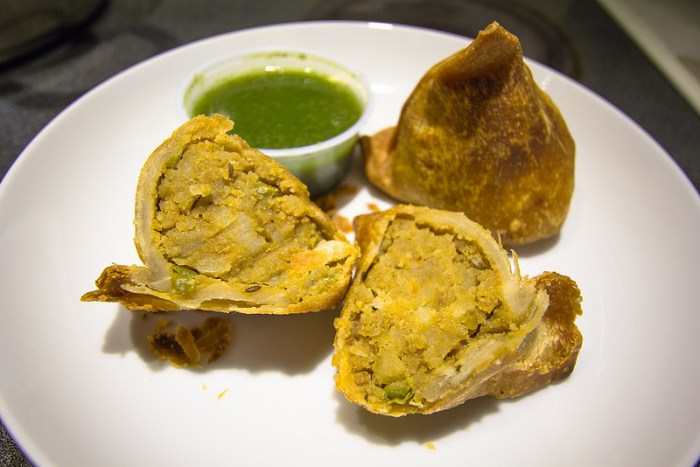
I was too full from eating the baked nian gao as part of my dinner last night, so I had a samosa for breakfast this morning! Samosas are easy to reheat; just put it in a toaster oven for a few minutes and it’ll be crunchy.

samosa - 1 samosa - 2

A samosa is a fried or baked pastry with a savory filling, such as spiced potatoes, onions, peas, lentils, ground lamb, ground beef or ground chicken. Its size and consistency may vary, but typically, it is distinctly triangular. Samosas are often accompanied by chutney. With its origins in Uttar Pradesh, they are a popular appetizer or snack in the Indian Subcontinent, Southeast Asia, Central Asia and Southwest Asia, the Arabian Peninsula, the Mediterranean, the Horn of Africa, North Africa and South Africa. (Wikipedia)

North Indian (or Punjabi) samosas are large and plump with a filling made of spicy mashed potatoes and peas. It is quite common to enrich the stuffing with raisins, cashews or peanuts. The pastry is thicker compared to its counterparts found in other parts of India and is traditionally deep-fried in pure ghee. (The Samosa Connection)

Traditionally, the samosa filling is prepared with vegetables including potatoes as the most common vegetable. Peas, onion and carrot are some of the popular additions. A plethora of flavoring ingredients like ginger, garlic, curry leaves, cumin powder, chili powder and coriander are added to enhance the taste of the filling. Samosa is generally served as an appetizer or snack along with coriander, tomato or tamarind chutney. Street vendors also sell this popular Indian snack along with chutney and sometimes with grated radish and chhole (chickpea curry). (iFood.tv)