Taiwan: Oyster Omelette

Restaurant: ASJ Restaurant
City: San Jose, CA

Last night, I had Taiwanese food for dinner with a few friends. We ordered an oyster omelette (also called oyster pancake in some restaurants) as one of our appetizers.

oyster omelette

Oyster omelette – egg, oysters, mushrooms, green onion, and some leafy greens.

People seem to like Taiwanese Street Food a lot, street food is a big part of Taiwanese culture. This is one of the most famous street foods – Taiwanese oyster omelette 蚵仔煎. If you like oysters or seafood, this is a great choice for you, if you like omelettes too then you’ve hit the jackpot! This omelette isn’t exactly the same as one of the western style omelettes it doesn’t just rely on egg to make the ‘pancake’ – the flour and water mixture is about half of the material in the omelette itself. Add to this the vegetables and finish with the special ‘secret’ sauce. (Taiwan Duck)

The following is a bit of information about the oyster pancake, from Taiwan Food Culture:

Oyster omelet was invented in early times when food was scarce and people learned to be creative with alternative forms of food. It may be described as a dish originating from a poor society.

Oyster omelet is made with fresh oysters, a batter of potato and sweet potato starch, eggs and green leafy vegetables—all pan-fried over high heat. Before serving, a specially concocted sweet-and-sour sauce is poured on top for added flavor. This delectable dish is a common sight in night markets across Taiwan.

The earliest form of oyster omelet is a traditional snack well known among the older generation in Tainan’s Anping area. Round and flat in shape, it consisted of oysters, pork and/or mushroom, wrapped and pan-fried in sweet potato starch.

Legend has it that in the 17th century when the Dutch took control of Anping, Zheng Cheng-gong (Koxinga) and his army fought and took the land. Defeated, the Dutch army hid all food provisions in a fit of anger, leaving Zheng’s troops to scrounge from local environs. They consequently used Tainan’s specialty oysters, mixed it with sweet potato starch and fried it into a dough-wrapped patty. The recipe was passed down through generations and has now become a popular snack in Taiwan.

Shaanxi: Jian Dui

Restaurant: Sun Sing Pastry
City: Oakland, CA

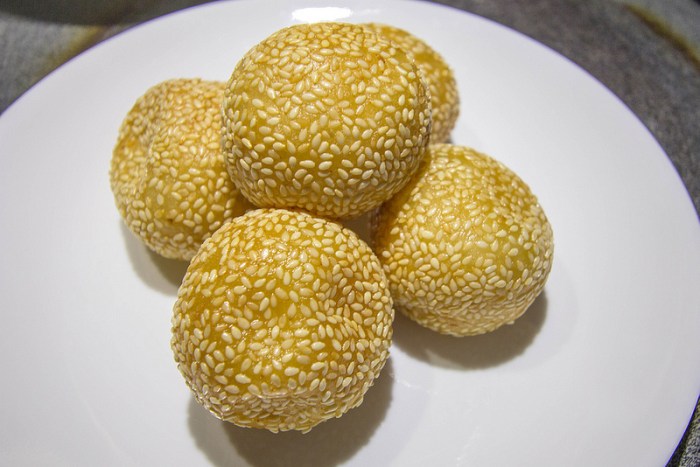
Sun Sing Pastry is a small store that carries dim sum; most customers get dim sum to-go but there are small tables for dining in. My parents and I grabbed a couple items here; we had to get the sesame balls with red bean paste, as it is similar to the sesame balls with mung bean!

jian dui

Glutinous rice balls with red bean paste filling and sesame seeds on the outside.

The following is some info about these sesame balls, from Wikipedia:

Jian dui (Mandarin) or jin deui (Cantonese), is a type of fried Chinese pastry made from glutinous rice flour. The pastry is coated with sesame seeds on the outside and is crisp and chewy. Inside the pastry is a large hollow, caused by the expansion of the dough. The hollow of the pastry is filled with a filling usually consisting of lotus paste (蓮蓉), or alternatively sweet black bean paste (hei dousha, 黑豆沙), or less commonly red bean paste (hong dousha, 紅豆沙).

Depending on the region and cultural area, jian dui are known as matuan (麻糰) in northern China, ma yuan (麻圆) in northeast China, and zhen dai (珍袋) in Hainan. In American Chinese restaurants and pastry shops, they are known as Sesame Seed Balls. They are also sometimes referred to as zhimaqiu (芝麻球), which translates to sesame balls in English.

The origins of jian dui can be traced back to the Tang dynasty as a palace food in Chang’an, known as lüdui (碌堆). This food item was also recalled in a poem by the Tang poet Wang Fanzhi. With the southward migration of many peoples from central China, the jian dui was brought along and hence became part of southern Chinese cuisine. In Hong Kong, it is one of the most standard pastries. It can also be found in most Chinatown bakery shops overseas.

These sweet, deep-fried puffs of dough coated in sesame seeds are a mainstay of dim sum houses, but at New Year’s they take on special meaning. Their round shape and golden color are considered lucky, and the fact that the dough balls swell as they’re fried and increase several times in size is a happy metaphor for a small venture growing and bringing back a large return. Sesame seed balls are traditionally filled with a bit of sweet red bean paste – they’re pretty much the Chinese equivalent of a jelly doughnut, only lighter and fluffier. (Dessert First)

Southern Vietnam: Bánh Cam

The same elderly that gave my family bánh tet, made us some bánh cam!

banh cam - 1 banh cam - 2

Glutinous rice balls with mung bean and shredded coconut filling, and with sesame seeds on the outside.

The following is some info about bánh cam, from Hungry Huy:

The name bánh cam literally means “orange cake” because these balls simply resemble oranges, not because there are any actual oranges in it. There’s wonderful harmony in bánh cam. The outer shell is a warm golden brown color covered in white sesame seeds. The exterior has a satisfying crispiness to it from frying. On the other side of that surface is a lightly chewy or springy glutinous rice dough and a sweet ball of mung bean. Fans of bánh cam can get pretty picky about this balance between the crisp and chew.

Although they look very similar, there are differences between bánh cam from the South and bánh ran from the North. Both styles can be found throughout the country though.

Northerners call it bánh ran, or “fried cake”. These are made with a Jasmine flower essence for a nice aroma. A sugary drizzle on these fried goodies can be found on them depending on the vendor. Another difference in the north is that when they are covered in sugar, the dough is made only with sweet rice flour and no rice flour, sesame seeds, or potatoes.

Southerners call it bánh cam, or “orange cake”. There is no essence of flower added to this. The most popular flavor added to the mung bean filling is with drops of vanilla extract. Only in the South will you find freshly shredded coconut in the filling too, but that will vary by vendor.

South Korea: Bon Chon Chicken

Restaurant: Bon Chon Chicken
City: Sunnyvale, CA

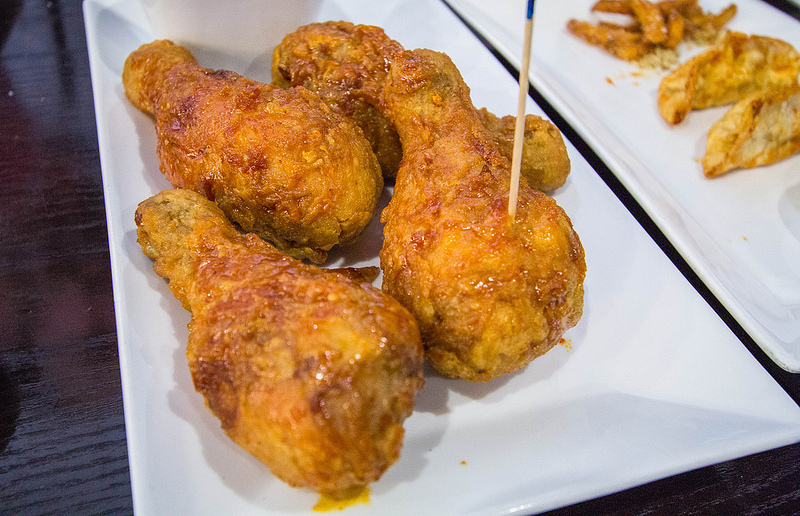
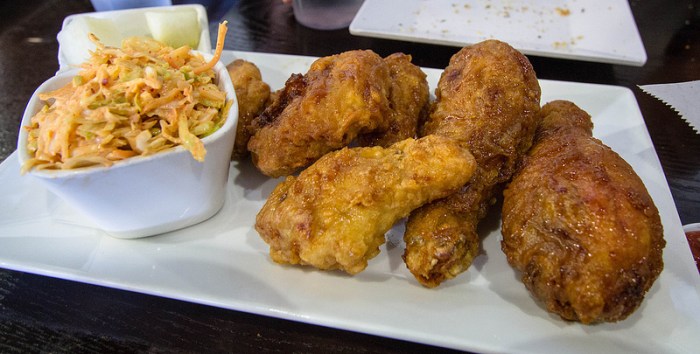
Went to Bon Chon Chicken for lunch to celebrate a coworker’s birthday!

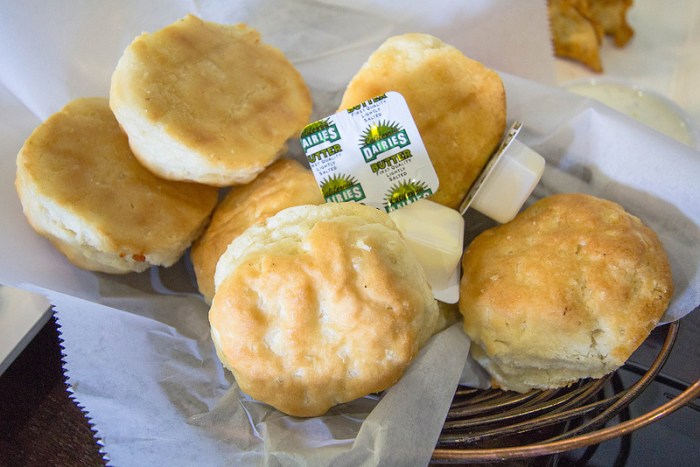
We ordered soy garlic and spicy hot garlic chicken (mixed; drumsticks and chicken wings) with kimchi coleslaw and biscuits. We also got curly fries and hot garlic potstickers. Each plate of chicken came with a side of pickled radish (daikon).

bon chon chicken - 1 bon chon chicken - 2 bon chon chicken - 3IMG_4616

Here’s some info about Bonchon Chicken, from Wikipedia:

Bonchon Chicken (Hangul: 본촌치킨; hanja: 本村치킨) is a South Korean-based fried chicken franchise restaurant. Bonchon is a Korean word meaning “My Hometown”.

The first Bonchon Chicken restaurant opened in 2002 in Busan, Korea. The first location in the USA was in Leonia, New Jersey. It later spread to California, New York, Maryland, Massachusetts, Virginia, and Texas. There are 10 locations in South Korea, 59 in the Philippines, 4 in Thailand, and 6 in Indonesia.

More info from Bonchon Chicken:

Walk down any neighborhood in Korea and you’ll find a mom-and-pop fried chicken joint on almost every block. With years of hands-on experience with Korean cuisine, founder Jinduk Seh, decided to focus on perfecting a recipe for fried chicken, and share one of his country’s favorite comfort foods with the world. The result was Bonchon, Korean word for “my hometown”.

Today there are 30 existing stores operating in the United States and 70 more overseas in Brunei, Indonesia, Philippines, and Thailand.

Southern Vietnam: Phở

Restaurant: Pho Kim Long
City: San Jose, CA

Had pho for dinner tonight! I realized I didn’t have pho for a while, and hadn’t been to my favorite pho place in the South Bay in months!

Pho is one of my comfort foods; when I was a kid, my family would get pho in Oakland Chinatown almost every week (it is now under a different management, sadly). My parents grew up in Saigon, where they’d occasionally have pho from street vendors. Pho can be very filling and good for cold weathers.

pho

Pho with tai, chin, nam, and gan – rice noodle soup with rare beef, well-done brisket, flank, and tendon. A plate of bean sprouts, lemon wedges, jalapeno peppers, and Thai basil was also served. I added all of those ingredients and also asked for hanh dam, which is vinegared onion. I also eat the meats with hoisin sauce and Sriracha sauce.

I’ve eaten with friends that put fish sauce (not nuoc mam, but the concentrated fish sauce), Sriracha sauce, hoisin sauce, and/or sugar into their pho. I’ve also tried their soup at the end… it’s entirely different than what I’m used to. It’s pretty interesting how each person’s pho tastes the same at the beginning but totally different at the end. Most of my friends/family dislike my pho because I add bean sprouts, lemon juice, and jalapeno pepper to my bowl, but I love it!

Read on for a little history about pho, from Wikipedia:

Phở is a Vietnamese noodle soup consisting of broth, linguine-shaped rice noodles called bánh phở, a few herbs, and meat. It is a popular street food in Vietnam and the specialty of a number of restaurant chains around the world. Pho is primarily served with either beef or chicken. The Hanoi and Saigon styles of pho differ by noodle width, sweetness of broth, and choice of herbs. The origin of pho and its name is a subject of scholarly debate. Continue reading

Mexico: Horchata

Restaurant: La Victoria Taqueria
City: San Jose (Downtown, on San Carlos)

I had La Vic’s (short for La Victoria Taqueria) after going to the Star Wars exhibit at the Tech Museum on Presidents’ Day. When I was attending SJSU, I’d go to La Vic’s frequently.

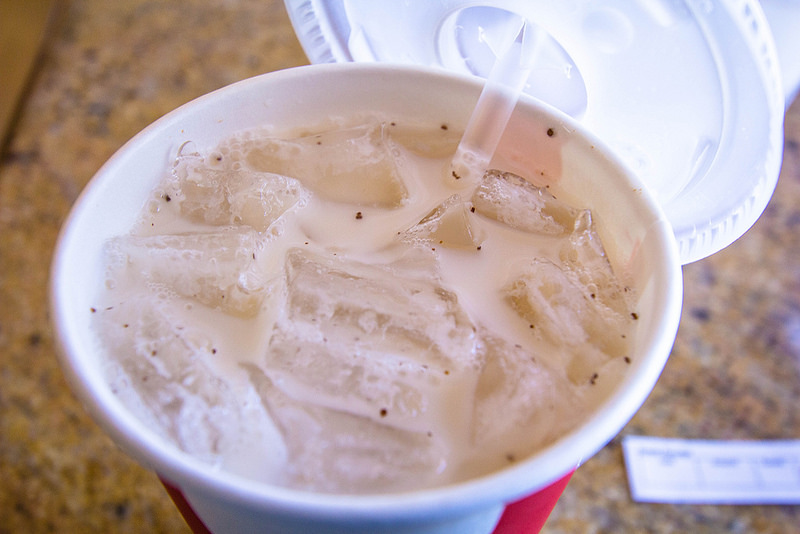
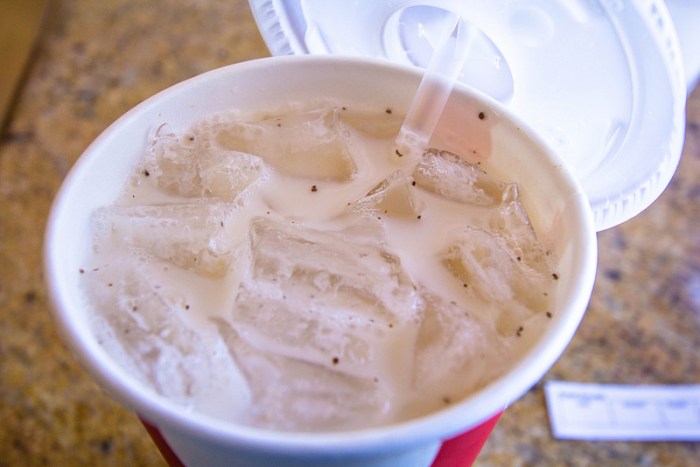
I ordered horchata in addition to a quesadilla. The dots in the horchata are cinnamon powder.

horchata

Horchata or Orxata, is the name of several kinds of traditional beverages, made of ground almonds, sesame seeds, rice, barley, or tigernuts (chufas). While in some countries the drink is usually tan and “milky”, some recipes call for milk, and others do not. Other ingredients often include sugar, cinnamon, and vanilla. Horchata, together with tamarindo and jamaica, are the three typical drink flavors of Mexican aguas frescas. (Wikipedia)

When served a cold glass of Horchata, we instantly think of hot summer days in Mexico, where most people think Horchata originated. But would you be surprised to know that the milky drink originally came from Valencia, Spain? First served to Jaime El Conquistador, the drink has evolved from being made with chufas (tiger nuts), to a drink that each Latin American country now calls their own with the addition of seeds, spices, fruits, and herbs. Most countries like Mexico and Guatemala make Horchata by soaking rice in cool water and sometimes adding almonds. Others, like Puerto Rico, typically make the drink by using sesame seeds as their base. El Salvador is another place where Horchata is made mostly from seeds and nuts, using cashews, peanuts and almonds. (Marcus Samuelsson)

Mexico: Quesadilla

Restaurant: La Victoria Taqueria
City: San Jose (Downtown, on San Carlos)

I had La Vic’s (short for La Victoria Taqueria) after going to the Star Wars exhibit at the Tech Museum on Presidents’ Day. When I was attending SJSU, I’d go to La Vic’s frequently.

The SW exhibit was originally to end at the end of February, but due to popular demand, they’re gonna stay till end of March! Get the discounted prepaid tickets from Costco (2 for $29.99), and then secure the actual physical tickets at the museum in advance, before they run out. Oh, and pay a difference of $5/person for the Millenium Falcon experience. That’s $20/person instead of $27 (Jedi package = SW + MF exhibits).

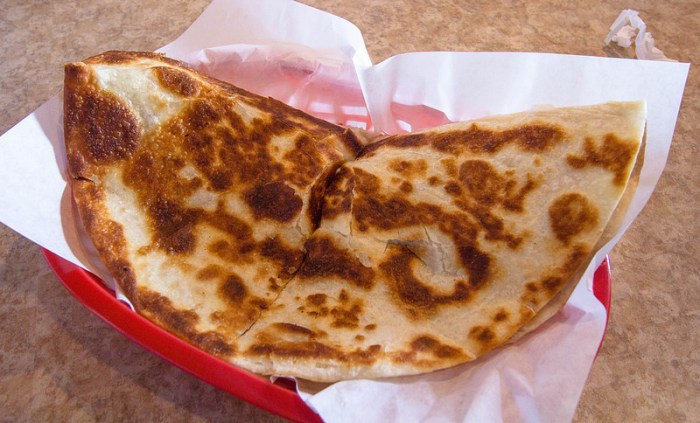
I ordered a quesadilla. La Vic’s Super Flour quesadilla has cheese, sour cream, guacamole, fresh salsa, & your choice of meat. I chose al pastor. The meat offered were carne asada (steak), carnitas (braised pork), pollo (chicken breast), pollo asado (grilled chicken), buche (pork), chille verde (pork in tamatillo sauce), lengua (beef tongue), chorizo (Mexican red sausage), and al pastor (marinated pork). I also ate the quesadilla with La Vic’s famous orange sauce.

quesadilla

A quesadilla is a flour tortilla or a corn tortilla filled with a savory mixture containing cheese, other ingredients, and/or vegetables, (often) then folded in half to form a half-moon shape. This dish originated in Mexico, and the name is derived from tortilla and the Spanish word for cheese queso. The specific origin for the quesadilla was in colonial Mexico. The quesadilla as a food changed and evolved over many years as people experimented with different variations of it. (Wikipedia)

According to Mexican food history, many of the traditional Mexican foods have roots in other cultures as well as the Mexican culture. For instance, quesadillas, a mainstay in Mexico and considered to be authentic Mexican food actually not only have roots in Mexican traditions, but in Spanish as well. The corn tortilla, thought to be quintessential Mexican, is actually native American. (Food Editorials)

Korea: Banchan

Restaurant: Bowl’d
City: Albany, CA

banchan

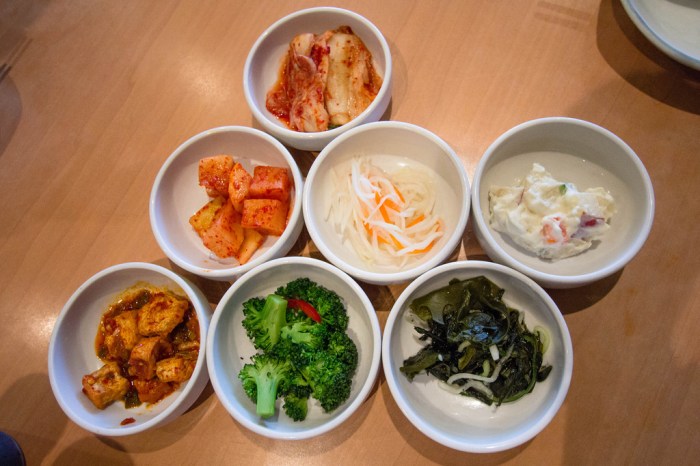
We were served 7 different small dishes; (left to right, top to left) cabbage kimchi, cubed radish (daikon) kimchi, pickled daikon and carrots, potato salad, tofu, broccoli, and seaweed.

Here’s some info about banchan, from Wikipedia:

Banchan (Hangul: 반찬; Hanja: 飯饌; also spelled panch’an) refers to small dishes of food served along with cooked rice in Korean cuisine. This word is used both in the singular and plural. The word Banchan translated into English means side dish.

The basic table setting for a meal called ‘bansang’ (반상) usually consists of bap (밥, cooked rice), guk or tang (soup), gochujang or ganjang, jjigae, and kimchi. According to the number of banchan added, the table setting is called 3 cheop (삼첩), 5 cheop (오첩), 7 cheop (칠첩), 9 cheop (구첩), 12 cheop (십이첩) bansang, with the 12 cheop used in Korean royal cuisine.

Banchan are set in the middle of the table to be shared. At the center of the table is the secondary main course, such as galbi or bulgogi, and a shared pot of jjigae. Bowls of cooked rice and guk (soup) are set individually. Banchan are served in small portions, meant to be finished at each meal and are replenished during the meal if not enough. Usually, the more formal the meals are, the more banchan there will be. Jeolla province is particularly famous for serving many different varieties of banchan in a single meal.

South Korea: Buckwheat Bibimbap

Restaurant: Bowl’d
City: Albany, CA

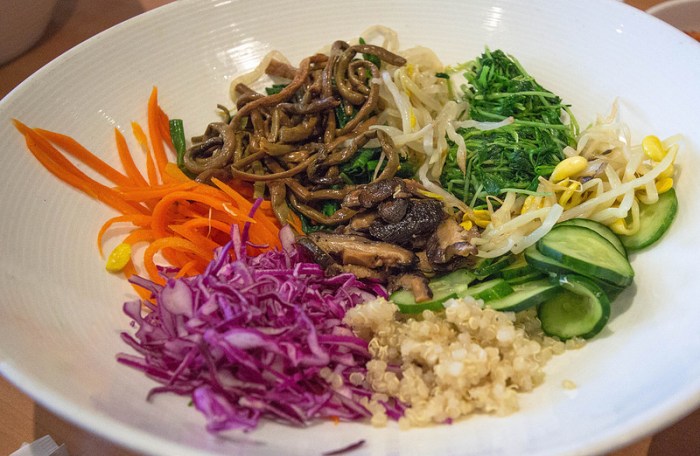
I had Korean food for late lunch with my dad and a friend; my friend picked this dish.

buckwheat bibimbapbuckwheat bibimbap - 2

Buckwheat works (모밀비빔국수) – spinach, mushroom, julienned carrots, bean sprouts, soy bean sprouts, red cabbage, cucumber, quinoa, watercress, with cold buckwheat noodles. no eggs or meat.

This is a variation of bibimbap, where buckwheat noodles are used instead of rice.

Korea: Japchae

Restaurant: Bowl’d
City: Albany, CA

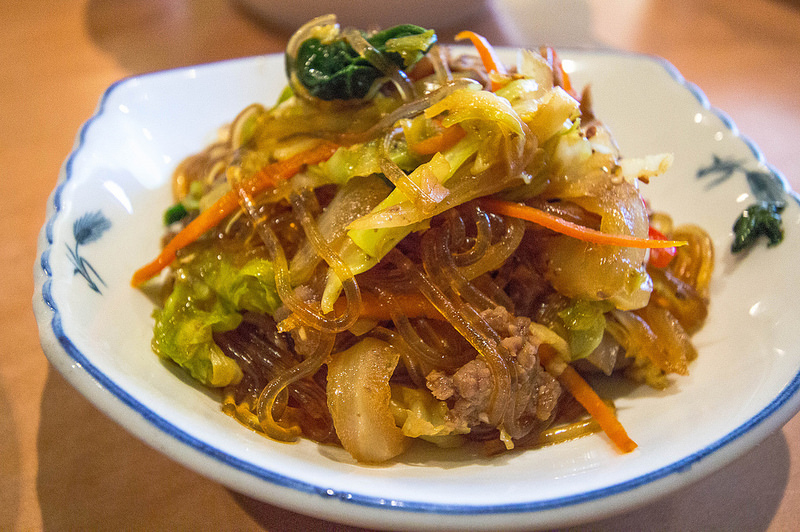
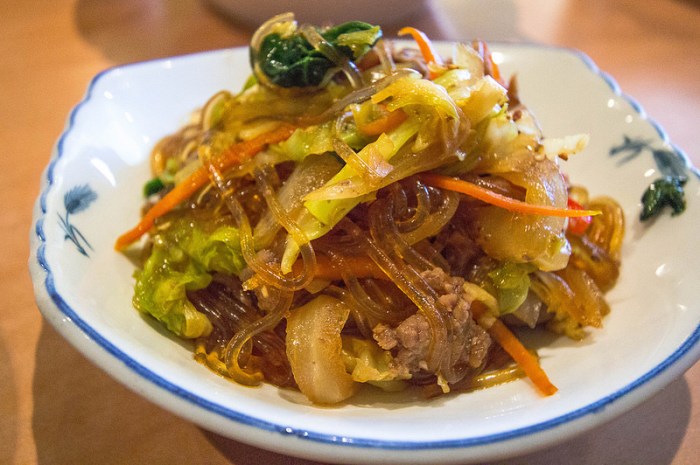
I had Korean food for late lunch with my dad and a friend; my dad ordered japchae.

japchae

Japchae (glass noodles) – stir-fried with thinly-sliced beef, mushroom julienned carrots, and onions. Drizzled with sesame oil.

Below is some information behind japchae, from Wikipedia:

Japchae, jabchae, chapchae, Chop Chae, or Chap Chae is a Korean dish made from sweet potato noodles (called dangmyeon, Korean: 당면), stir fried in sesame oil with various vegetables (typically thinly sliced carrots, onion, spinach, and mushrooms), sometimes served with beef, and flavoured with soy sauce, and sweetened with sugar. It is usually served garnished with sesame seedsand slivers of chili. It may be served either hot or cold.

The name, japchae, comprises the two hanja words; jap (hangul: 잡, hanja: 雜, literally “mixed and stirred”) and chae (hangul: 채, hanja: 菜, literally “vegetables”). Therefore, japchae literally means “a mixture of vegetables.”

Japchae was first made in the early 17th century, when the Joseon Dynasty was reigning in the Korean peninsula. When King Gwanghaegun hosted a big party at his palace, one of his lieges, Yi Chung, created this dish to please the king’s palate. The king liked this dish so much that he rewarded his liege by promoting him to the position of hojo panseo (hangul: 호조판서, hanja: 戶曹判書, equivalent to the Secretary of the Treasury).[2] At the time, japchae was made with vegetables and mushrooms, such as sliced cucumber, shredded mu, and pyogo (shiitake) mushroom. Since the early 20th century, dangmyeon (cellophane noodles made from sweet potato starch) has become an integral and primary ingredient of this variety of japchae.