Harbin: Vanilla Cream Popsicle

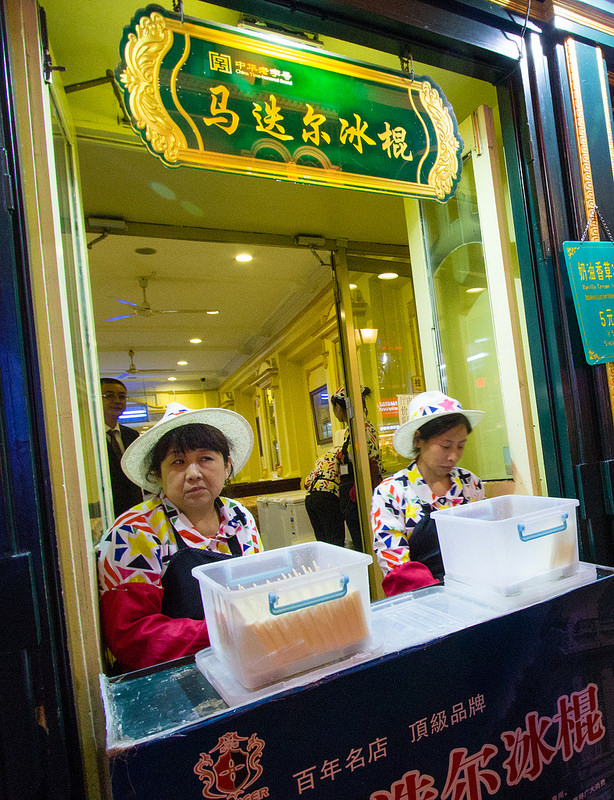
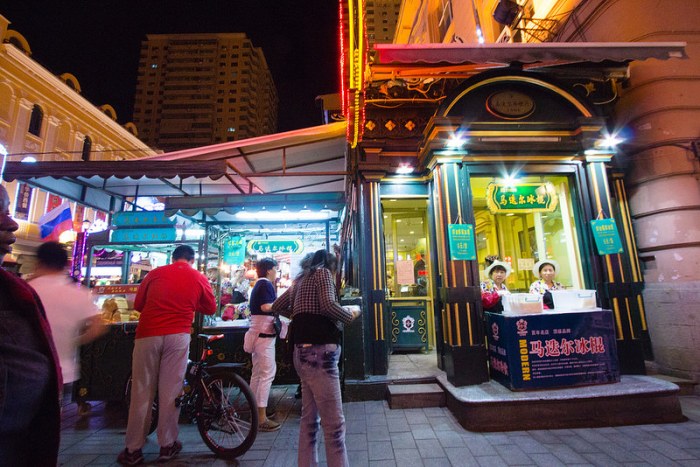
Vendor: 馬達爾冰棍 (Modern Popsicle)
City: 
Harbin, Heilongjiang, China

Zhongyang Street is a pedestrian street full of restaurants, vendors, malls, and stores. The street is blocked for several blocks from vehicles. However, you should keep your eyes and ears alert, for any motorbike or bicycle passing by. The street is bustling with locals and tourists every night!

As we walked down the street, we noticed people were lining up at a popsicle shop. We went to check it out when the queue died down.

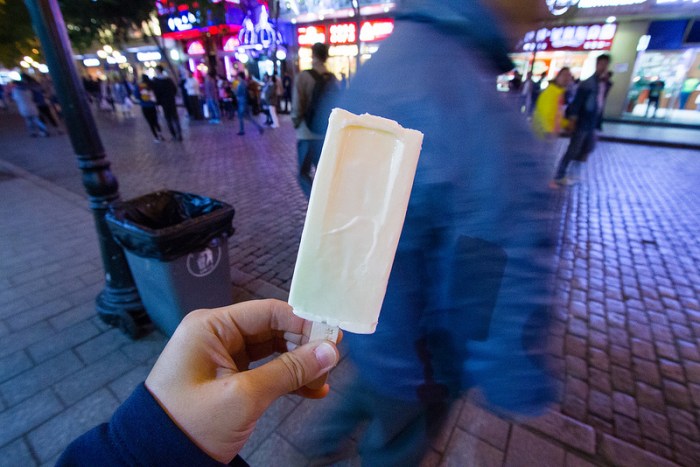
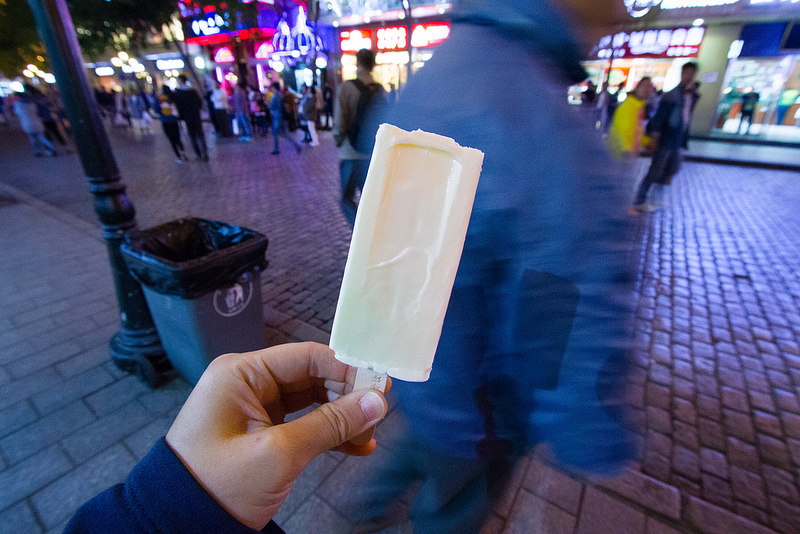
The shop’s name translates to Modern Popsicle, Modern Ice Stick, or Modern Ice Pop. They were selling vanilla cream popsicle (奶油香草冰棍) for ¥5/piece (~$0.80 USD). CNNGo mentioned about a chocolate flavor, but vanilla cream was the only option when we went. The popsicles are sold all year round; people still buy them in the winter when it’s -20°C or below!

popsicle - 1
popsicle - 3
popsicle - 2

It was 4°C (~40°F) at night and the cream had a distinct milky taste that I wasn’t accustomed to… So I could only eat a little more than two-thirds of the popsicle before I had enough. At least this one didn’t melt like my ice cream in Hong Kong!

Northeastern China (Dongbei): Jiaozi & Goutie (Dumplings & Potstickers)

Restaurant: Orient King of Dumplings (东方饺子王)
City: Harbin, Heilongjiang, China

After we arrived at Harbin from Beijing by airplane, we had dinner at Orient King of Dumplings on the way to the hotel.

Orient King of Dumplings is a chain restaurant found in Harbin, Beijing, and other major cities across China. Jiaozi and goutie are unique to Northeast China (Dongbei).

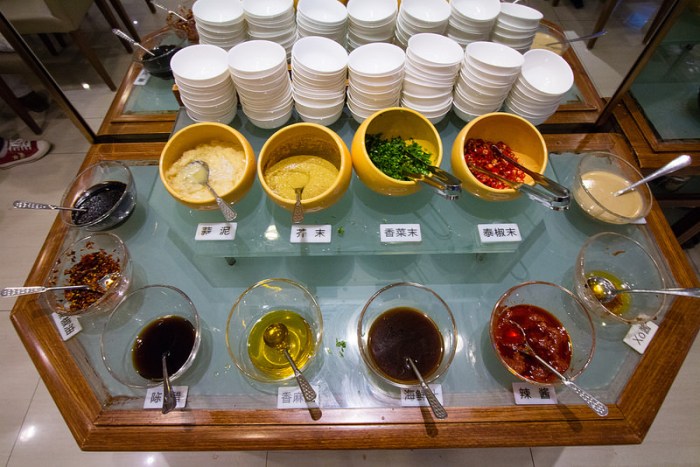
We ordered jiaozi, goutie, and a few other side dishes. Before the dishes arrived, we went over to a sauce bar next to our table, to create our own sauce! There were 12 different sauce and spices to choose from!

orient king of dumplings - sauce bar

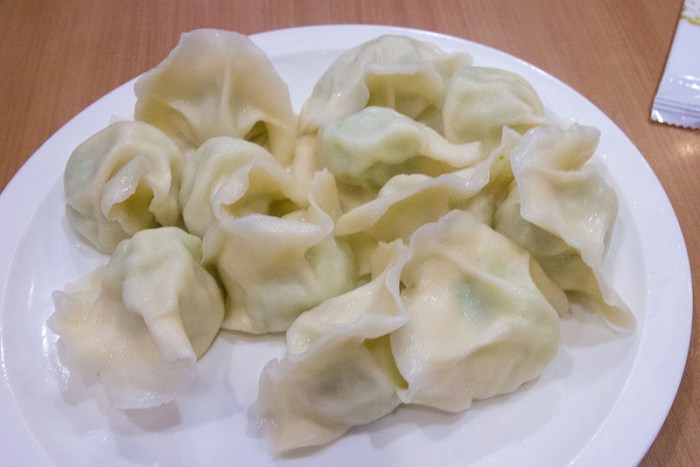
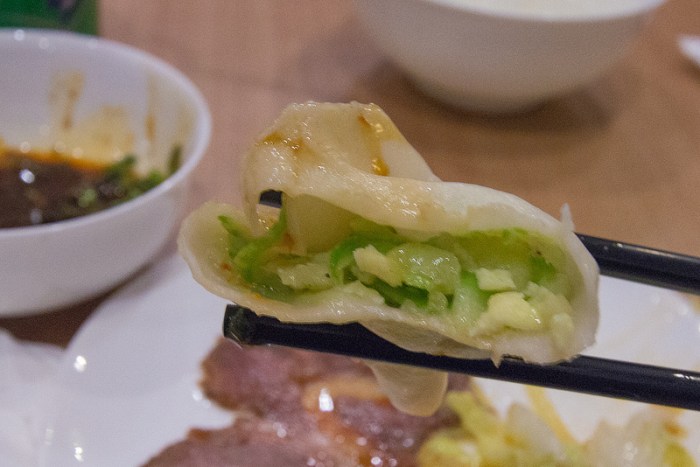
And then the jiaozi (dumplings) arrived! The ones we ordered were filled with vegetables. Harbin is at the Northeastern part of China, where nights can range from cool to cold. The hot jiaozi warmed us up!

jiaozi - 1jiaozi - 2

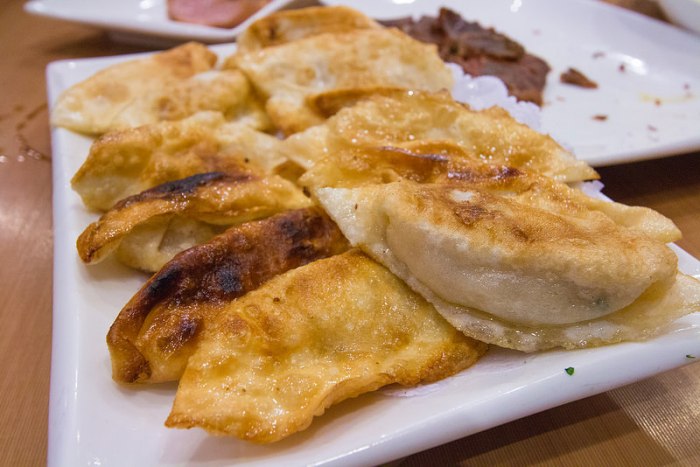
Then the goutie (potstickers) arrived at our table! We had three different kinds, two with meat and one with vegetables. I thought the meat filled goutie tasted way better than the vegetable filled goutie. Northeastern potstickers are flatter and shaped longer than the Cantonese counterpart.

goutie

Eating jiaozi and goutie in China is nothing like eating them in the States. It’s one of the must-eat dishes in Northeastern China. So, don’t miss out on these if you’re in town!

Beijing: Beijing Noodles with Soybean Paste (aka Chinese Spaghetti)

Restaurant: 京味小館 (Jing Wei Xiao Guan)
City: Beijing, China

After lunch (where we had the Peking roast duck), we went to Tiananmen Square and Wangfujing. For dinner, we had thick noodles with soybean paste, which is a Beijing specialty and nicknamed “Chinese spaghetti”.

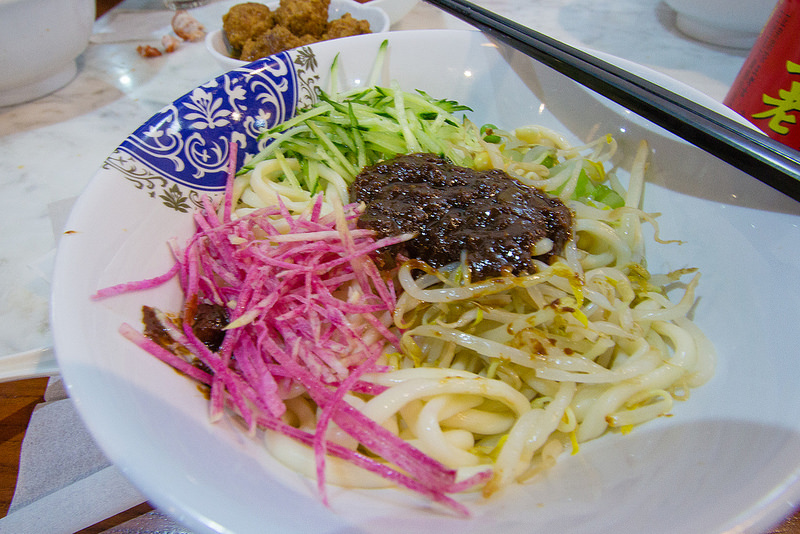
When you order the dish, you start off with the cold noodles as the base ingredient and choose the toppings you want with soybean paste. We all had the same toppings- bean sprouts, cucumber, and red radish.

When I got my bowl, I thought the presentation looked similar to bibimbap!

beijing noodles - 1

All the ingredients were mixed together before eating. It was a little messy because the noodles were thick and soybean paste splattered everywhere!

beijing noodles - 2

After mixing, the dish also reminded me of the Korean dish, jjajangmyun. Chinese spaghetti uses soybean paste while jjajangmyun uses black bean paste. Chinese spaghetti is also not as thick as jjajangmyun.

beijing noodles - 3

This cold dish helped us cool down from the hot and humid Beijing weather. Beijing was humid this weekend, but not crazy humid as Hong Kong.

I found some interesting tidbits about Chinese spaghetti from Beijing Tourism:

Beijing Noodles with Soybean Paste is a northern Chinese dish consisting of thick wheat noodles topped with a mixture of stir-fried ground pork and cucumber with fermented soybean paste. Nicknamed as “Chinese spaghetti”, the noodles has been popular throughout Beijing.

In Summer Solstice, natives in Beijing have a tradition of eating noodles. Food relevant to Summer Solstice always sells well during this period. People can eat as much lettuce and chilled noodles as they wish, because these foods can help stimulate appetites instead of undermining their health in the hot summer days.

Noodles with Soybean Paste Self-made Noodles with Soybean Paste is the Beijingers’ Favorite. Due to their popularity, the price of different kinds of noodles shoots up in Summer Solstice. So people usually prefer to make noodles at home. Hand-made noodles and hand-pulled noodles are very popular. After noodles are cooked, cool them with cold water. and then mix in the fried soybean paste. If you like, you can also mix in some cucumber slices, summer radish slices and soybean sprouts. Two pieces of garlic added can make the noodles savory. Or you can stir the noodles with sesame oil, vinegar and zanthoxylum oil, because noodles with sesame sauce have a distinctive flavor. Many people also prefer to eat hot noodles in the summer. These are called “Guotiaoer”. It is said that eating hot noodles can help dispel evils and the moisture and summer heat inside human bodies.

Beijing: Peking Roast Duck

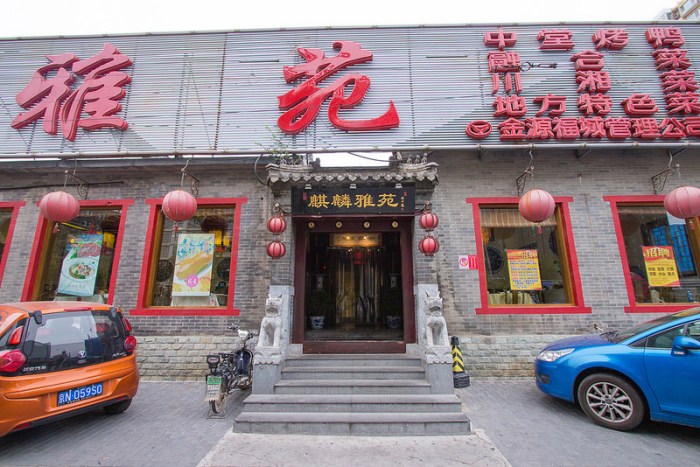
Restaurant: 麒麟雅苑 (Qilinyayuan)
City: Beijing, China

In the morning, three of us attended an English service at Haidian Christian Church. Afterwards, we walked to a restaurant nearby for delicious Peking roast duck!

qilinyayuan storefront

When we walked inside, there was a seating room with tables and a large window separating the room from the duck oven!

qilinyayuan oven

We ordered roast duck (obviously). It was presented in an elegant way I’d never seen before, especially at Chinese restaurants in the SF Bay Area.

qilinyayuan - 1

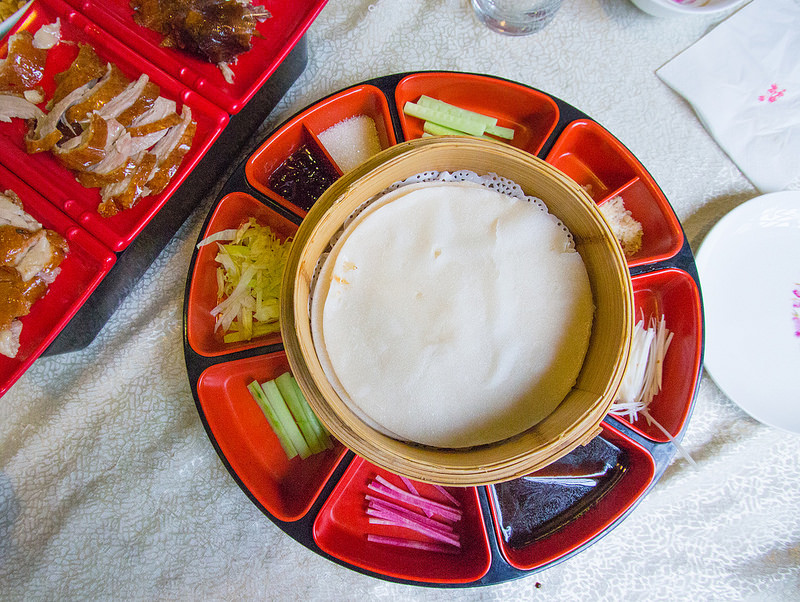
A number of ingredients surrounded a basket of Peking duck wrappers (or ‘pancakes’ as some folks call ’em). Lettuce, cucumber, turnip, onion, hoisin sauce, salt, minced garlic, and prune jam.

qilinyayuan - 2

Since the wrappers were thin, some were inseparable and had two layers stuck together. But that didn’t take away the fun in making my wrap!

qilinyayuan - 3 qilinyayuan - 4

The wrappers stayed hot for the duration of our meal. We were curious if there was anything beneath the wrapper basket, so we lifted it up and out came a lot of steam…

qilinyayuan - 5

A hot packet in hot water!!! Ingenious.

I’ll have to admit, Peking duck is way better in Peking (now called Beijing). If you’re in the city, don’t miss out on getting delicious roast duck!

China: Soy Milk w/ Red Bean

Restaurant Chain: Yonghe King (永和大王)
City: All major cities in China

I was in Hong Kong for a day, then flew to Beijing to meet up with my pastor for a China tour.

Yonghe King is a restaurant chain in China, specializing in Taiwanese-style foods. I first went to this restaurant in Beijing, and again in Shenyang. I ordered cold soy milk with red bean, everytime I went to Yonghe King!

soy milk with red bean

The soy milk itself is plain and unsweetened. The red bean helped sweeten the drink a bit. You also have the option of ordering hot soy milk, but I prefer drinking it cold if it’s hot outside.

Read on for some more info about Yonghe King, from Wikipedia:

Yonghe King (Chinese: 永和大王; pinyin: yǒnghédàwáng) is a Chinese fast-food restaurant that specializes in noodles. The headquarters are on the fourth floor of Building B of the Rainbow Hongqiao Centre (莱茵虹桥中心) in Minhang District, Shanghai.

Yonghe Dawang opened its first restaurant in Shanghai on December 12, 1995. Today Yonghe has branches throughout China, with over 70 restaurants in major Chinese cities including Shanghai, Beijing, Shenzhen, Hangzhou, Jinan, and Suzhou. In 2004, Yonghe King merged with one of the largest fast-food chain in the Philippines, Jollibee, which is owned by Chinese Filipino Mr. Tony Tan Caktiong.

The original logo of the chain was that of a smiling face against a red background, which was strikingly similar to the Colonel Sanders logo used by KFC. The Associated Press stated that the former logo was “a smiling, grandfatherly Chinese man”. In 2005 the chain changed its logo to that of a steaming bowl of soup.

Hong Kong: Ice Cream @ Mobile Softee

Vendor: Mobile Softee
City: Stanley, Hong Kong

My friend drove me around Hong Kong Island, and when we drove through Stanley, I recognized an iconic truck I read on this blog prior to the trip.

We had just dried up from getting soaked wet from a sudden downpoar at Big Wave Bay two hours earlier. So getting ice cream sounded like a fantastic idea! My friend parked and stayed in her car while I went across the street to get ice cream. An ice cream cone was $9 HKD (~$1.16 USD).

mobile softee - 1 mobile softee - 2

I got two soft ice cream, one for myself and one for my friend. The ice cream had already started to melt immediately after I received it! So I had to rush to my friend to give hers, take a pic of mine, and eat it all within a minute! The ice cream was soft, while the cone was thin and very crispy. Ahh, it was very refreshing in the hot and humid weather.

Next Stop Hong Kong has some detailed background info on Mobile Softee (formerly called Mister Softee):

Hong Kong is famous for its many street food snacks which are cheap, simple and available mostly throughout the year. Unfortunately, many street food stalls and hawkers disappeared or vanished due to Hong Kong’s continuously strive for modernization.

However, when you walk and wander around in Hong Kong you might have already noticed the uniquely designed white, red and blue vans “Mister Softee” (nowadays called “Mobile Softee”) with the sweet, cute music-box style melody coming out of the speakers of the vans. These vans are not only selling ice-cream in Hong Kong, but also spreading the special memories and Hong Kong culture to everyone.

After decades, Mobile Softee still use the famous and classic “Blue Danube” melody to attract attention. Once you hear this “Blue Danube” melody it is hard to get it out of your head again and if you walk in the famous sightseeing spots such as Victoria Harbor in Tsim Sha Tsui or through the crowded streets in Mong Kok, you can hear the Mister Softee melody from far away. As soon as the melody appears people start lining up in front of the red, white and blue ice-cream van waiting for their favorite street snack: ice-cream.

When you talk with locals you will easily understand why Mister Softee is so popular. Although, Mister Softee sells only four products (Soft Ice-Cream, Nutty Drumstick, Large Cups and Jumbo Orange), every Hong Kongnese knows Mister Softee and has their own set of (childhood) memories connected with this special ice-cream vendor. Ice-cream is in a sense one of the sweetest memories.

The Story of Mister Softee or Mobile Softee

The “Mister Softee” company was founded in Philadelphia in 1956 and is the largest soft ice-cream company in America. In the late 1970s, the unique Mister Softee Ice-Cream Vans have been imported from England and the Mister Softee success story began. In 1978, Hong Kong Government decided to stop issue hawking licenses. As a result of this law change resulted that existing licenses cannot be transferred to other or new vehicles anymore. Unfortunately there are only 14 Mister Softee Ice-Cream vans in Hong Kong. The story behind this is actually quite interesting and unique – a typical Hong Kong story. The Mister Softee Ice-Cream Vans you see on Hong Kong’s streets today are the vans from the 1970s. Having this unique law still applied probably adds to the charm and nostalgia feeling of Mister Softee. In 2010, “Mister Softee” changed the name to “Mobile Softee”.

Where to Find Mister Softee?

Literally citywide. Mister Softee Ice-Cream Vans can be found next to schools and train stations on weekdays and appear more often in the popular sightseeing spots such as Tsim Sha Tsui, Mong Kok, Central, Temple Street or Victoria Park on weekends and holidays. Simply listen and hear if you can hear the catchy ice-cream tune or spot the eye-catching Mister Softee Van. Nowadays, you will have higher chance to see them in Golden Bauhinia Square Wan Chai, Star Ferry Pier Tsim Sha Tsui and near IKEA store next to Sha Tin MTR station.

The Damage or how much do I need to pay for it?

The Soft Ice-Cream starts at $8.0 HKD (hard to believe that the same product was only $0.5 HKD 30 years ago). If you don’t have enough change, they also accept Octopus payment.

Hong Kong: Yum Cha @ Master Chan Dim Sum Specialists

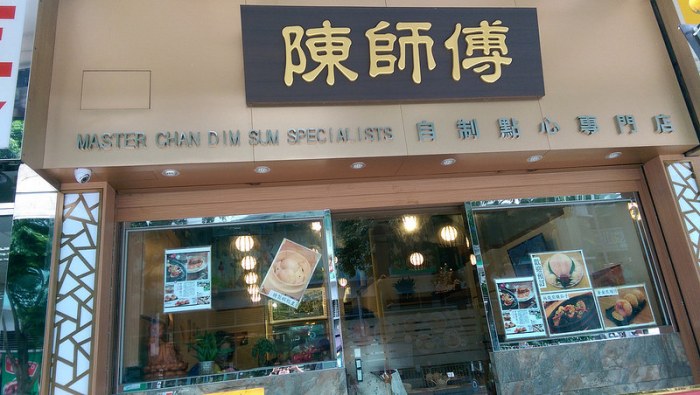
Restaurant: Master Chan Dim Sum Specialists (陳師傅點心專門店) 
Address: G/F, 41 King Fuk Street
City: San Po Kong, Hong Kong

I left SFO at ~1am Thursday and arrived at HKG at ~6:30am Friday. This was my first overseas trip (!!), and I flew the Singapore Airlines because that’s what all my HK friends suggested (with Cathay as the second choice).

The humidity in Hong Kong is no joke- it was freakin’ humid! I was wearing comfy pants and a light sweater for SF night weather and the plane ride (planes with long flight tend to turn down the temp so everyone’s covered with a blanket). When I stepped out of the plane in Hong Kong, the airport was midly humid with AC on. But, when I stepped out of the airport, the humidity just hit me with a blast. I just wanted to take a shower and change to shorts immediately.

So.. what’s the first thing you do after a 12-hr flight to Hong Kong? Wash up…. and then EAT!

I stayed in San Po Kong with family friends, and after I showered, we went to a dim sum place right across their flat. There’s literally a restaurant or convenient store on every block, so you’ll never starve.

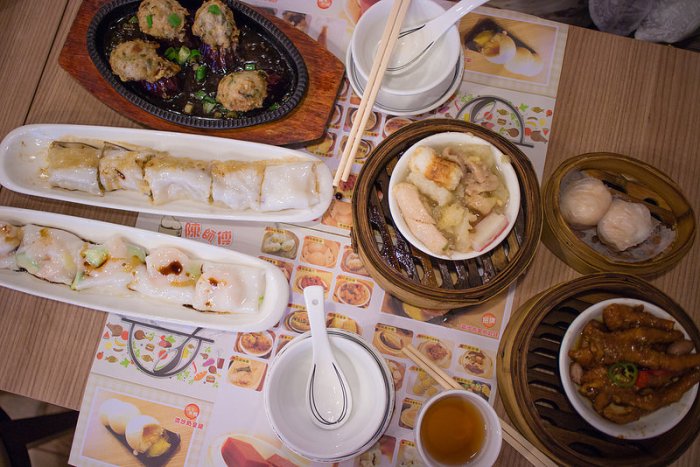
master chan dim sum specialists

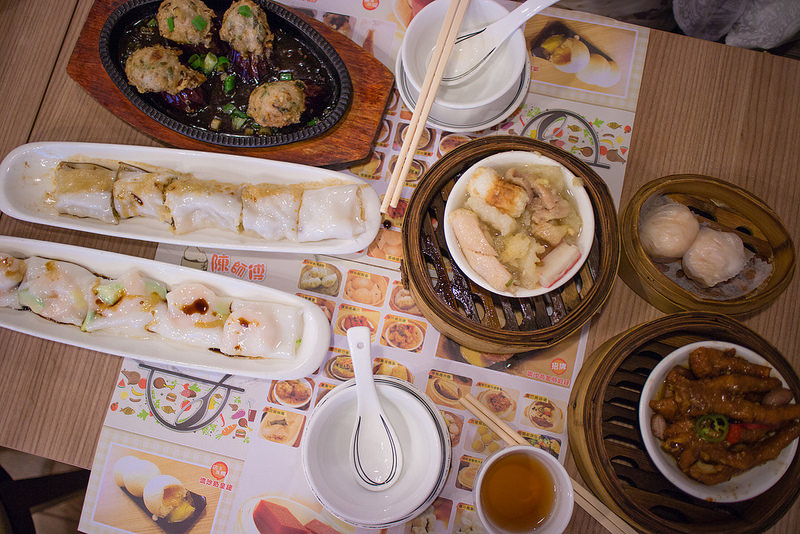
Dim sum. There’s nothing like getting dim sum in Hong Kong (and I’m sure, in Guangdong). It beats dim sum in the States. It’s not greasy and it tastes way better. You can even eat dim sum by yourself, as the portions are much smaller!

master chan dim sum specialists - 1

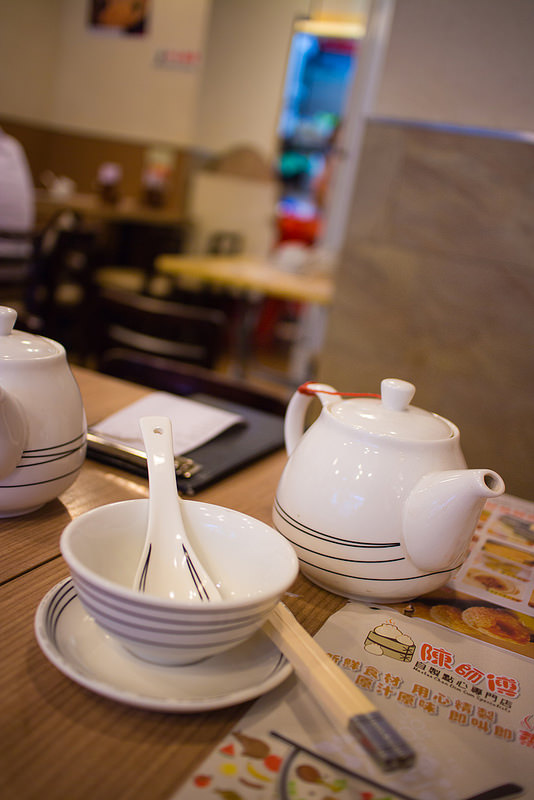
The menu is on the paper mat. It was in Chinese, so I could only look at the pictures, but it was too small to see what kind of stuffing the dish had. My friend did her best translating some of the dishes that stood out.

master chan dim sum specialists - 2

We ordered six dishes. I was surprised to see a small portion of har gao; there are usually at least 4 in a basket in the States. All dishes were yummy.

master chan dim sum specialists - 3

If you’re in Hong Kong, be sure to get dim sum. There’s many dim sum places in each city. Din Tai Fung and Tim Ho Wan are both Michelin Star restaurants, if you want to check those out as well.

Netherlands: Stroopwafel

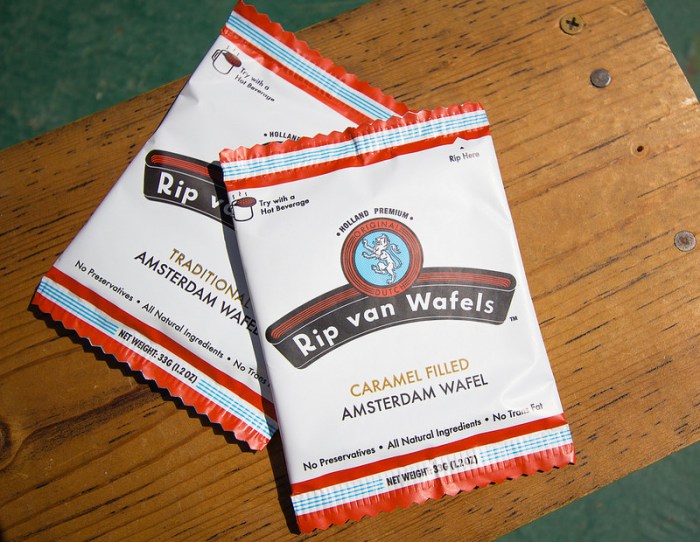
A friend gave my sister and I packs of stroopwafel, or wafel for short, from Rip van Wafels.

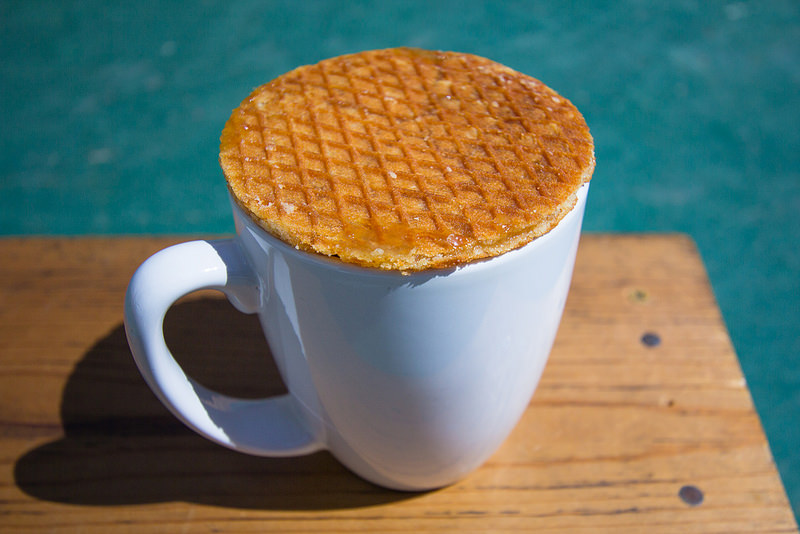
They’re basically thin waffles with a layer of syrup in the middle, and eaten with a cup of coffee.

stroopwafel - 1

A wafel is placed on the top of your cup to let the steam warm up the syrup or filling, before consumption! The wafel is gooey and chewy, yet slightly crispy at the same time.

stroopwafel - 2

Rip van Wafels is based in San Francisco, and folks in the SF Bay Area can get them from Whole Foods, Peets, and Bi-Rite (the market, not the creamery). You can also order online, if you’re not in the area.

More info about stroopwafel, from Wikipedia:

A stroopwafel (Dutch pronunciation: [ˈstroːpʋaːfəl]) (English translation: syrup waffle, treacle waffle, or caramel waffle; lit “syrup waffle”) is a waffle made from two thin layers of baked dough with a caramel-like syrup filling in the middle. They were first made in Gouda in the Netherlands. Large versions are sold in the streets as a snack.

The stiff dough for the waffles is made from flour, butter, brown sugar, yeast, milk, and eggs. Medium sized balls of dough are put into a heated waffle iron and pressed into the required uniformly thin, round shape. After the waffle has been baked, and while it’s still warm, it is split into thin layered halves. The warm filling, made from syrup, brown sugar, butter, and cinnamon, is spread between the waffle halves, gluing them together.

The stroopwafel originates from Gouda in the Netherlands. It was first made during the late 18th century or early 19th century by a baker using leftovers from the bakery, such as breadcrumbs, which were sweetened with syrup. One story ascribes the invention of the stroopwafel to the baker Gerard Kamphuisen, which would date the first stroopwafels somewhere between 1810, the year when he opened his bakery, and 1840, the year of the oldest known recipe for syrup waffles. In the 19th century, there were around 100 syrup waffle bakers in Gouda, which was the only city in which they were made until 1870. After 1870 they were also made at parties and in markets outside the city of Gouda. In the 20th century, factories started to make stroopwafels. In 1960, there were 17 factories in Gouda alone, of which four are currently still open.

China & Vietnam: Mooncake w/ Mixed Nuts

Mid-Autumn festival is just around the corner! Some Chinese and Vietnamese markets started selling mooncakes as early as July!

My mom picked up a box of mooncake from 99 Ranch. She likes nuts, so she picked up a set with mixed nuts and egg yolk.

mooncake - 1

This version of mooncake is considered as a ‘contemporary style’ from China and Vietnam. The Chinese and Vietnamese both celebrate Mid-Autumn festival, so several boxes at the store have both languages written on it.
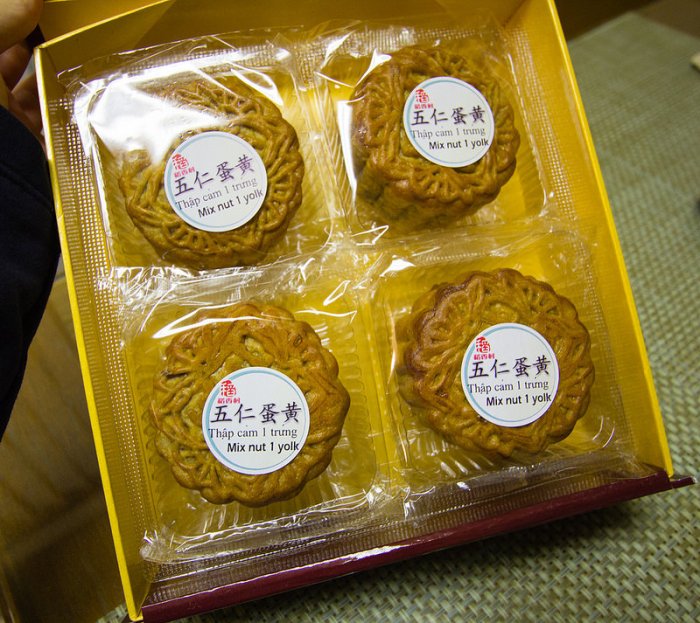
mooncake - 2mooncake - 3

The outer surface of the mooncake has either Chinese characters or an image on it.

mooncake - 4

My favorite part of mooncake is the yolk! I dislike nuts, so this particular kind of mooncake wasn’t for me. I did have a slice, though.
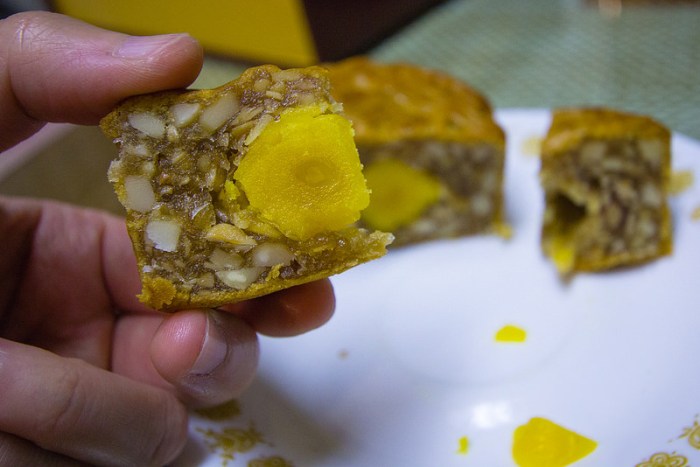
mooncake - 5

What’s your favorite mooncake? Mine is the Cantonese style, with just the lotus seed paste and yolk. It’s simple, but yet smooth and rich.

I actually got to try two different types of mooncake in Hong Kong two weeks later. Unfortunately, I was in a hurry to the airport and ate it in a taxi and on the plane….so no pics of it! :(

Here’s some info on mooncake, from Wikipedia:

Mooncake (simplified Chinese: 月饼; traditional Chinese: 月餅; pinyin: yuè bĭng) is a Chinese bakery product traditionally eaten during the Mid-Autumn Festival (Zhongqiujie). The festival is for lunar worship and moon watching, when mooncakes are regarded as an indispensable delicacy. Mooncakes are offered between friends or on family gatherings while celebrating the festival. The Mid-Autumn Festival is one of the four most important Chinese festivals.

Typical mooncakes are round pastries, measuring about 10 cm in diameter and 3–4 cm thick. This is the Cantonese mooncake, eaten in Southern China in Guangdong, Hong Kong, and Macau. A rich thick filling usually made from red bean or lotus seed paste is surrounded by a thin (2–3 mm) crust and may contain yolks from salted duck eggs. Mooncakes are usually eaten in small wedges accompanied by Chinese tea. Today, it is customary for businessmen and families to present them to their clients or relatives as presents, helping to fuel a demand for high-end mooncake styles. The energy content of a mooncake is approximately 1,000 calories or 4,200 kilojoules (for a cake measuring 10 cm (3.9 in)), but energy content varies with filling and size.

Most mooncakes consist of a thin, tender pastry skin enveloping a sweet, dense filling, and may contain one or more whole salted egg yolks in their center as the symbol of the full moon. Very rarely, mooncakes are also served steamed or fried. Traditional mooncakes have an imprint on top consisting of the Chinese characters for “longevity” or “harmony”, as well as the name of the bakery and the filling inside. Imprints of the moon, the Lady Chang’e on the moon, flowers, vines, or a rabbit (symbol of the moon) may surround the characters for additional decoration.

Over time, both the crusts and the composition of the fillings of mooncakes have diversified, in particular due to a commercial need to drive up sales in the face of intense competition between producers and from other food types. Part of these trends are also to cater to changing taste preferences, and because people are more health-conscious. Most of these contemporary styles were therefore especially prominent amongst the cosmopolitan and younger Chinese and amongst the overseas Chinese community, although traditional mooncakes are often sold alongside contemporary ones to cater to individual preferences.

Fillings in contemporary style mooncakes has diversified to include just about anything which can be made into a paste. Mooncakes containing taro paste and pineapple, which were considered novelty items at their time of invention have in recent years become commonplace items. In addition, filling with ingredients such as coffee, chocolate, nuts (walnuts, mixed nuts, etc.), fruits (prunes, pineapples, melons, lychees, etc.), vegetables (sweet potatoes, etc.), and even ham have been added to give a modern twist to the traditional recipes. It is also increasingly popular to change the base of the paste to a custard-style.
Ethiopia & Eritrea: Injera

Restaurant: Enssaro null
City: 
Oakland, CA

My sister, two friends, and I decided to try something ‘exotic’ and had lunch at an Ethiopian restaurant by Lake Merritt. Finding free parking around Lake Merritt on a weekend is no small feat! I drove around for an hour until I gave up and parked across the restaurant at a parking meter. The parking meters have been updated with today’s tech, so it accepts credit cards! Hooray for carrying no coins!

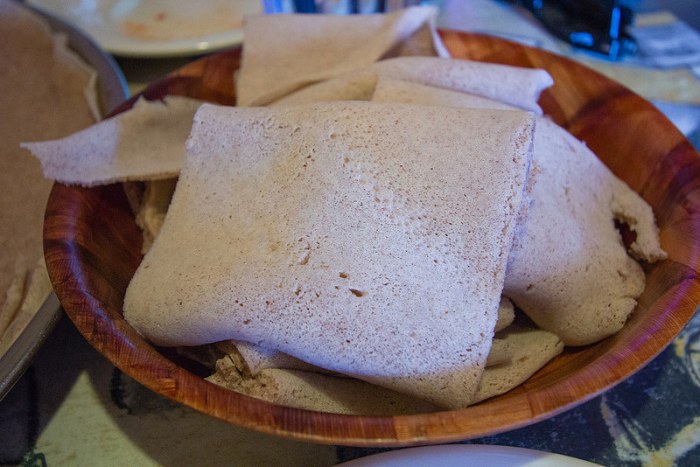
We ordered four different dishes, and one appetizer. Our table was given bowl of whole wheat injera.

injera

None of us had tried Ethiopian food before (in a restaurant setting). When we took a bite of injera for our first time, we were all intrigued by the taste and texture of it!

The taste was similar to sourdough bread, like those used in bread bowls. The texture was soft, yet slightly sticky and spongy. One side of injera was smooth, while the other side was sticky and spongy.

Ethiopians and Eritreans eat with their hands, and use injera to grab and scoop the food off the plate. The sticky and spongy side of injera helps with grabbing the food, so the food doesn’t fall out.
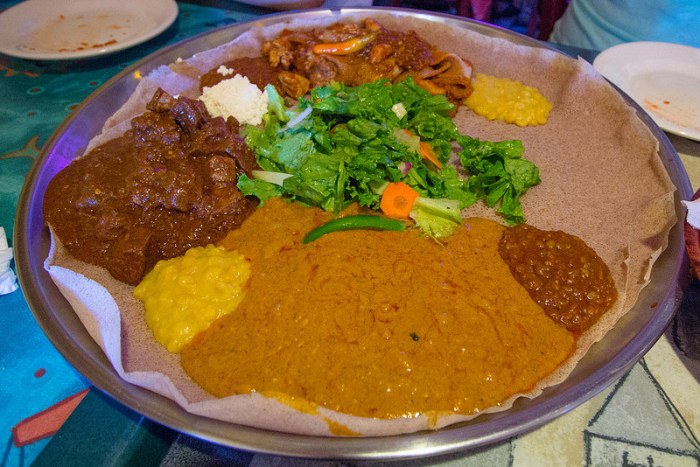
At Enssaro, injera was also used as a lining on a large round plate to hold the food in place.

injera plate

Here’s more info about injera, from Wikipedia:

Injera (Amharic, Tigrinya: እንጀራ ənǧära [ɨndʒəra], sometimes transliterated as enjera) is a sourdough-risen flatbread with a unique, slightly spongy texture. Traditionally made out of teff flour, it is a national dish in Ethiopia and Eritrea.

The most valued grain used to make injera is from the tiny, iron-rich teff. However, its production is limited to certain middle elevations and regions with adequate rainfall, so it is relatively expensive for the average household. As many farmers in the Ethiopian highlands grow their own subsistence grain, wheat, barley, corn, and/or rice flour are sometimes used to replace some or all of the teff content. There are also different varieties of injera in Ethiopia, such as nech (white), kay (red), and tikur (black).

In Eritrea and Ethiopia, a variety of stews, sometimes salads (during Ethiopian Orthodox fasting, for which believers abstain from most animal products) or simply more injera (called injera firfir), are placed upon the injera for serving. Using one’s right hand, small pieces of injera are torn and used to grasp the stews and salads for eating. The injera under these stews soaks up the juices and flavours of the foods and, after the stews and salads are gone, this bread is also consumed. Injera is thus simultaneously food, eating utensil, and plate. When the entire “tablecloth” of injera is gone, the meal is over.