Hong Kong: Honey Walnut Shrimp

Restaurant: Fortune Kitchen
City: Fremont, CA

I had Shanghainese for dinner with my parents and relatives last night. My sister is back home for spring break, so we had to get the honey walnut shrimp! We rarely order this dish unless we have a few young adults/kids in our party, because shrimp has high cholesterol. The honey glazed walnuts are so good; walnuts are supposedly good for your brain!

Many Chinese restaurants in the US carry the honey walnut shrimp dish, as it is very popular with Americans. Several restaurants will carry multiple regional dishes. While Fortune Kitchen’s dishes are mostly Shanghainese, they carry a few Dongbei (Northeast China) and Cantonese/HK style foods.

I’ve seen the shrimps cooked in two ways; deep fried or pan fried. The honey walnut shrimps are usually on a bed of deep fried (white) rice noodle. The honey walnut shrimps we ordered here were on a bed of lettuce- much healthier than the white rice noodles! Some restaurants will have it on a bed of broccoli.

IMG_20140323_193256

Honey walnut shrimps is an HK invention that made it’s way to the U.S. when a lot of chefs came over in the early-mid 90s, probably marginally related to the ’97 HK change over to China. Like most of these trends coming that way, landed on the West Coast first and then NYC. One sign it happened this way is it showed up first at banquets, i.e., high to low trickle down. (Chow)

In Cantonese, it is translated to be “Hop Toh Ha” which means walnut shrimp. (FineChinaGirl)

Vietnam: Bò Kho

Restaurant: Cam Huong Sandwiches
City: Union City, CA

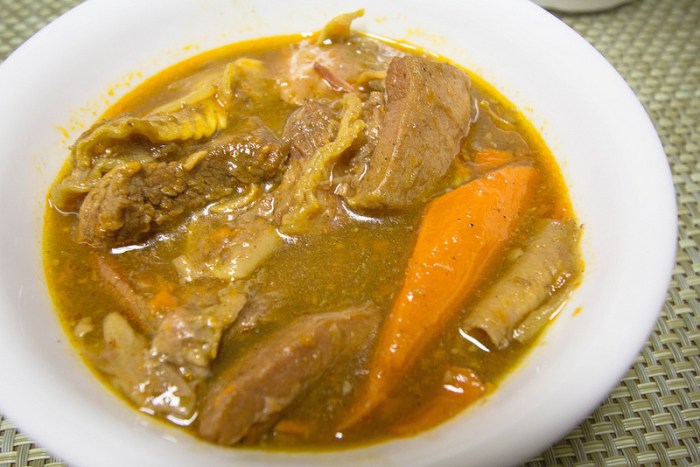
I had some bò kho to-go for dinner last night! We had some leftover, so I had it for lunch as well! This is my favorite kind of beef stew; it’s not thick, while very fragrant and savory. I love eating this dish with noodles and/or baguette. :D

bo kho

Continue reading

Iran: Ghormeh Sabzi

Restaurant: Arya Restaurant
City: Cupertino, CA

One awesome thing about having diversity in the workplace is the opportunity to try foods from a coworker’s ethnicity! One of my coworkers, Beeta, is Iranian American. She also has a YouTube channel, by the name of Stationary Bee, where she reviews various stationaries; check it out! Today, we got to try foods from Beeta’s roots!

ghormeh sabzi

Ghormeh sabzi – sautéed vegetables cooked with dried limes, beef, red kidney beans, and special seasonings, served with a side of basmati rice. Continue reading

Iran: Zereshk Polo

Restaurant: Arya Restaurant
City: Cupertino, CA

One awesome thing about having diversity in the workplace is the opportunity to try foods from a coworker’s ethnicity! One of my coworkers, Beeta, is Iranian American. She also has a YouTube channel, by the name of Stationary Bee, where she does reviews of various stationaries; check it out! Today, we got to try foods from Beeta’s roots!

zereshk polo - 1zereshk polo - 2

Zereshk polo – basmati rice mixed with barbarries and saffron, served with chicken. Zereshk translates to barberries, while polo translates into rice. The barberry has a similar taste to cranberry, but it’s sweet yet tarty, and much softer. The chicken served with the zereshk polo is shown below.

chicken served with zereshk polo

Continue reading

Japan: Hi-Chew

Market: Daiso
City: Union City, CA

I don’t remember when I got hooked on Hi-Chews… but I can assure you that they are waaaaay better than Starburst! It’s softer and more fun to chew on. I have a bowl of Hi-Chews in my office, and it empties out fast!

Here in the SF Bay Area, you can find bags of Hi-Chews at many Asian markets. Costco even carries it! However, the the bags won’t have peach or cherry flavors. Daiso sometimes carries Hi-Chews by the stick. The flavors available here are green apple, strawberry, grape, mango, banana, melon (cantaloupe), peach, and cherry.

Have you tried other flavors, or do you have other flavors available near you? Which is your favorite flavor?

hi-chew 1

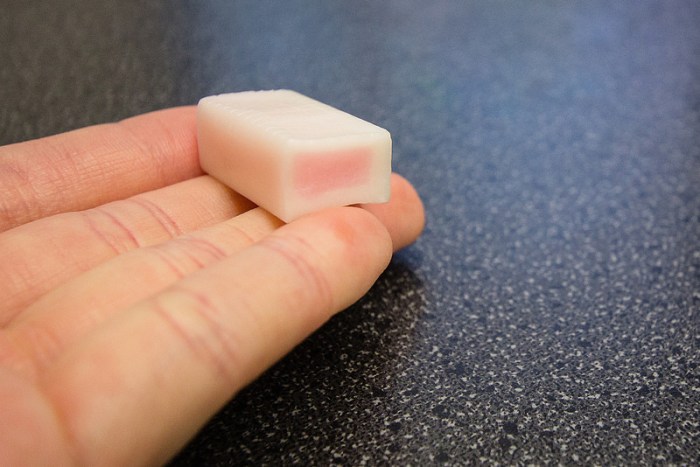
Shown below is a close-up of the peach Hi-Chew.

hi-chew 2

Continue reading

Vietnam: Nước Mía

Restaurant: Lee’s Sandwiches
City: San Jose, CA (Downtown)

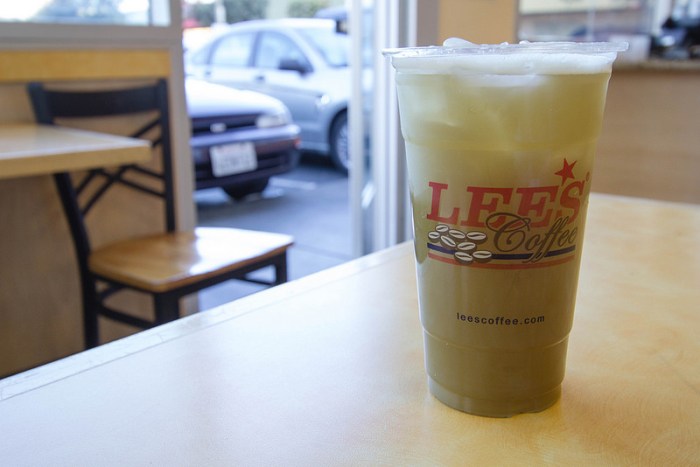
I was in Downtown San Jose to attend a food photography workshop taught by Chris Rochelle of Chow, at the SJ Museum of Art (yes, such a class exists!). Afterwards, I went to Lee’s Sandwiches to grab nước mía (sugarcane drink) I’d get often while attending SJSU. The drink was so refreshing in the balmy weather!

sugarcane drink - 1 sugarcane drink - 2

Sugarcane juice, called nước mía, is very popular in Vietnam as a refreshing drink in the hot climate. Kumquat juice, a citrus, is often added to balance the sweetness. It is available at numerous small street stalls and is often sold alongside other popular Asian beverages. It was common for sugar cane juice to be sold in small plastic bags filled with ice, with the open end attached around a drinking straw by a rubber band. It is now more commonly sold in disposable plastic cups. (Wikipedia)

Little did I know that sugarcane drink is also consumed in several other countries; there are many other places where it’s grown. Each country seems to have a slight variation of the drink, where either ginger, lime, kumquat, pineapple, salt, etc. are added. I, however, like it plain!

United States: Pear Cranberry Pie

Bakery: Niles Pie Company
City: Union City, CA

Happy π day! I grabbed a pie on my way to work this morning.

pear cranberry pie - 1 pear cranberry pie - 2

A mix of Oregon Comice pears, house-made candied ginger, and cranberry jam. Pure Madagascar vanilla pulls it all together. Butter crumble topping.

Pear cranberry pie is ubiquitous in the United States, but here’s what I found out about cranberries, from Everything Pies:

Cranberries are a native fruit to North America. They were used as a staple as early as 1550. Cranberries are eaten fresh, ground, or mashed with cornmeal and baked into bread.

Maple sugar or honey was used to sweeten the berry’s tangy sour flavor.

In 1620 the Native Americans taught the Pilgrims how to use cranberries. The German and Dutch settlers named the berry “crane-berry” because it appeared to be the favorite food of cranes and the blossom resembled the neck color of an English cranes.

Later on craneberry was shortened to cranberry.

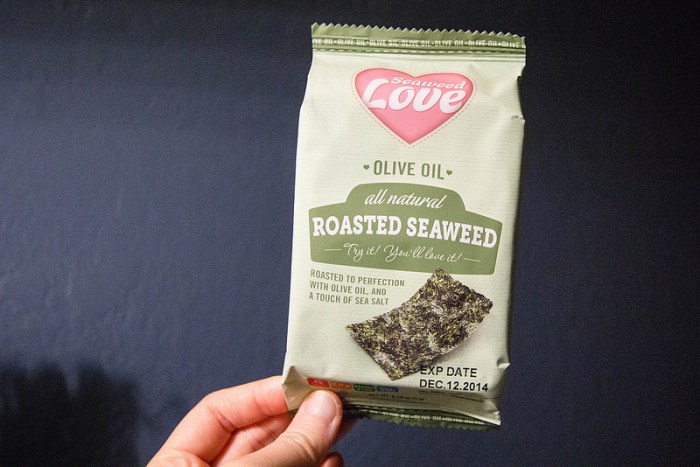
Korea: Roasted Seaweed

On Saturday, I attended Women Techmakers Summit at Googleplex! It was a conference for women in the tech field (both students and already in the industry), where female technology leaders shared about their work and background.

Women are currently a minority in the tech field. When I was getting my bachelors in computer engineering, there’d be around 2 to 5 females and 15 to 20 males in each CmpE class. I also graduated with 4 other females, among 15+ males.

I got to hear Sowmya Subramanian (Engineering Manager, YouTube), Yoky Matsuoka (VP of Technology, Nest Labs), Megan Smith (VP of Google[x], Google), Raquel Romano (Software Engineer, Google), Kimber Lockhart (Senior Director of Engineering, Box), and a few other females speak about their work and obstacles. I left the conference feeling inspired!

I snagged a package of roasted seaweed during one of the sessions…and ate it tonight! :D

roasted seaweed roasted seaweed - 2

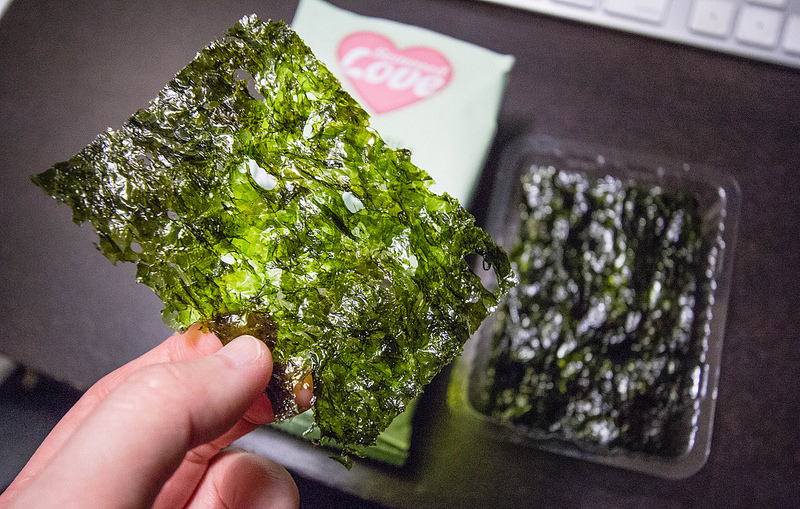
Roasted seaweed typically comes in a pack like the one above. You can find them in many Asian markets, and even at Costco! They’re light, crispy, slightly salty, and addictive! I could snack on it all day… Roasted seaweed also goes really well with rice. Continue reading

Japan: Manjū

Bakery: Shuei-Do Manju Shop
City: San Jose, CA

Shuei-Do Manju Shop is a block down the street from Gombei, so I got some Japanese sweets after lunch on Friday. Below is the set of 6 sweets I picked, which was a combination of daifuku and manju.

manju & mochi

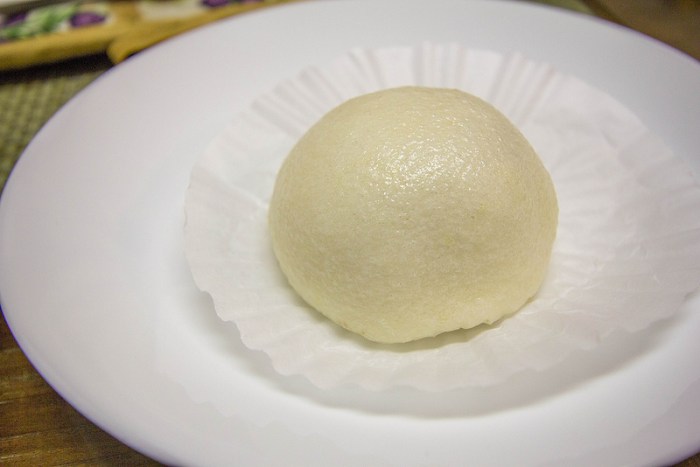
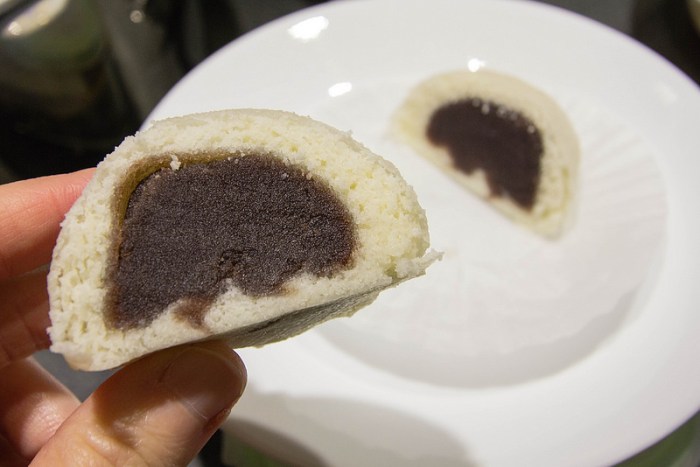
Here, we have the white manju; steamed wheat flour with smooth azuki (red) bean.

manju - 1 manju - 2

Below is some info about manjū, from Wikipedia:

Manjū (饅頭, まんじゅう) is a popular traditional Japanese confection. There are many varieties of manjū, but most have an outside made from flour, rice powder and buckwheat and a filling of anko (red bean paste), made from boiled azuki beans and sugar. They are boiled together again and kneaded. There are several varieties of bean paste used including koshiantsubuan, and tsubushian.

Manjū was derived from a type of mochi (蒸餅), or pounded rice cake, that has existed in China for a long time. It was originally called mantou in Chinese, but became known as manjū when it came to Japan. In 1341, a Japanese envoy that came back from China brought back manjū with him and started to sell it as Nara-manjū. It is said that this was the origin of Japanese manjū. Since then, it has been eaten for nearly 700 years by Japanese people. Now it can be found in many Japanese sweet shops. Its low price is a reason that it is popular.

The difference between mochi and manju is that mochi is made from pounded ricecake while manju is made of rice powder, flour, and buckwheat flour. Texturally, manju has a flakey crust and a cake-like interior. (Origamidumpling)

Japan: Daifuku

Bakery: Shuei-Do Manju Shop
City: San Jose, CA

Shuei-Do Manju Shop is a block down the street from Gombei, so I got some Japanese sweets after lunch on Friday. Below is the set of 6 sweets I picked, which was a combination of daifuku and manju.

manju & mochi

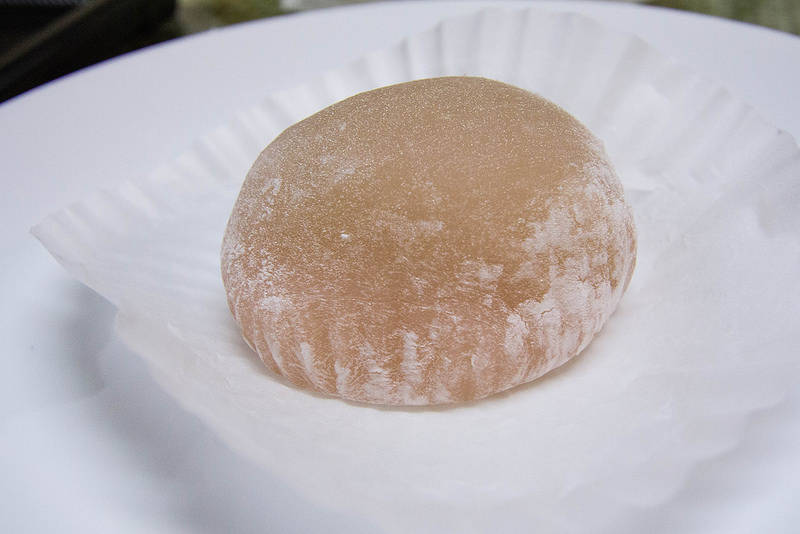
Here, we have the pink white daifuku; rice flour with smooth lima (white) bean filling.

daifuku daifuku - 2

The mochi has a soft, chewy, and sticky texture. The lima bean paste melted in my mouth. Both the mochi and bean paste were sweet.

Below is some info about daifuku, from Wikipedia:

Daifukumochi (大福餅), or Daifuku (大福), literally “great luck”, is a Japanese confection consisting of a small round mochi (glutinous rice cake) stuffed with sweet filling, most commonly anko, sweetened red bean paste made from azuki beans.

Daifuku comes in many varieties. The most common is white-, pale green-, or pale pink-colored mochi filled with anko. These come in two sizes, one approximately 3cm (1.2in) diameter, the other palm-sized. Some versions contain whole pieces of fruit, mixtures of fruit and anko, or crushed melon paste. Nearly all daifuku are covered in a fine layer of corn or potato starch to keep them from sticking to each other, or to the fingers. Some are covered with confectioner’s sugar or cocoa powder. Though mochitsuki is the traditional method of making mochi and daifuku, they can also be cooked in the microwave. Mochi and daifuku are very popular in Japan.

Daifuku was originally called Habutai mochi (腹太餅) (belly thick rice cake) because of its filling nature. Later, the name was changed to Daifuku mochi (大腹餅) (big belly rice cake). Since the pronunciations of Fuku (腹) (belly) and Fuku (福) (luck) are the same in Japanese, the name was further changed to Daifuku mochi (大福餅) (great luck rice cake), a bringer of good luck. By the end of the 18th century, Daifuku were gaining popularity and people began eating them toasted. They were also used for gifts in ceremonial occasions.

The difference between mochi and manju is that mochi is made from pounded ricecake while manju is made of rice powder, flour, and buckwheat flour. Texturally, manju has a flakey crust and a cake-like interior. (Origamidumpling)