Shenyang: Homemade Jiaozi

We were invited to a dinner and fellowship at 神爱之家, a 3-month old Christian church in Shenyang. The English name of the church is God’s Pasture of Family Lore, and the name says, it’s a family-oriented church.

For dinner, we had homemade jiaozi (dumplings). The fellowship ladies were making the dumplings when we arrived, and we joined them! The dough and stuffing were made from scratch.

homemade jiaozi - 2

It was a mini-factory here! One of the ladies was a pro at breaking the dough into equally-sized balls. A second lady was a pro at rolling the balls into thin and round jiaozi wrappers. Another lady was a pro at sealing the jiaozis with an unique shape. Several jiaozis were completed every second.

homemade jiaozi - 1

After several plates of jiaozis were made, they were boiled and eaten! We had spicy dipping sauces to compliment with the jiaozis. There was also a side dish of handmade flour noodles in spicy sauce.

homemade jiaozi - 3

Thank you 神爱之家, for inviting us and a memorable fellowship time!

Shenyang: Lunch @ 华夏民俗村 (Huaxia Folk Village)

Restaurant: 华夏民俗村 (Pinyin: hua xia min su cun; transl.: Huaxia Folk Village)
City: Shenyang, Liaoning, China

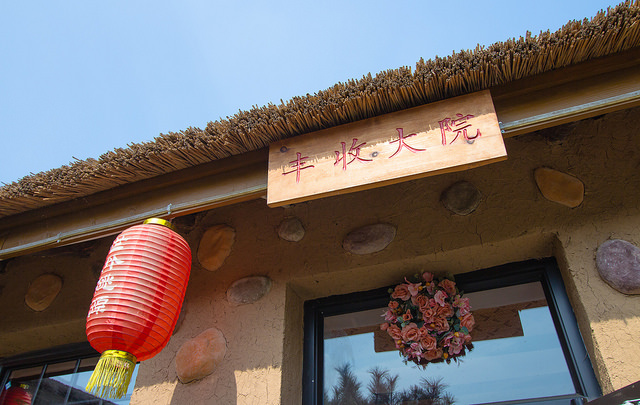
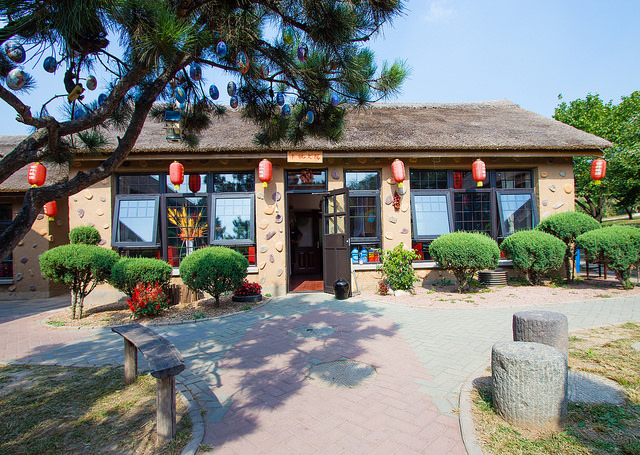
We visted Dongbei Theological Seminary’s new campus in Shenyang. The area of this new campus was donated by the owner of 华夏民俗村, which is now neighboring the campus. The owner is a Christian businessman, who owns the restaurant. 华夏民俗村 is divided into two parts, 热带雨林 (Rainforest) and 世外桃源 (Paradise). Each part has a different theme and type of dishes.

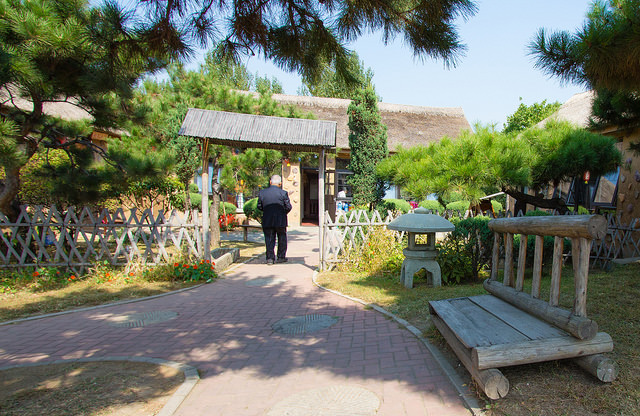
We ate at 世外桃源 (Paradise). There were small buildings scattered around the area. The area used to be a village, with each home converted to dining rooms. Each building has two dining rooms, with a large round table in each room. The restaurant’s kitchen was located elsewhere on the premises and several waiters were seen walking around outside with trays of food or drinks, from the kitchen to the dining rooms. I felt like I was eating at the countryside!

华夏民俗村 - 1华夏民俗村 - 2华夏民俗村 - 3华夏民俗村 - 4

The interior and ceiling was captivating as well!

华夏民俗村 - 5

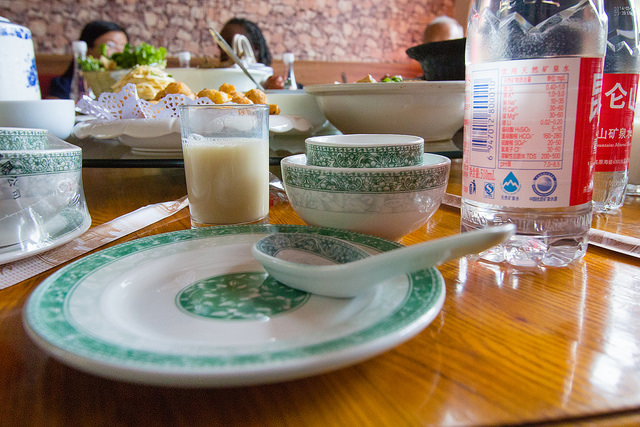
All of us had a set of dishes that were packaged in plastic wrap, and a pair of chopsticks wrapped in paper. This was to ensure that the dishes were clean.

华夏民俗村 - 6

Instead of tea, everyone was served hot soy milk (unsweetened) from a kettle.

华夏民俗村 - 9a

We had a spicy seafood soup in a large crab-shaped bowl.

华夏民俗村 - 7

Noodles and bread is a specialty in Northeastern China. We had pan fried spiral bread with a mix of meats and vegetables underneath!

华夏民俗村 - 9华夏民俗村 - 11

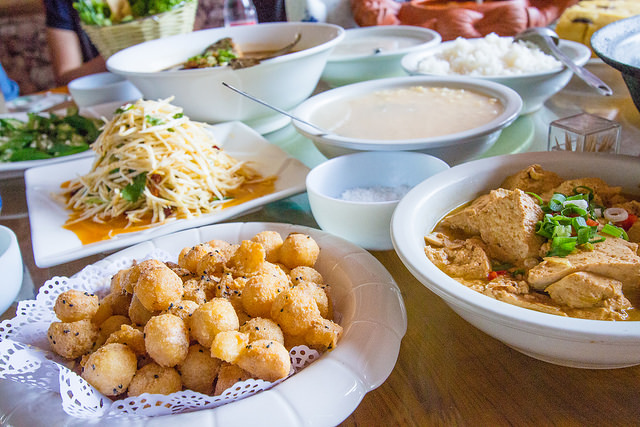
We also had fried potato balls, tofu, fish, corn soup, okra, cabbage salad, a plate of fresh fruit, and a basket of fresh vegetables!

华夏民俗村 - 12华夏民俗村 - 13

I highly recommend checking out this unique restaurant if you’re in Shenyang.

Baidu has more information about the restaurant. (Warning- it’s in Chinese!)

China: Taiwanese Food @ Yonghe King (永和大王)

Restaurant Chain: Yonghe King (永和大王)
City: All major cities in China

We headed to Shenyang after visiting Anshan Bethesda Rehabilitation Ministry. We took the G-train once again, but the ride was 45 minutes this time. Shenyang is just north of Anshan. Shenyang is the capitol of Liaoning province, and was once called Mukden.

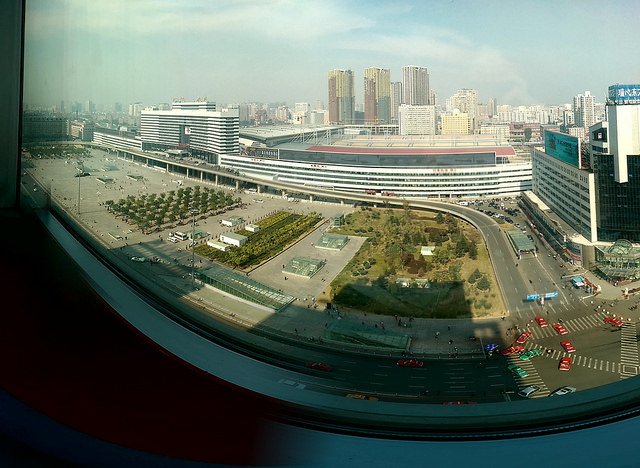
We stayed at the hotel right across the Shenyang Railway Station. The railway station is a major station for the subway, bullet trains, and taxis/busses. The subway is underground, the bullet train is on ground level, and taxis are above ground from the overpass. The station has tons of exits, which can get confusing, but at least they tell you which is the northern and southern exit. Some exits take you across the street from the station, so you can avoid crossing the street with traffic. There are also several restaurants at the southern side of the station, right underneath the overpass for autos.

shenyang railway station
Shenyang Railway Station

For dinner, we went to a nearby mall which has a few restaurant chains including McDonald’s and Yonghe King. We opted for the latter. I had my soy milk with red bean, and we ordered a few dishes to share.

yonghe king - 1
Yonghe King storefront inside a mall in Shenyang

yonghe king - 2
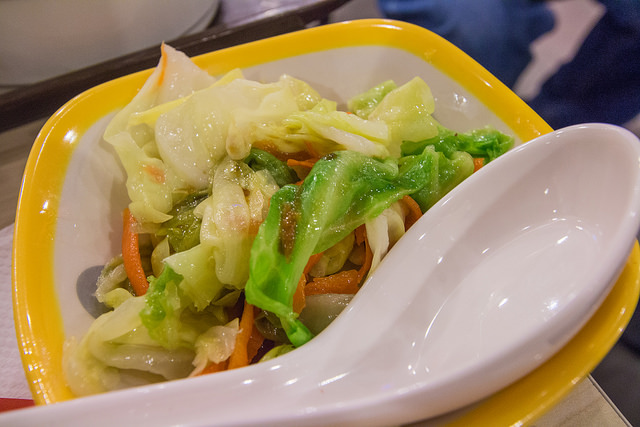
Complimentary Salad

yonghe king - 3
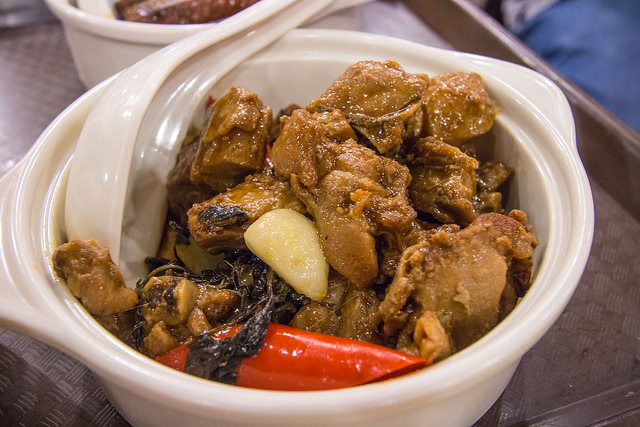
Three Cups Chicken

yonghe king - 4
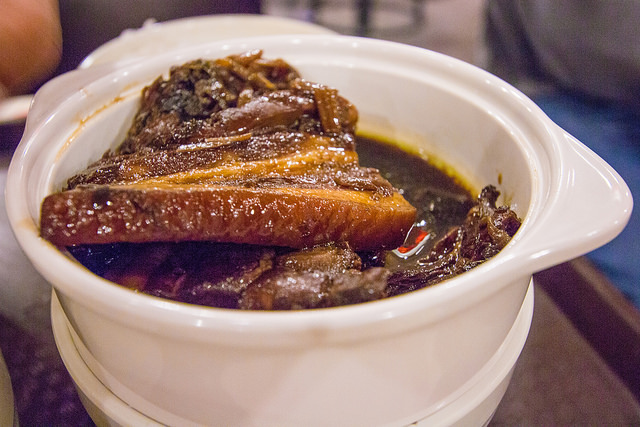
Braised Pork Belly

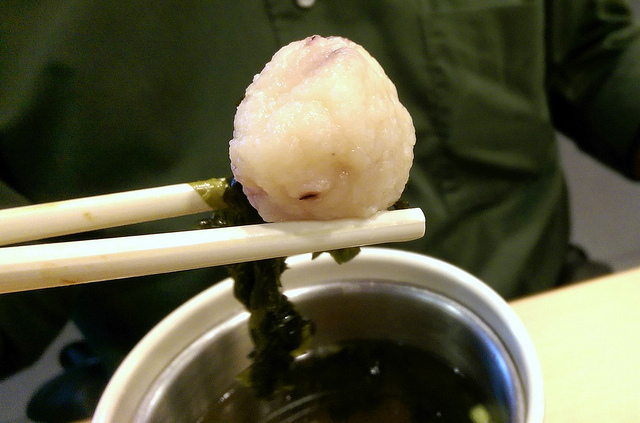
We pretty much ordered the same items everytime we ate at Yonghe King, with just one different dish each time. Shown below is a seaweed soup with octopus balls, which we had at an underground food court connected to a subway station in Beijing.

yonghe king - 5
Seaweed Soup w/ Octopus Balls 

Our bill came down to ¥145 RMB for four adults (~$23.50 USD). Ahh, I miss the fast food restaurants in Mainland China. They’re a better alternative to McDonald’s!

Anshan: Green Onion Pancake & Spicy Purple Potato

Restaurant: 万宝酒店 (WanBao Restaurant)
City: Anshan, Liaoning, China

For the next leg of our China Trip, we took the G-train (high speed train) from Harbin to Anshan. The journey took approximately 3 hours, but the G-train was going over 300 km/hr and it was a smooth ride!

In Anshan, we visited Anshan Bethesda Rehabilitation Ministry (ABRM). ABRM is an unique ministry; they aid the disabled and immobilized people in the area. The Chinese government has little to no aid to the disabled. The founder, Dr. Xu, was a promising orthopedic surgeon but a freak accident paralyzed him. He later became a born-again Christian and received a calling to aid the many disabled by providing them wheelchairs. He eventually set up a clinic (ABRM) which provides physical therapy to the disabled.

We had lunch with Dr. Xu and a few of the ABRM staff near the facility, where they introduced us to Liaoning cuisine! We had several dishes, all of them superb and unique to the Liaoning region. Here are two dishes that stood out.

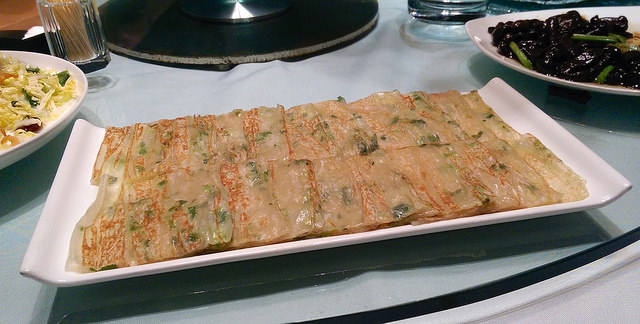
onion pancake

Green onion pancake is much thinner and softer in Anshan and Liaoning. The green onion pancake from Southern China and Taiwan is thicker. I had the Shanghai version earlier this year, which was thick but crispier.

purple potato

The dish shown above was given to us on the house! When the waiters placed it on our table, I initially thought they were sausages due to its shape and color. However, we were told it was spicy purple potato! Purple potato in spicy sauce. Purple potato is abundant in Northeastern China and served in many restaurants.

Harbin: Fish w/ Black Bean Garlic Sauce

Restaurant: 兴隆居道外老菜馆 (xing long ju dao wai lao cai guan)
City: Harbin, Heilongjiang, China

Tonight we stayed in a different hotel closer to Songhua River, which is closer to the other end of Zhongyang Street. Home Inn is a hotel chain in Mainland China and I’ve found their AC to be much more reliable than American hotels (Crowne, Holiday Inn, Hyatt, etc) in China. Chinese hotel rooms are generally smaller and cheaper than American hotels. A single room with double-sized bed was around ¥180 RMB per night (~$30 USD per night).

We went to a restaurant a few blocks from the hotel that advertised  to have free Wi-Fi. However, their Wi-Fi wasn’t exactly free.. I think you had to be a subscriber or have a Chinese mobile number in order to log into the Wi-Fi. Anyhow, the restaurant had their menu on their wall. A photo of each dish was displayed on the wall and each dish was referenced by a number. The portions were on the larger size, so we only had two dishes with rice.

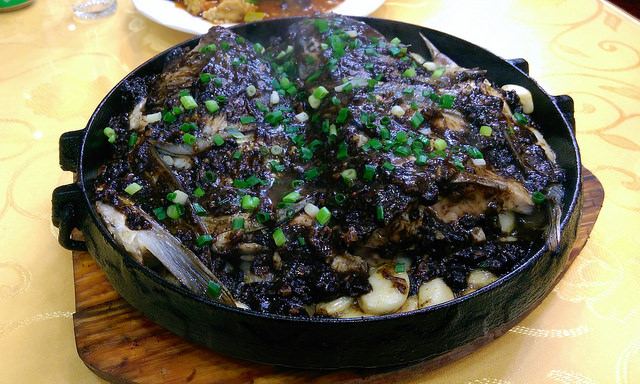
My favorite dish out of the two was the fish with black bean garlic sauce in a skillet.

fish black bean garlic sauce

The fish was completely covered in black bean sauce, and there were tons of garlic underneath the fish.

fish black bean garlic sauce - 2

Fish is always good with lots of sauce and flavor. It also makes me a happier person when the bones are bigger! Fish with small bones are just too much work for me and makes me go nuts.

Harbin: Pineapple Cream Filled Pastry

Vendor: 曼哈頓夾心糕餅 (Manhattan Sandwiched Pastry)
City: Harbin, Heilongjiang, China

After we went to Tai Yang Dao (Sun Island) and Tiger Park, we walked on the other end of Zhongyang Street, towards Songhua River. There was an underground passenger walkway to get across the intersecting street to the river. You can get to the river via the underground passenger walkway or by crossing the street with lots of cars passing by.

We used the underground walkway on our way back to the hotel. There was a mall underground on the way out! We went inside the mall to check it out, but it was full of clothing shops. A baking aroma caught my attention near the mall entrance, and we traced it to the source. It was a vendor selling pineapple custard filled pastries!

pineapple custard pastry - 1

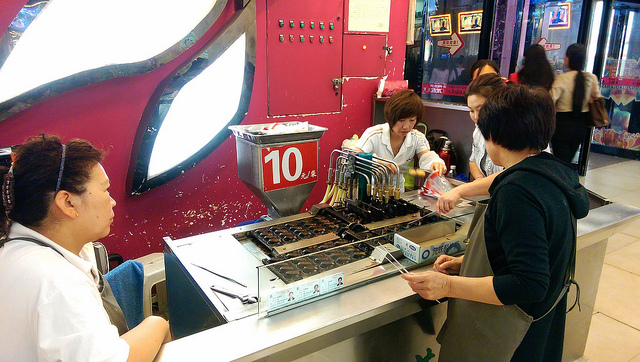
The pastries were freshly made onsite with the machine shown in the photo above. First, half of the mold was filled in and baked for a bit before the cream was placed on top. Then the other half of the mold was placed on top; there was a hole in the second mold to complete the other half of the pastry, to ensure that the cream is in the middle.

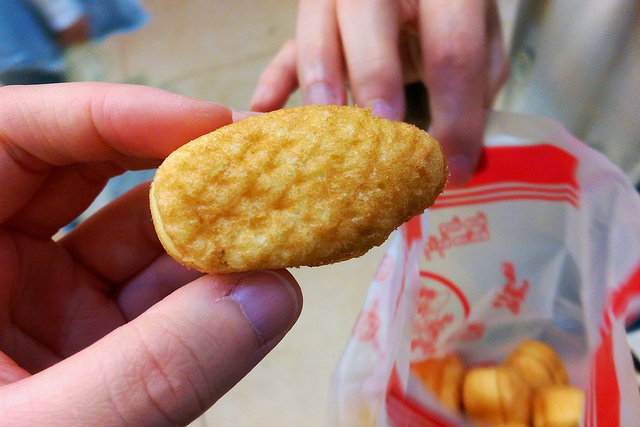
A bag of pastries were sold for 10 yuan per bag (~$1.63 USD). The pastries are called 多味菠蘿蛋撻 (duo wei bo luo dan ta), which loosely translates to “many flavor pineapple egg tart”. Perhaps there are different cream flavors. They refered to the pastry as “egg tart”, but I will refer to it as pastry as it is not really an egg tart..

pineapple custard pastry - 2

I counted 10 pieces inside our bag. A bag was shared among the three of us. One stayed back at the hotel to rest up.

pineapple custard pastry - 3

The pastries resembled a pineapple on the outside, from the mold. The cream filling had a hint of pineapple flavor as well.

pineapple custard pastry - 4

Since it was freshly made, it was steaming hot and I nearly burned my tongue on my first bite! Eating the pastries kept us warm outside as the afternoon got cooler.

pineapple custard pastry - 5

Harbin has harsh winters, so this would definitely be worth checking out if you’re in the area for the Ice Festival! Holding a bag can also warm up your hands, while eating the pastries will warm up your body! Now, that’s a win-win situation! :D

Harbin: Roast Duck/Pork @ Lao Chang Spring Pancake (老昌春饼)

Restaurant: 老昌春饼 (Lao Chang Spring Pancake)
City: Harbin, Heilongjiang, China

Today, we went around Harbin for some sightseeing. We had lunch after visiting St. Sophia and Hallelujah Church, to fuel up before visiting Tai Yang Dao (Sun Island) and Tiger Park.

Lao Chang Spring Pancake has roast meat with thin pancakes/wraps and smaller dishes. Think roast duck but with a wider variety of meats and side dishes to choose from. There were also different types of pancakes/wraps, ranging from thick to thin!

You might be wondering why I typed “pancakes/wraps”. The Chinese call the thin sheets used to roll the meat in as “pancakes”. I call them “wraps” because they’re too thin, and are actually used to wrap around the meat. Pancakes have a much thicker consistency from the batter and are usually eaten flat.

We had a number of side dishes, with two different types of meat (roast duck and roast pork), and three different types of wraps.

lao chang spring pancake - 1
Mung Bean Sprout Salad

lao chang spring pancake - 2
Roast Pork

lao chang spring pancake - 3
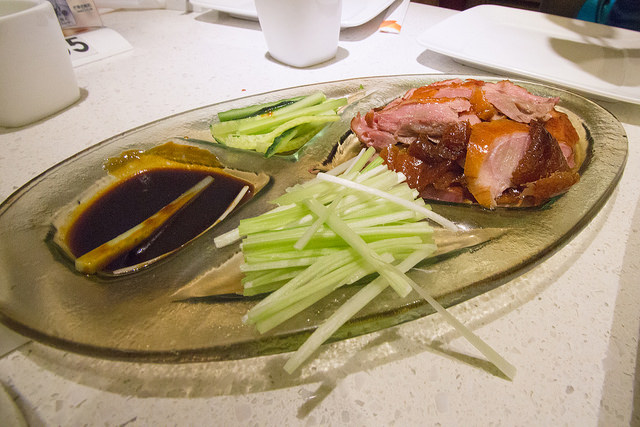
Roast Duck with Onion, Cucumber, and Hoisin Sauce

lao chang spring pancake - 5
Our table; can you spot the three different kinds of wrappers?

lao chang spring pancake - 4
Pastor Chan and his wrapper; look how thin and translucent the wrapper is!

lao chang spring pancake - 7
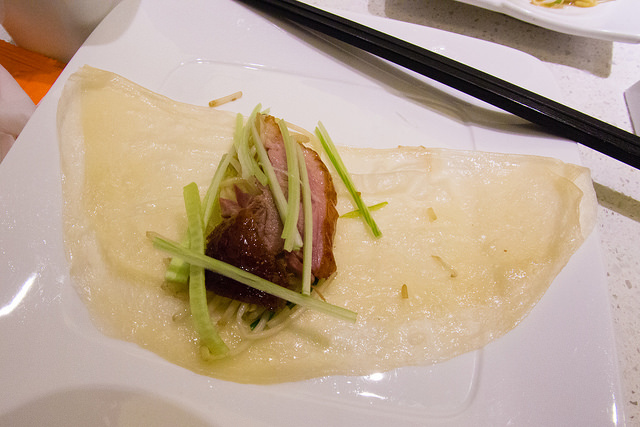
My plate; roast duck with a thin wrap before rolling.

lao chang spring pancake - 9
Pastor Chan’s wrapped meat; the style of wrapping and stuffing is unrestricted!

It was quite an experience eating roast duck/pork with various toppings. I had only eaten roast duck with onion and hoisin sauce in a wrap before. I also had only eaten roast duck with a somewhat thick wrap similar to the one shown in the last photo, but not a very thin and translucent wrap. It was actually easier to bite into the thin and translucent wraps, and its elasticity helped contain the juice from dripping onto the plate! It was tricky unfolding the wrap into a full circle, as it was sticky, but that didn’t stop us from eating!!

Harbin: Russian & Eastern European Food @ Huameixicanting (華梅西餐廳)

Restaurant: 華梅西餐廳 (Huameixicanting)
City: 
Harbin, Heilongjiang, China

Zhongyang Street is a pedestrian street full of restaurants, vendors, malls, and stores. The street is blocked for several blocks from vehicles. However, you should keep your eyes and ears alert, for any motorbike or bicycle passing by. The street is bustling with locals and tourists every night!

There was one restaurant on Zhongyang Street that specialized in a cuisine that wasn’t Asian. From the outside, it looks like a typical Chinese restaurant, but to Westerners, the name might be misleading. I thought the English name “Huameixicanting” was a typo for Chinese/Mexican food. Translating “華梅西餐廳” in Google Translate gives you “Chinese Macy Restaurant”, which makes no sense. Instead, breaking it down to 華梅/西/餐廳 (Hua Mei / Xi / Canting) gives you Hua Mei / West / Restaurant. Then it tells you it’s a Russian restaurant; the major city west of Harbin is Moscow. Harbin is known as the Eastern Moscow.
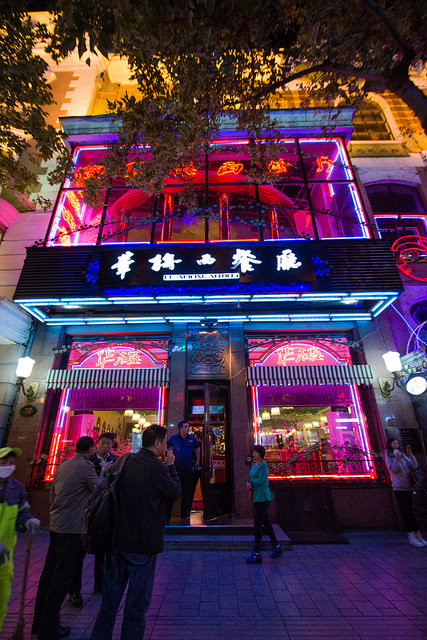
huameixicanting - 1

When I walked inside Huameixicanting, I was blown away by the interior design and how elaborate it was. I had never seen Russian architecture and interior design before.

The first floor had tables on the side with a large open area in the middle that served as a waiting area. The second floor was filled with tables and had a Kremlin style interior.

I felt like I was in a completely different world, in a country already far away from home! I was just mindblown.
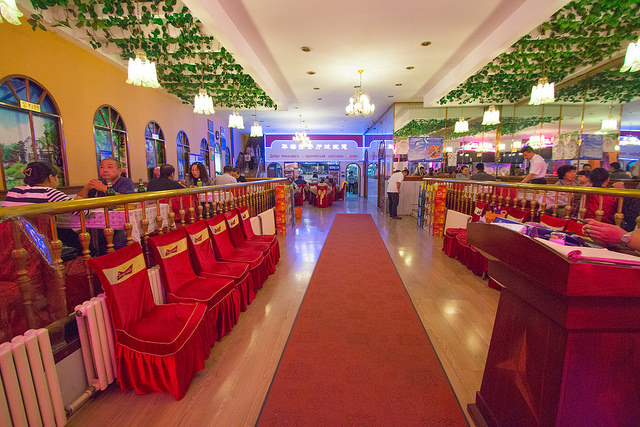
huameixicanting - 2
1st Floor – Modern European Garden-Style Bar
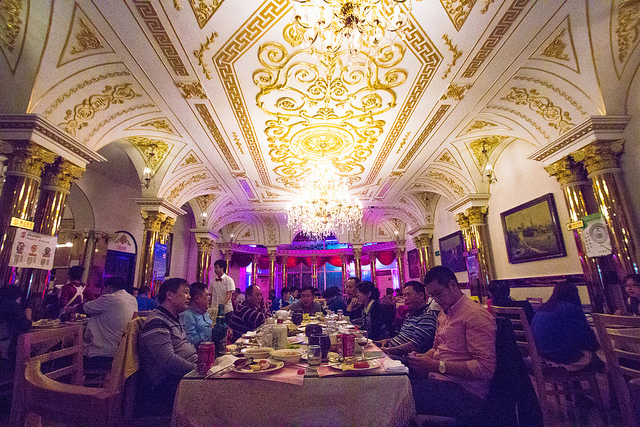
huameixicanting - 3
2nd Floor – Former Soviet Union Moscow Kremlin Style, with Superior Single Room

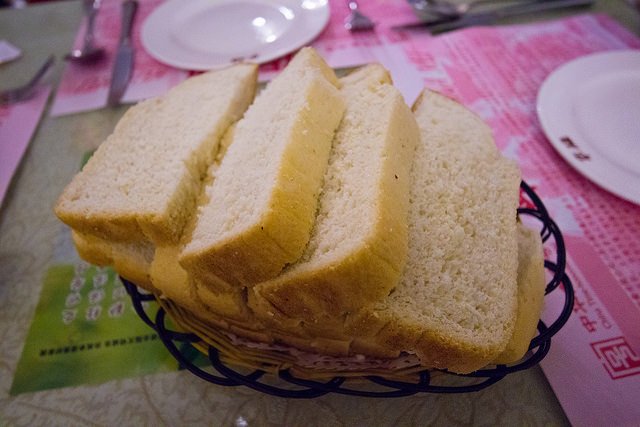
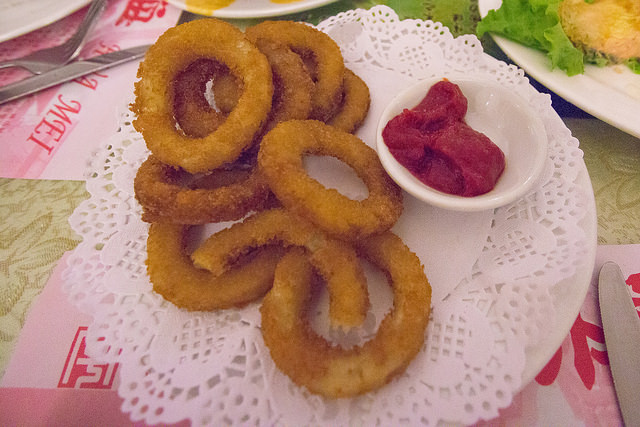
The menu was in Chinese, so Pastor Chan ordered the food for the four of us. We were served bread and soup before receiving the rest of the dishes. Bread served as the staple, unlike how rice is for the Chinese. We dipped the bread in our soup, and the stews we ordered. I was surprised to find out we had onion rings, which is also popular back at home in the States. Yay for onion rings and a break from Chinese food tonight!
huameixicanting - 4
Bread

huameixicanting - 8
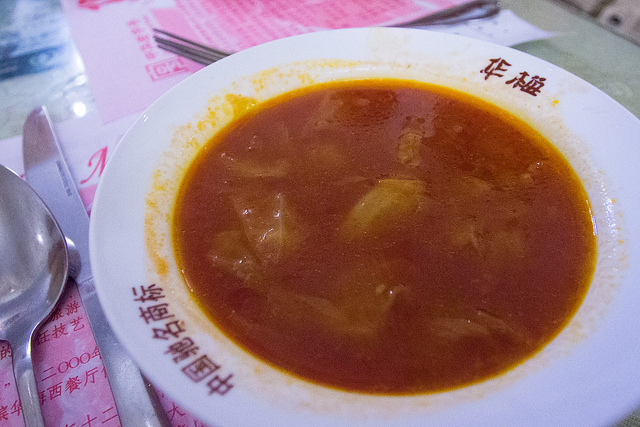
Shchi (щи) – Russian Cabbage Soup

huameixicanting - 5
Fried Fish with Egg

huameixicanting - 6
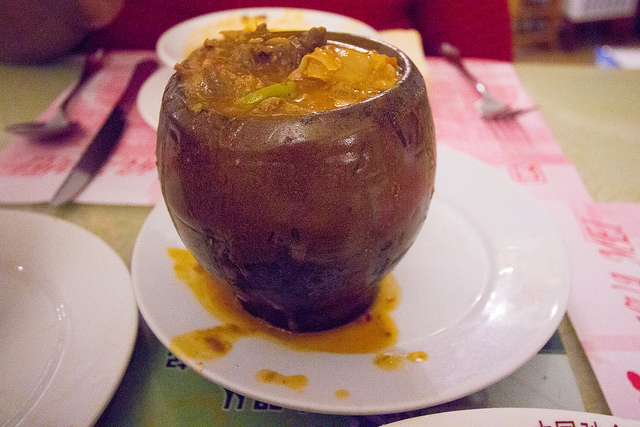
Chanahi (Чанахи) – Georgian Lamb & Vegetable Stew
huameixicanting - 7
Onion Rings with Tomato Paste

The total cost came down to ¥114 RMB (~$18.54 USD). In other words, that’s ¥25.8 (~$4.64 USD) per person.

I also found out that because Russia was under the Soviet Union, there’s Russian and Eastern European cuisines. The former Soviet Union includes a number of present-day countries including Georgia, Belarus, and Ukraine. So there’s perhaps a slight misunderstanding about whether a particular dish is Russian or not, because the Russia Federation is the largest and biggest country among all post-Soviet states. For example, the lamb stew I had earlier isn’t Russian, but it’s Georgian. Georgia used to be part of Soviet Union, so the lamb stew is Eastern European but not Russian.

Harbin: Lunch @ Heilongjiang Seminary (黑龙江神学院)

Seminary: Heilongjiang Seminary (黑龙江神学院)
City: Harbin, Heilongjiang, China

Today we met a deaf congregation in Harbin where I gave a short testimony. Then we went on an hour-long bumpy van ride to Heilongjiang Seminary (黑龙江神学院). I then gave another testimony to a class that consisted of first/second year deaf and hearing students. I spoke in English while my pastor translated into Mandarin. The hearing students took turns interpreting from Mandarin to Chinese Sign Language for the rest of the class. Yep, English→ Mandarin→ CSL!

Heilongjiang Provincial Protestant Bible School started in 1996 and was upgraded to seminary level in 2013. Heilongjiang Seminary now has a larger campus at Mount of Olives, with a much bigger curriculum and larger staff body. Also, if you were deaf and wanted to become a pastor in China, this was the seminary you’d attend. It’s the only seminary in China that accepts and trains deaf students to become pastors in the deaf community.


Heilongjiang Seminary’s Cafeteria/Restaurant


Heilongjiang Seminary’s Library

We were invited to have lunch at one of the buildings that serves as a restaurant/cafeteria. There was a dining room that had two large circular tables. Each table had a mechanical lazy Susan in the middle that revolved on its own when turned on. You can grab onto the turntable to resist it from moving, though.

The kitchen prepared so many dishes for us, so I’ll list them all in one post rather than publishing individual ones to save time. All dishes are the Heilongjiang style of the Northeastern Chinese cuisine. The spices in Northeastern dishes are more profound than in Cantonese dishes. Heilongjiang tends to have more potatoes, lamb/mutton, and corn in their diet.

hppbs - 1
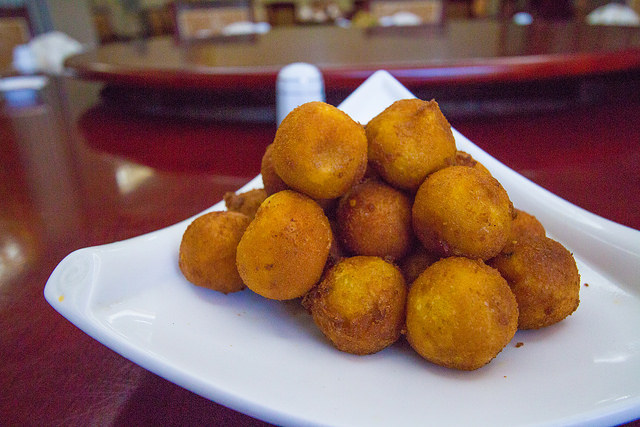
Fried Potato Balls

hppbs - 2
Bianhua Fish (邊花魚), a type of bream found in Heilongjiang

hppbs - 3
Mutton with Onion

hppbs - 4
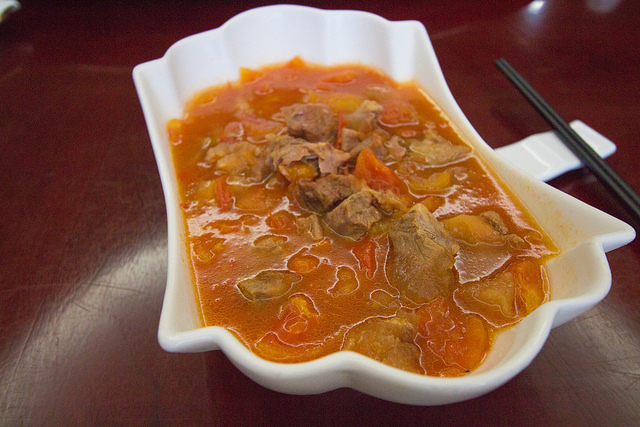
Beef & Tomato Stew

hppbs - 5
Calamari & Green Pepper

hppbs - 6
Sliced Pig Ear & Cucumber Salad

hppbs - 10
Cabbage with Bean Thread

hppbs - 7
Sponge Cake

hppbs - 8
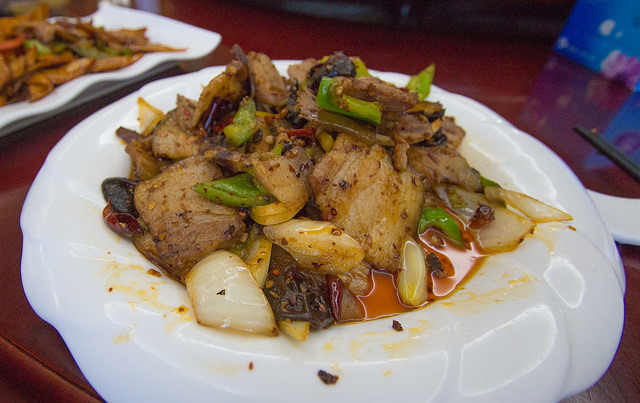
Spicy Pork Belly

hppbs - 9
Left- Rice with Corn; Right- Snow Peas

Thank you, Heilongjiang Seminary, for the yummy food! :)

Harbin: Churin Leadfoods’ Gewasi

Today we met a deaf congregation in Harbin where I gave a short testimony. Then we went on a hour long car ride to Heilongjiang Provincial Protestant Bible School.

If you were deaf and wanted to become a pastor in China, this was the seminary you’d attend. It’s the only seminary in China that accepts and trains deaf students to become pastors in the deaf community. Heilongjiang Provincial Protestant Bible School is a large campus with at least 5 buildings that included a dormitory, restaurant, library, and classrooms!

We went to the building with the restaurant for lunch. Before we were seated, I noticed a tray full of some strange yellowish-brownish drink that looked like pee.

IMG_7589

There was an explanation of the drink on the label in Chinese. It tells us that the drink is Russian, and is made from fermented rye bread. The drink is called gewasi (格瓦斯) in China, but it is better known as kvass (квас) in Russia and elsewhere.

Here’s a closer look at the bottle. Can you spot the Russian name of the drink on the label?

IMG_7588

This particular bottle can be found in many shops, restaurants, and Churin Leadfoods stores all over Harbin and Heilongjiang. I am not sure how easy it is to find in other cities, as I had not seen them in Beijing, Shenyang, and Xi’an. To get an idea of how much it cost… I purchased a 350mL bottle for 3¥ each at Churin Leadfoods in Harbin Railway Station. That’s roughly around $0.50 USD per bottle…and cheaper than most soda cans in the US. I drank at least one bottle a day while in Harbin. :)

Goldsea has some info about Churin Leadfoods and gewasi/kvass:

In 1900 a Russian merchant named Ivan Churin founded Harbin Churin Food to cater to the popularity of Russian foods in China’s far-northeastern Heilongjiang province. In addition to foods like lieba (a type of Russian bread) and lidaosi (Lithuanian sausage), Churin sold kvass, a lightly alcoholic beerlike beverage made by fermenting rye bread that had been popular for centuries in Russia and eastern Europe. With alcohol content well under 1.2% — and generally closer to 0.5% — kvass is generally considered a soft drink with healthful properties, partly due to its vitamin B content and partly because it doesn’t have nearly as much sugar as most sodas.

Kvass caught on quickly in Heilongjiang. By 2009 Harbin Churin Food was producing 5,000 tons of kvass a year for a 90% share of the local market. In 2011 it decided to popularize the drink in the rest of China by moving its factory to Tianjin, a more centrally located major city that serves as Beijing’s port. The move allowed Churin to expand sales to 20,000 tons in its first year there, prompting it to set its sights on 100,000 tons within three years.

Wikipedia has some more info on gewasi/kvass:

Kvass is a fermented beverage made from black or regular rye bread. The color of the bread used contributes to the colour of the resulting drink. It is classified as a non-alcoholic drink by Russian and Ukrainian standards, as the alcohol content from fermentation is typically less than 1.2%. Generally, the alcohol content is low (0.05% – 1.0%). It is often flavoured with fruits such as strawberries and raisins, or with herbs such as mint. Kvass is also used for preparing a cold summertime soup called okroshka.

It is especially popular in Russia and Ukraine, but also well-known throughout Belarus, Estonia, Serbia, Poland, Latvia and Lithuania, as well as in other former Soviet states such as Georgia, Kazakhstan and Armenia where many kvass vendors sell the drink in the streets. Kvass is also popular in Harbin and Xinjiang, China, where Russian culture is a strong influence.

The word “Kvass” derived from Old East Slavic квасъ, kvasŭ, meaning “yeast” or “leaven”. Today the words used are almost the same: in Belarusian: квас, kvas; Chinese: 格瓦斯/克瓦斯, géwǎsī/kèwǎsī; Latvian: kvass; Polish kwas chlebowy (bread kvass); Russian: квас, kvas; in Ukrainian: квас/хлібний квас/сирівець, kvas/khlibnyy kvas/syrivets. Except Lithuanian: gira, which means beverage similar to Latvian dzira. In Estonian: kali, which means leaven.