Japan: Agedashi Tofu

Restaurant: Gombei
City: San Jose, CA

Yesterday, I had lunch at Gombei in San Jose Japantown. Gombei has four locations (Menlo Park, Sunnyvale, Santa Clara, and San Jose); the first store opened is at SJ Japantown. Gombei is well known for their curry dishes, and fried tofu dish.

agedashi tofu

Gombei named this dish as “fried tofu”. Gombei serves this dish using fresh tofu from San Jose Tofu Company, which is right next to Gombei.

Read on for more info about the dish, from Wikipedia.

Agedashi tofu (or agedashi dofu, 揚げ出し豆腐, often shortened to age tofu or age dofu) is a Japanese way to serve hot tofu. Silken (kinugoshi) firm tofu, cut into cubes, is lightly dusted with potato starch or cornstarch and then deep fried until golden brown. It is then served in a hot tentsuyu broth made of dashi, mirin, and shō-yu (Japanese soy sauce), and topped with finely chopped negi (a type of spring onion), grated daikon or katsuobushi (dried bonito flakes) are sprinkled on top.

Agedashi tofu is an old and well-known dish. It was included in a 1782 Japanese all-tofu cookbook entitled Tofu Hyakuchin (literally “One hundred Tofu”), along with other tofu dishes such as chilled tofu (hiyayakko) and simmered tofu (yudofu).

Japan: Katsu Karē

Restaurant: Gombei
City: San Jose, CA

Yesterday, I had lunch at Gombei in San Jose Japantown. Gombei has four locations (Menlo Park, Sunnyvale, Santa Clara, and San Jose); the first store opened is at SJ Japantown. Gombei is well known for their curry dishes, and fried tofu dish.

katsu kare

Katsu karē – curry sauce with chicken cutlet, served over rice. There were also some potatoes, onion, and carrots within the curry sauce. The red bit next to the rice was pickled radish (fukujinzuke). The curry sauce is on the thicker and sweeter side, contrary to Indian curry. Continue reading

Shanghai: Chao Nian Gao

Restaurant: Fortune Kitchen
City: Fremont, CA

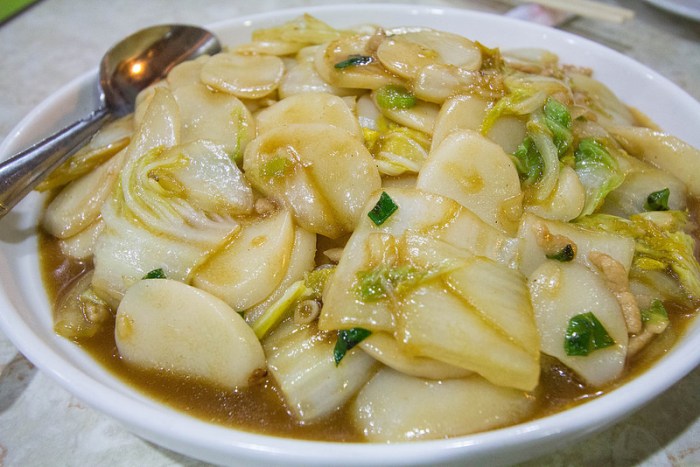
My parents and I went out for dinner at a Shanghainese restaurant near home. I ordered the stir fried rice cake (chao nian gao, in Mandarin) so you guys can see another variation of the rice cake dishes!

chao nian gao

Shanghai style rice cake; chewy rice cake with cabbage, pork, and green onion.

Here’s some info about the dish, from Wikipedia:

The Shanghai nian gao style is usually packaged in a thick soft rod to be sliced up or packaged pre-sliced and either stir-fried or added to soup. Depending on the cooking method, this style is a soft to a chewy variant. The Shanghai style keeps the nian gao white, and made with non-glutinous rice. The color is its distinct feature.

When served as a dish, the most common is the stir-fry method, hence the name (炒年糕, chǎo nián gāo). There are three general types. The first is a savory dish, common ingredients include scallions, beef, pork, cabbage, Chinese cabbage etc. The second is a sweet version using standard white sugar. The last version is taste-less, and is often consumed for its chewy textures.

Taiwan: Pineapple Cake

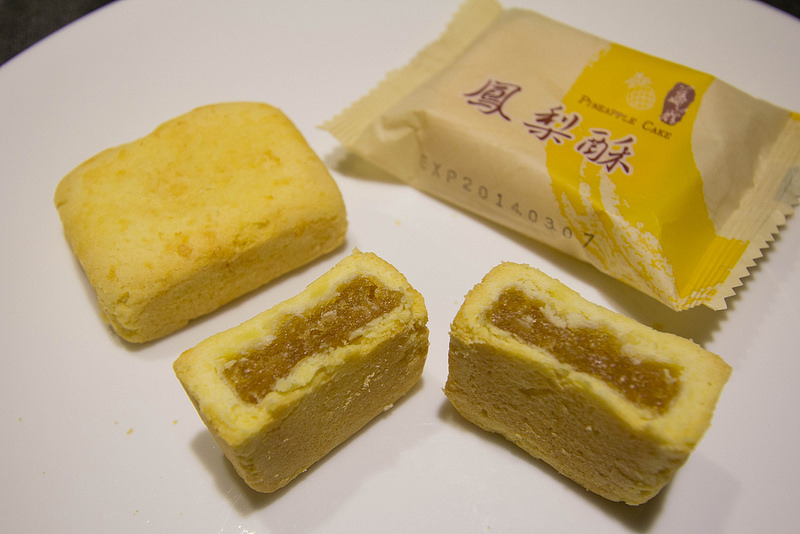
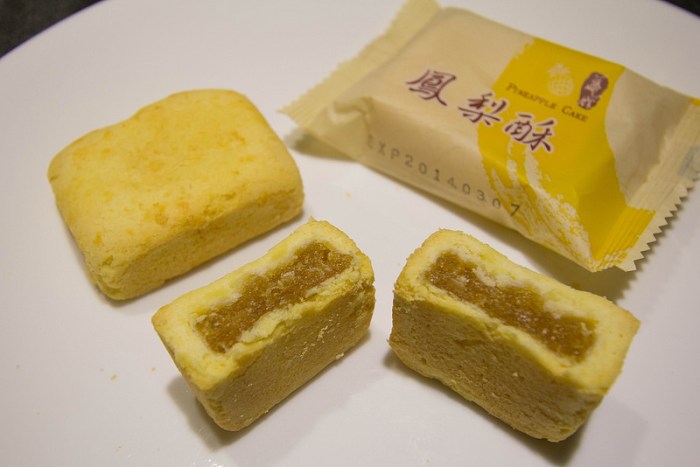
A friend went to Taiwan over the holidays, and got some Taiwanese pineapple cakes! These particular pineapple cakes were from China Pacific Catering Services Ltd. My friend got these on her flight back home via China Airlines.

pineapple cake - 1 pineapple cake - 2

Pineapple cakes have a shortbread-like exterior which crumbles upon touch. The inside is filled with a pineapple jam-like filling. (Kirbie’s Cravings)

Below is a background of the Taiwanese pineapple cakes, from Taiwan Food Culture:

“The Taiwanese word for pineapple sounds like ‘prosperity arrives,’ so it’s very auspicious,” explains food critic Ann Hu. “Since pineapples symbolize both Taiwan and wealth, it’s no wonder they’ve become so popular.”

Pineapple cakes’ success is connected to their special characteristics. First of all, they keep well and are easy to carry. Not especially sweet or moist, they can remain fresh for 15 days without preservatives. “And they’re not crumbly either, so you don’t have to worry that they’ll fall apart if you bump into something,” notes Chang Kuo-rong, chairman of the Taipei Bakery Association. Next, since pineapple cakes are mostly bought as gifts for friends and family, flavor and price are top considerations. Buttery pineapple cakes are sweet without being oily. And they’re not particularly expensive, with 12-pack boxes running from NT$300–600. Furthermore, the pineapples used to fill these cakes are mostly grown in southern and central Taiwan. The supply is stable, and the crop isn’t sensitive to the weather. Tasty, sweet and keeping well, they are well suited to serve as a representative product of Taiwan. Continue reading

Korea: Doraji Muchim

Market: Hankook Supermarket
City: Sunnyvale, CA

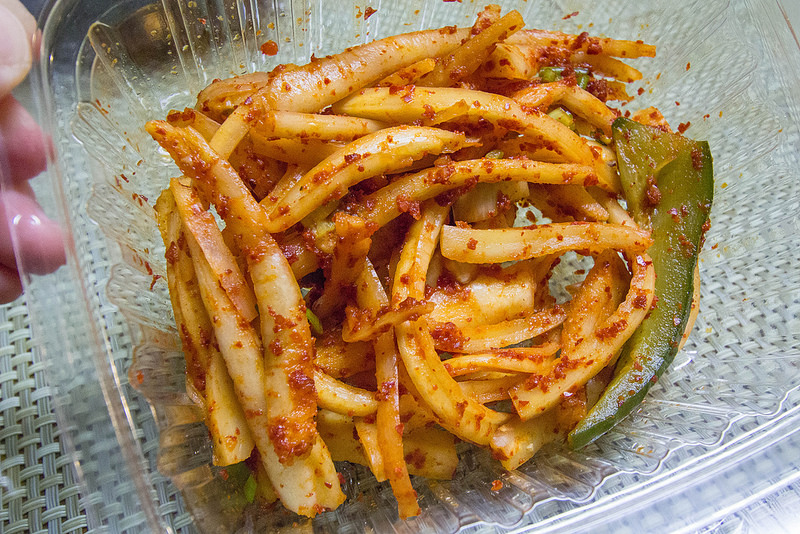
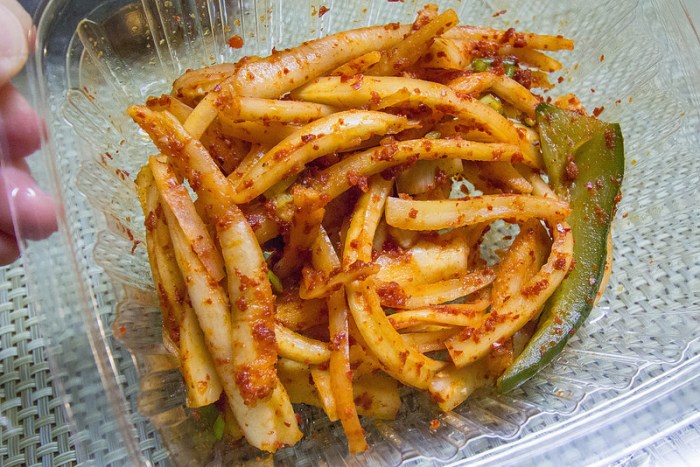
My parents and I shopped at Hankook Supermarket yesterday. Hankook has many trays of side dishes (banchan) for you to scoop into plastic containers, to be weighed at the cashier. We scooped a few to try but among the ones we got, this was the most interesting because we’ve never had it before. It’s not chewy, but it’s somewhat hard and crunchy.

doraji muchim

Doraji muchim (도라지무침) – spicy bellflower root. Continue reading

Korea: Rabokki

Restaurant: Seoul Jung (inside Lawrence Plaza Food Court)
City: Santa Clara, CA

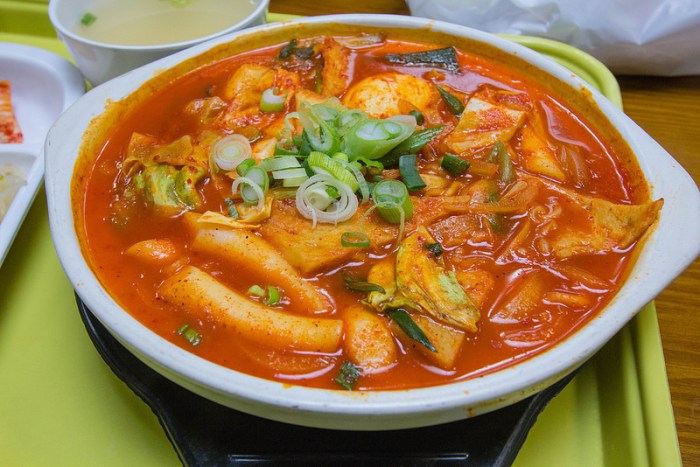
I had lunch with my parents at Lawrence Plaza Food Court. Since there were several food stalls in the food court, my mom wanted to order from two different ones to share. I got Seoul Jung’s “rice cake” dish while my parents got a seafood noodle soup from a different food stand.

ddeokbokki - 1 ddeokbokki - 2

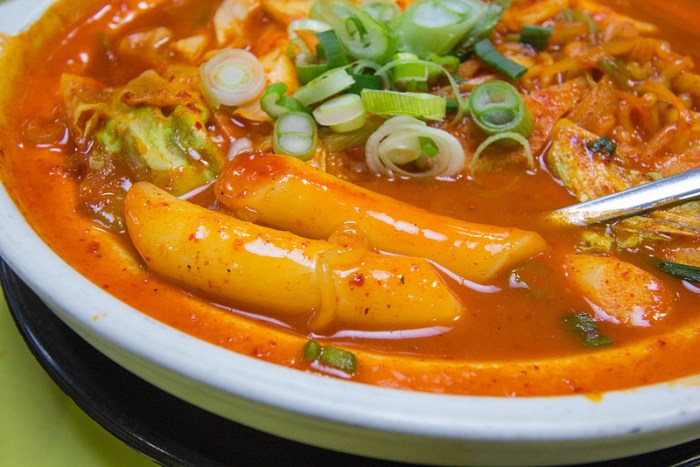
Seoul Jung’s “rice cake” dish turned out to be rabokki (ddeokbokki with ramyeon). The dish came with banchan and a small bowl of soup. The second photo is a close up of the spicy rice cake (ddeokbokki). The dish contained rice cake, fish cake, hard boiled egg, cabbage, green onion, leek, and noodles. As you can tell by the redness of the dish, it’s very spicy; my mom had trouble eating just one piece of rice cake! On the other hand, I enjoyed it! The hot and spicy dish warms you up really well on a cold, rainy, windy day!

Oh, and this was actually my first time having ddeokbokki (and rabokki). It wasn’t my first time having ddeok (rice cake), though. There’s a Shanghai dish that uses this type of rice cake, which I have yet to post!

떡볶이 (ddeokbokki, often translated “spicy rice cakes”) comes in many forms in Korea. (Seoul Taste)

Rabokki is a variation of the popular street food tteokbokki. Tteokbokki is fried sticky rice cakes in a sweet and spicy sauce along with some other veggies. Rabokki has the addition of ramen noodles and hard-boiled eggs. The chewy rice cakes and soft noodles soak up a lot of flavor. (Aeri’s Kitchen)

Read on for more info on ddeokbokki, and rabokki, from Wikipedia:

Tteokbokki or ddeokbokki is a popular Korean snack food made from soft rice cake, fish cake and sweet red chili sauce. It is commonly purchased from street vendors or pojangmacha (small tented restaurants on wheels, or street stalls). Originally it was called tteok jjim (떡찜) and was a savory braised dish of sliced rice cake, meat, eggs, and seasoning. Continue reading

Taiwan: Mongolian Barbecue

Restaurant: El Camino Mongolian BBQ
City: Santa Clara, CA

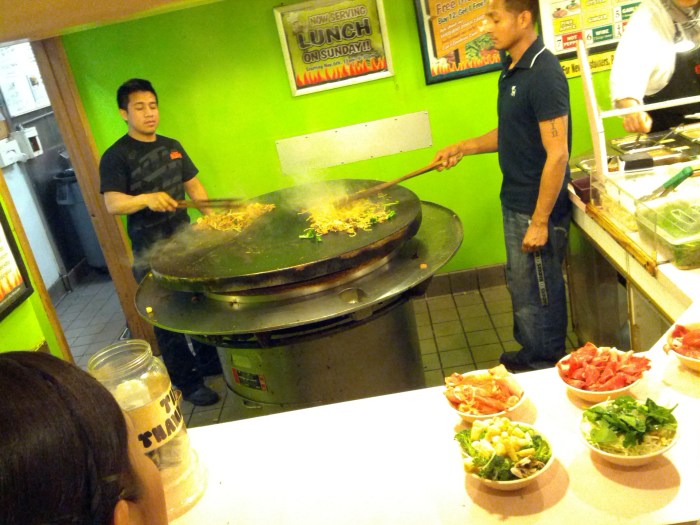
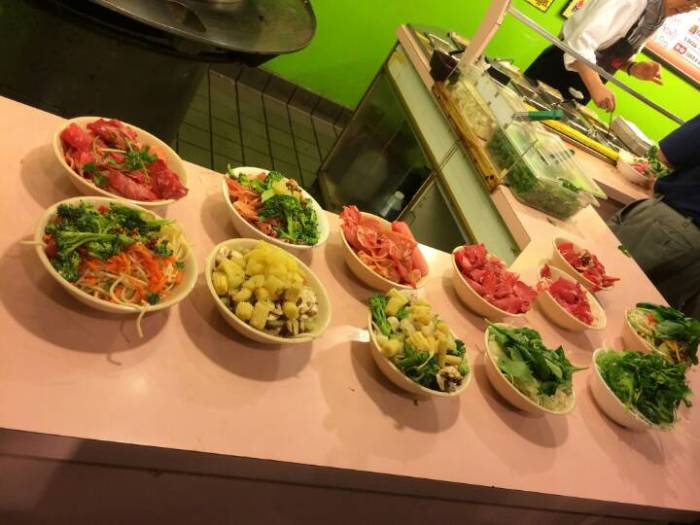
Several coworkers and I had a farewell lunch at El Camino Mongolian BBQ for lunch today! This place is owned and run by a Korean couple; check out their story!

wpid-IMG_20140228_120741.jpgwpid-download_20140228_134002.jpgwpid-IMG_20140228_121227.jpg

Did you know that despite its name, Mongolian BBQ is not Mongolian? It’s actually from Taipei, Taiwan! Read on for more, from Cultural China:

Food cooking on a Mongolian barbecue griddle. Mongolian barbecue (蒙古烤肉) is a restaurant style of stir frying meats and vegetables over a large, round, solid iron griddle that is as large as 2.5 m in diameter and can cook at temperatures as high as 300 °C or 572 °F. It is originally from Taiwan, despite the name, and not Mongolia, and is only very loosely related to barbecue. The name seems to have stuck mainly because it is somewhat catchier than “Taiwanese teppanyaki.” Continue reading

Korea: Kimbap

Restaurant: HK Super Deli (inside Hankook Supermarket)
City: Sunnyvale, CA

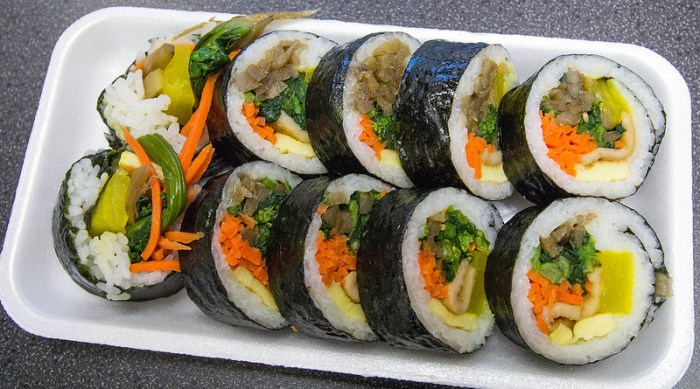
Earlier today, I was in the area so I stopped by Hankook Supermarket. I got kimbap from HK Super Deli, a food stand inside the supermarket. I ate some for snack, then ended up eating the rest for dinner!

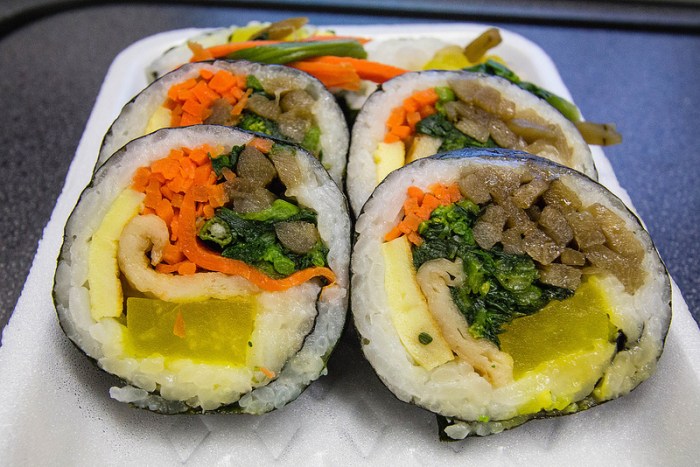
kimbap - 1 kimbap - 2

White rice with danmuji (yellow radish/daikon), fishcake, egg, carrot, burdock root, and rapeseed, rolled in seaweed.

Continue reading

Southern Vietnam: Canh Chua Cá Bông Lau

Restaurant: Anh Hong
City: Milpitas, CA

In addition to bò 7 món, we had the sour soup with catfish.

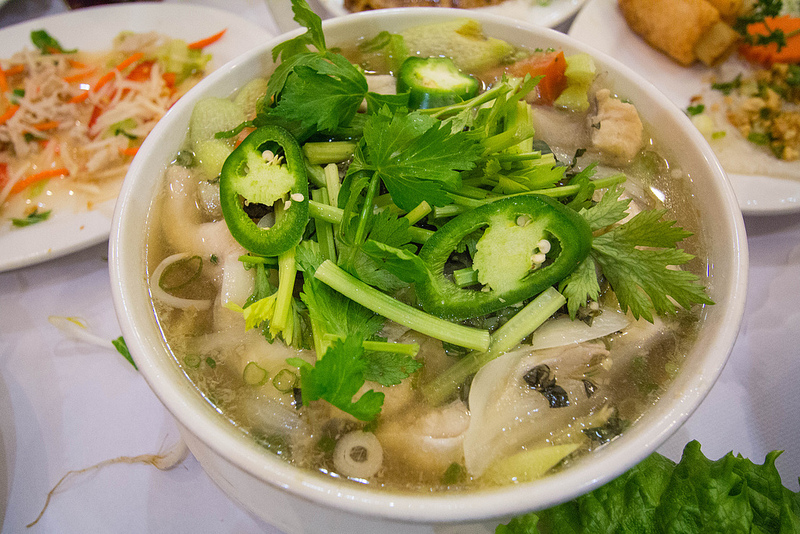
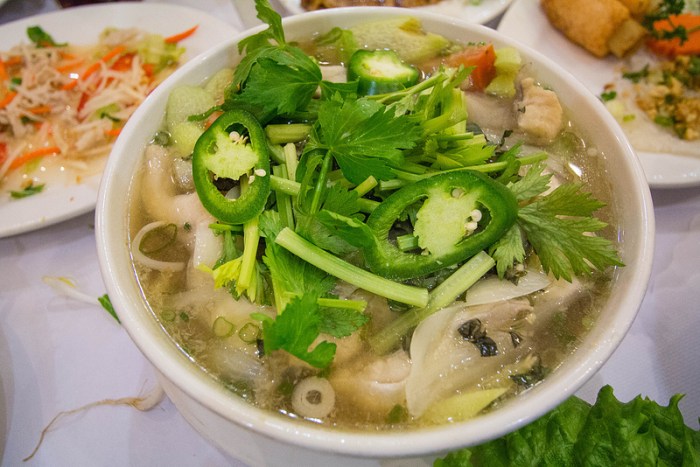
Canh Chua Cá Bông Lau

Canh chua cá bông lau – sour soup made with pangasius krempfi catfish. Other ingredients included in the soup were jalapeno pepper, tomatoes, pineapple, onion, bạc hà.

The following is some more info about the soup, from Wikipedia:

Canh chua (literally “sour soup”) or cá nấu (“boiled fish”) is a sour soup indigenous to the Mekong Delta region of southern Vietnam. It is typically made with fish from the Mekong River Delta, pineapple, tomatoes (and sometimes also other vegetables such as okra or bạc hà), and bean sprouts, in a tamarind-flavored broth. It is garnished with the lemony-scented herb ngò ôm (Limnophila aromatica), caramelized garlic, and chopped scallions, as well as other herbs, according to the specific variety of canh chua; these other herbs may include rau răm (Vietnamese coriander), ngò gai (long coriander), and rau quế (Thai basil). It can be served alone, with white rice, or with rice vermicelli.

The sour taste of the soup comes from tamarind, which is mixed with a small amount of hot water; the mixture is then stirred for a few moments to release all the essence, and the liquid (minus the tamarind seeds and other solids, which are discarded) is then added to the soup.

When made in style of a hot pot, canh chua is called lẩu canh chua.

This is my favorite soup; I espcially like eating the bạc hà (also called giant elephant/mammoth ear or Indian taro). It’s basically the stalk of colocasia gigantea. It’s crunchy and spongy with the soup when you eat it. I also ate the catfish with the concentrated fish sauce.

Southern Vietnam: Cháo Bò

Restaurant: Anh Hong
City: Milpitas, CA

This was the last dish served in Anh Hong’s bò 7 món.

chao bo

Beef rice porridge with green onion, ginger, and peanuts.

Cháo is a variation of congee, it uses a variety of different broths and meats, including duck, offal, fish, etc. When beef is used, it is called cháo bò. (Wikipedia)

Cháo, or rice congee, is synonymous to me with cold remedies. As a child, this Vietnamese soup was Maman‘s antidote; the warmth is soothing for the throat and the soft texture makes it easy to consume. The soup contains a handful of rice which acts as a thickener for the flavorful broth. (Pham Fatale)