Japan/Taiwan: Hokkaido Milk Tea

Cafe: i-Tea null
City: Oakland, California (Chinatown)

I went to Oakland Chinatown to run an errand for my dad, and grabbed a milk tea to quench my thirst. I also needed to be caffeinated for my flight to Portland in a few hours!

I had never gotten Taiwanese style milk tea at Chinatown before, so I Yelped and Foursquared and this place popped up. Almost everyone raved about the Hokkaido milk tea, so I decided to try it!

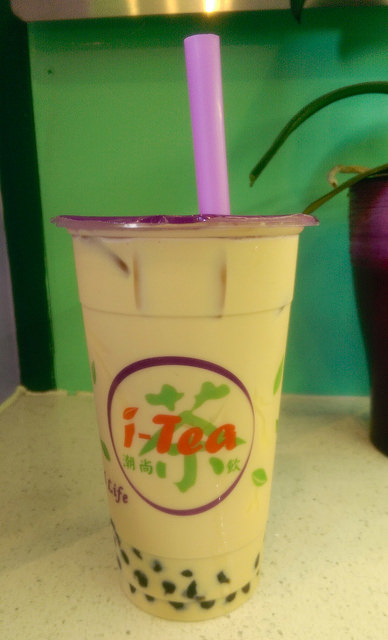
hokkaido milk tea

Hokkaido milk tea is black tea blended with caramel syrup. It also came with boba (pearls/tapioca balls) and egg pudding. At i-Tea, you can opt for mango pudding instead of the standard egg pudding.

If sweet drinks are your thing, definitely try this milk tea! It’s very sweet and rich.

Kashmir: Kashmiri Soda

Restaurant: Mumbai Chowk null
City: Newark, California

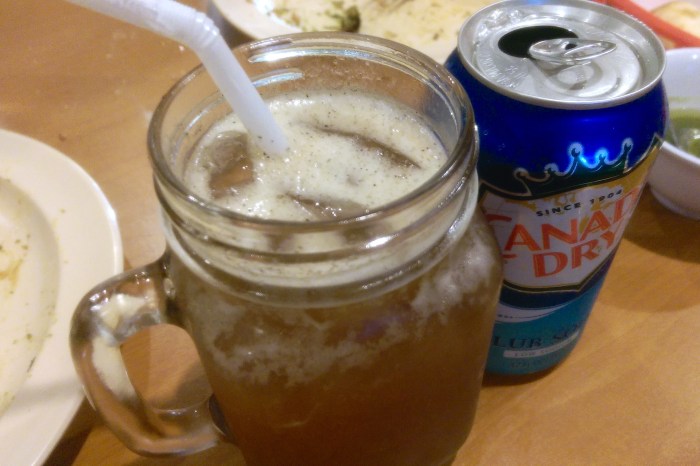
I had dinner with family friends at an Indian restaurant near home. There was a list of sodas on the wall, so one of us asked what “Kashmiri Soda” was. The waiter gave us one to try and guess what it was!

Here’s what it looked like. The waiter put some stuff into the mason jar, poured club soda in it, and mixed it before serving. We each poured out a little bit of the brownish soda in our empty water cups to try.

2014-07-24 20.14.072014-07-24 20.14.03

As I brought my cup closer to my mouth, the smell became more pungent and foul! It made me want to put the drink down! The waiter just laughed at our reactions… Then after taking a sip while trying to hold my breath… I thought it wasn’t as bad, but it was still pretty nasty!

My sister knew right away what it was after a sip- sulfur. In college, she camped at a site known to contain sulfuric water, and said the smell is very distinct. On the contrary, I had not smelled it till now…and I will remember it forever! Some people may think sulfur smells similar to rotten eggs.

The waiter told us it’s a drink made from black salt (kala namak), with a hint of lime, and carbonated water (club soda). He also said they drink the soda to help digestion.

Here’s more info about black salt, from Wikipedia:

Kala Namak or Himalayan Black Salt (Urdu کالا نمک; Bengali Biit lobon (বিট লবণ); Newari Be Chi; Nepali Birae Nun (बिरे नुन) ; Hindi काला नमक Marathi काळं मीठ ;kālā namak; Gujarati સંચળ Sanchal; Tamil இந்துப்பு; Malayalam ഇന്തുപ്പ്) also known as sulemani namak, black salt, kala loon or black Indian salt, is a type of rock salt, salty and pungent-smelling condiment used in South Asia. The condiment is composed largely of sodium chloride with several impurities lending the salt its colour and smell. The smell is mainly due to its sulfur content. Due to the presence of Greigite (Fe3S4, Iron(II,III) sulfide) in the mineral, it forms brownish pink to dark violet translucent crystals when whole, and, when ground into a powder, it is light purple to pink in color.

Composition

Kala namak consists primarily of sodium chloride and trace impurities of sodium sulphate, sodium bisulfate, sodium bisulfite, sodium sulphide, iron sulfide and hydrogen sulfide. Sodium chloride provides kala namak with its salty taste, iron sulphide provides its dark violet hue, and all the sulphur compounds give kala namak its slight savory taste as well as a highly distinctive smell, with hydrogen sulphide being the most prominent contributor to the smell. The acidic bisulfates/bisulfites contribute a mildly sour taste. Although hydrogen sulphide is toxic in high concentrations, the amount present in kala namak used in food is small and thus its effects on health are negligible: Hydrogen sulphide is also one of the components of the odor of rotten eggs and boiled milk.

Uses

Kala Namak is used extensively in South Asian cuisines of Bangladesh, India and Pakistan as a condiment or added to chaats, chutneys, salads, all kinds of fruits, raitas and many other savory Indian snacks. Chaat masala, an Indian spice blend, is dependent upon black salt for its characteristic sulfurous hard-boiled egg aroma. Those who are not accustomed to black salt often describe the smell as similar to rotten eggs. Kala Namak is appreciated by some vegans in dishes that mimic the taste of eggs. It is used, for example, to spice tofu to mimic an egg salad.

Kala Namak is considered a cooling spice in ayurvedic medicine and is used as a laxative and digestive aid. It is also believed to relieve intestinal gas and heartburn. It is used in Jammu to cure goiters. This salt is also used to treat hysteria, and for making toothpastes by combining it with other mineral and plant ingredients.

I don’t think I’d be getting this ever again. Have you tried this soda? If not, would you be willing to try it?! :D

 

Louisiana: Fried Catfish

Restaurant: Jonathan’s Fish & Chips null
City: Menlo Park, California

I met up with a friend that works at Menlo Park for a quick dinner. From the name, I thought it was a British restaurant. However, it’s not… It’s Cajun! Wikipedia has an explaination of Cajun cuisine:

Cajun cuisine (French: Cuisine cadienne). This style of cooking is named for the French-speaking Acadian deported by the British from Acadia in Canada to the Acadiana region of Louisiana, USA. It is what could be called a rustic cuisine; locally available ingredients predominate and preparation is simple.

We ordered fried catfish  with a basket of fries. The catfish came with tartar sauce and packets of mustard. Had we known the fried catfish was on a bed of fries, we wouldn’t have ordered a basket of fries! There was also ketchup and hot sauce on the table.

2014-07-23 19.09.02

Like I mentioned before, catfish eaten plain is bland…gotta eat with some sauce! I ate my fried catfish with a mix of ketchup and hot sauce. YUM.

Here’s some info about catfish, from Deep South Dish:

Fried catfish is a common dinner during Lent, but we southerners love it anytime, really. There are catfish houses everywhere down south, where catfish is often all you can eat, coleslaw, hush puppies, and homemade buttermilk biscuits with jelly or honey are served family style, and sweet tea comes most often in Mason jars or even icy tin cups, alongside local favorites like fried dill pickles, turnip greens, fried okra, squash casserole, and fried green tomatoes.

Southern Vietnam: Cá Kho Tộ (aka Catfish in Claypot)

Restaurant: Vung Tau III Restaurant null
City: Newark, California

When I was growing up, my family would go to Nguyen Vu often, as it was close to home, but there was a change of ownership along the way and sort of went downhill. Whenever we ate there, I’d always request the fish claypot dish. This was way before I knew it was called catfish! I just knew that the sauce made the fish taste sooooo goood with rice!

As a kid, I generally hated eating fish because of the darn bones. Catfish on the other hand, is easy separate from the bones. Catfish is also bland without sauce, so it must be eaten with sauce. Catfish was, and still is, my favorite fish! Seabass became another favorite as I got older.

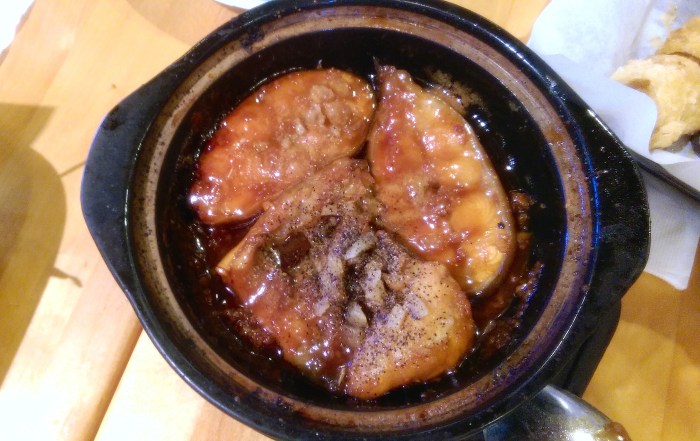
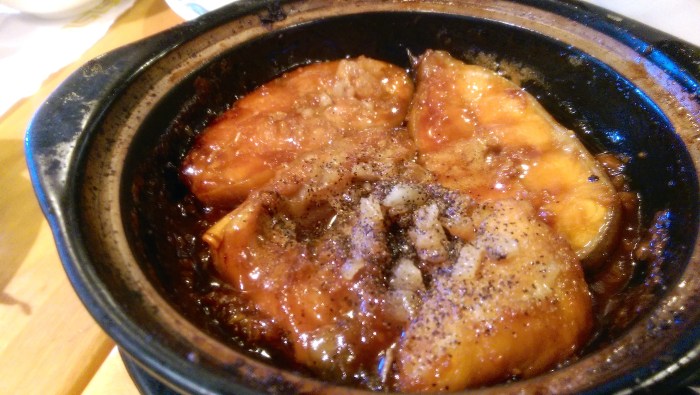
And tonight, we ordered the catfish claypot dish, called cá kho tộ.

2014-07-19 19.14.062014-07-19 19.14.33

This dish is on the saltier side, and is usually eaten with rice. The Culinary Chronicles tells us a little more about the dish:

Cá kho tộ is traditionally made with catfish and uses a combination of nước màu (caramel sauce), tons of fish sauce, shallots and coconut juice. Although it’s meant to be cooked in a claypot (tộ), you can use any heavy bottom pot that you have on hand.

We use Coco Rico (coconut soda) in a lot of our kho dishes in lieu of coconut juice but if you can’t find it at your local ethnic grocery store, the latter should work out fine.

Once done, the fish is really tender and I love to spoon the thick, salty/sweet sauce over rice. So good! But just a suggestion, be sure to turn on your kitchen fan while you’re cooking up cá kho because the aroma can be a bit strong.

Southern Vietnam: Bì Cuốn (aka Shredded Pork Roll)

Restaurant: Vung Tau III Restaurant null
City: Newark, California

Another rice paper roll we ordered was bì cuốn, which is a rice paper roll with shredded pork. I usually eat it with nước mắm (fish sauce), contrary to the peanut-hoisin sauce with gỏi cuốn.

2014-07-19 19.08.382014-07-19 19.09.55

Shredded pork is actually not quite healthy (high cholesterol), as it is a mixture of shredded pork, pork skin, and pork powder. But it’s tasty!! I found a YouTube video shows you how to make the shredded pork.

Like gỏi cuốn, bì cuốn is fairly simple to make if you have the shredded pork.

Southern Vietnam: Gỏi Cuốn (aka Spring Roll)

Restaurant: Vung Tau III Restaurant null
City: Newark, California

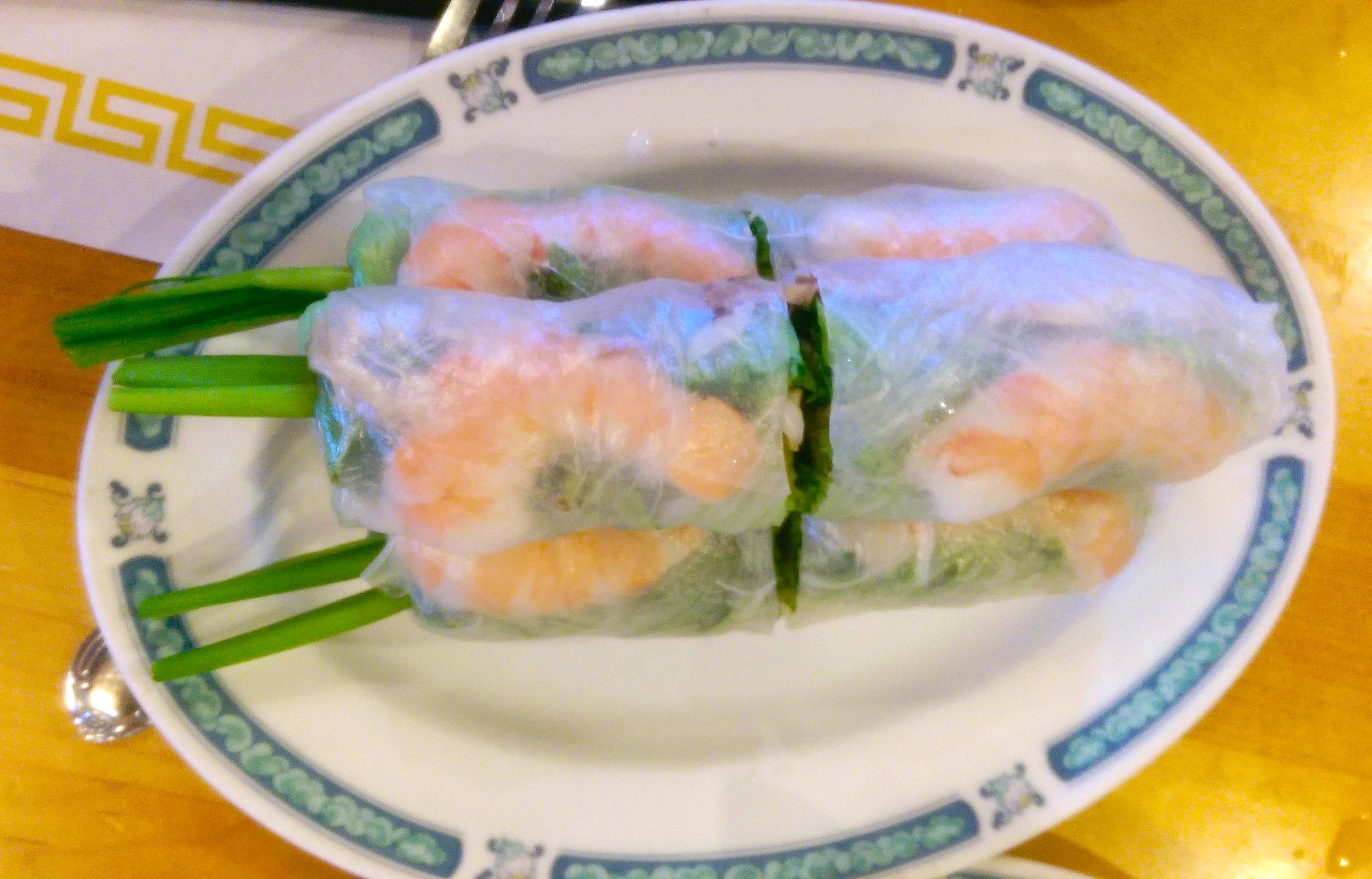
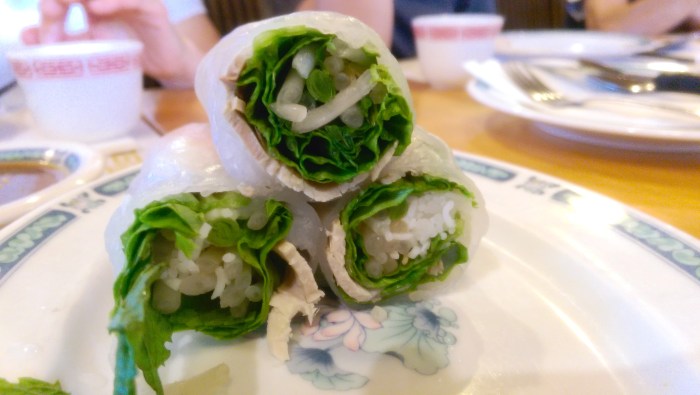
This is perhaps a post many of you are familiar with! Gỏi cuốn, also known as spring rolls, was one of the appetizers we had during dinner.

Gỏi cuốn is a rice paper roll that typically contains shrimp, pork, vermicelli, mint leaves, chives, and bean sprouts. It’s also to be eaten after it’s prepared, when the rice paper is still soft. The rice paper will harden over time. Gỏi cuốn is also served with a peanut-hoisin sauce. Some people may opt to eat it with nước mắm.

2014-07-19 18.47.562014-07-19 18.49.16

Here’s some info, from Wikipedia:

Preparation

The banh trang is dipped in water, then laid flat on a plate and the desired amount of ingredients is placed on top. The fresh gỏi cuốn is then rolled up and ready to be eaten. Gỏi cuốn can be served with tương xào (also known as hoisin sauce), which consists of ground tương (tương đen or tương xay)and mixed coconut water (or broth), before being stir-fried with garlic and some sugar and then sprinkled with chili powder and ground peanuts. Alternatively, gỏi cuốn can be served with peanut sauce or other Vietnamese dipping sauces, such as nước chấm, a condiment based on fish sauce.

In Vietnam and in various parts of Southeast Asia, Vietnamese can be seen hand-making banh trang (rice paper) and placing them on the rectangular bamboo trays around their houses. Traditionally, gỏi cuốn are eaten with a large group of people at a home setting.

Regional

In southern Vietnam, these rolls are called gỏi cuốn, meaning salad rolls, while in northern Vietnam, these rolls are called Nem cuốn, meaning nem rolls. In central Vietnam, it is simply called “rice paper” roll. In the West, these rolls are called by several different English names, including “salad roll,” and “summer roll.” Sometimes the word “Vietnamese” is added at the beginning of these words, for example, in Hong Kong they are called “Vietnamese roll,” or “Vietnamese spring rolls” in Australia and the United States. Some Asian restaurants in the United States also refer to them as “crystal roll” “soft roll” or “salad roll”.

Fresh rolls are easily distinguished from similar rolls by the fact that they are not fried and the ingredients used are different from (deep-fried) Vietnamese egg rolls. Fresh rolls have gradually become more popular in neighboring Cambodia, Thailand, and Laos as well as in Canada and the U.S. or wherever there are a significant concentrations of the Vietnamese diaspora. Its popularity is also partly due to several websites promoting Vietnamese food by tourists as well as Southeast Asian food experts and by word of mouth. In Cambodia, Vietnamese gỏi cuốn are called nime chao, derived from the Vietnamese word nem. In Japan, they are called nama harumaki (生春巻き, “raw spring rolls”), and are typically filled with shrimp.

These rolls are also really simple and easy to make at home. Here are some recipes:

Vietnam: Chả Giò & Nem Rán

Restaurant: Vung Tau III Restaurant null
City: Newark, California

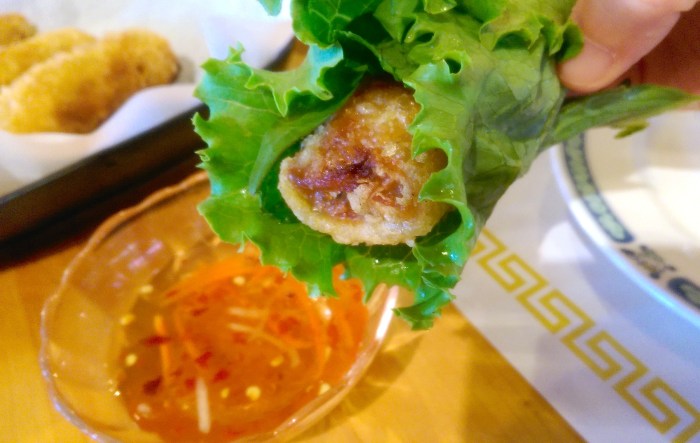
A must-order item at Vung Tau are the Vietnamese egg rolls, which the Southern Vietnamese call chả giò (minced pork sausage) and the Northern Vietnamese call nem rán (fried roll). I’ve got to get it everytime I go there!

Vietnamese egg rolls aren’t made the same way as the Chinese or Filipino egg rolls. It is also not to be confused with ‘spring rolls’ (gỏi cuốn or nem cuốn). The wrap used is different; it’s made of rice paper instead of flour. The rice paper makes the rolls light, airy, and very crispy. I loooooooove ’em!

2014-07-19 18.46.13

Many Southern Vietnamese restaurants serve chả giò with lettuce, an assortment of leaves, and nước mắm (fish sauce). You can eat chả giò by itself, but it’s traditionally eaten as a lettuce wrap (with or without the leaves), then dipped in nước mắm.

2014-07-19 18.51.20

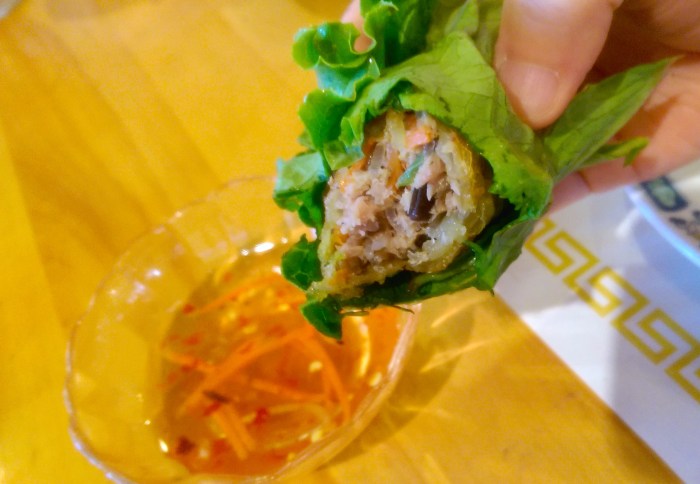
After a bite into it, you can see the ingredients used inside the chả giò. Vung Tau’s chả giò contains shredded pork, black fungus, carrots, and rice vermicelli. Each restaurant may have a slight variation with the filling/stuffing.

2014-07-19 18.52.05

Yum! This makes me want to go back for some more right now!

And here’s more info from Wikipedia:

Ingredients

The main structure of a roll of chả giò is commonly seasoned ground meat, mushrooms, and diced vegetables such as carrots, kohlrabi and jicama, rolled up in a sheet of moist rice paper. The roll is then deep fried until the rice paper coat turns crispy and golden brown. The ingredients, however, are not fixed. The most commonly used meat is pork, but one can also use crab, shrimp, chicken, and sometimes snails (in northern Vietnam), and tofu (for vegetarian chả giò– ‘chả giò chay‘). If diced carrots and jicama are used, the stuffing is a little bit crunchy, matching the crispy fried rice paper, but the juice from these vegetables can cause the rolls to soften after a short time. If the rolls are to be stored for a long time, mashed sweet potato or mung beans may be used instead to keep the rolls crispy. One may also include bean sprouts and rice vermicelli. Eggs and various spices can be added to one’s preference. Sometimes, the ingredients can include julienned taro root and carrots if jicama cannot be found. Taro roots give it a fatty and crunchy taste.

The most interesting part in nem recipe is that it varies on different families and also different regions of Vietnam. No recipe is official. It depends on the custom of eating of each family. Therefore, in some ways the chả giò made by the wives show their cares for their own family.

Confusion with other varieties of rolls

There can often be confusion as to what exactly is meant by nem depending on the circumstances. In Vietnam, there can be confusion between northerners and southerners because northerners tend to use the term nem to refer to a variety of rice paper rolls, including gỏi cuốn (often referred to in western restaurants as “salad rolls”). The southerners, however, tend to adopt a more narrow definition of nem.

Further confusion can occur outside of Vietnam because the English translation of chả giò varies according to restaurants’ menus, chả giò is often confused with other dishes such as egg rolls or salad rolls. As chả giò made with rice paper can easily be shattered when fried, and also stay crispy for only a few hours, restaurants outside of Vietnam have adopted wheat flour sheet to make chả giò, in place of rice paper, thus blurring the difference between chả giò and the Chinese egg roll.

Southern Vietnam: Gỏi Ngó Sen

Restaurant: Vung Tau III Restaurant null
City: Newark, California

My aunt and uncle live at the Mojave Desert, where there’s a lack of ethnic restaurants. Vung Tau III is a local Vietnamese restaurant my aunt and uncle must eat at, everytime they’re in town!

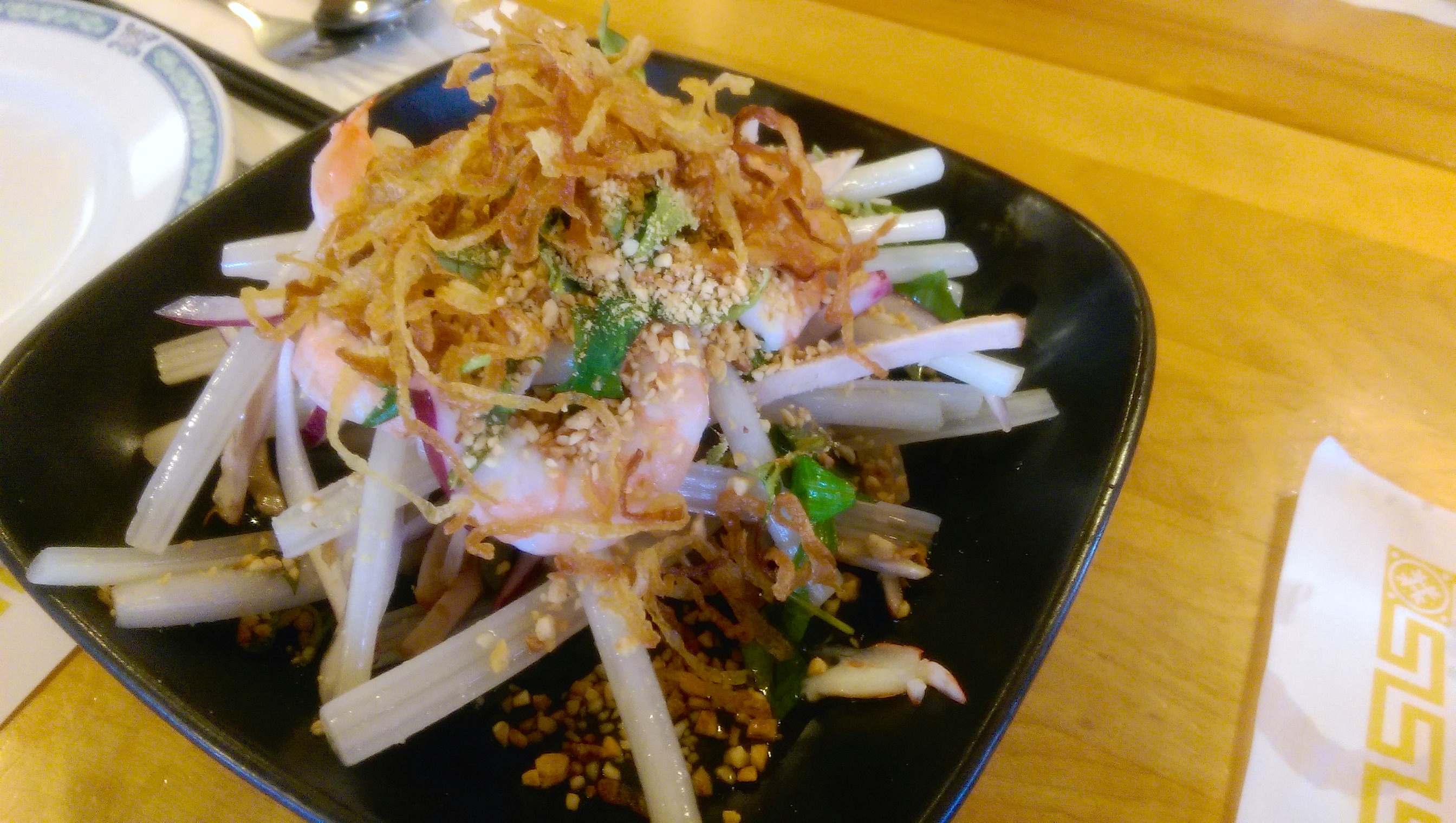
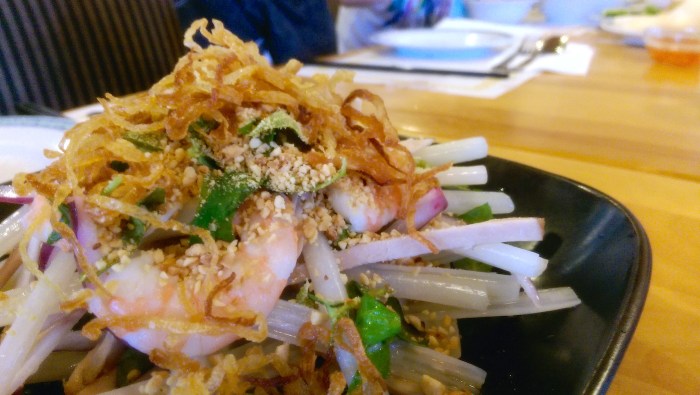
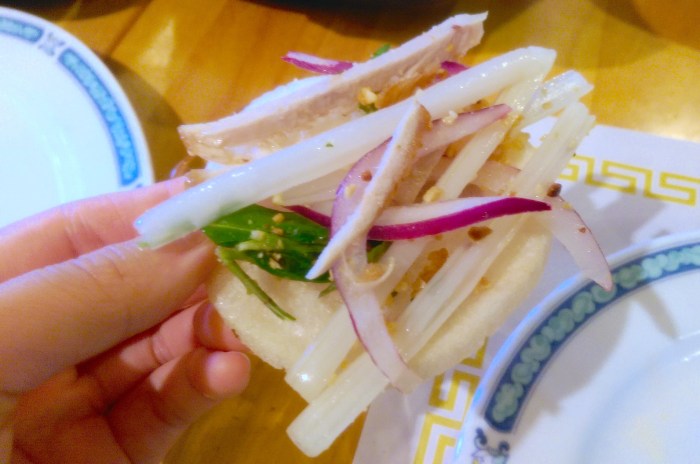
When ordering lots of dishes for a large table, salad is a must! Gỏi ngó sen is a Vietnamese lotus root salad, typically served with shrimp and pork, along with fried shallots, crushed peanuts, green onion, rau răm (Vietnamese coriander), mint, and fish sauce.

2014-07-19 18.45.252014-07-19 18.45.40

The salad is also served with bánh phồng tôm (prawn crackers), to be eaten together, like in the photo below! The cracker makes the salad super crunchy (the lotus root is already somewhat crunchy), and fun to eat!

2014-07-19 18.56.33

Gỏi ngó sen literally translates to lotus salad. Gỏi is how salad is called, in the South. In the North, salad is called nộm. So, this salad is called nộm ngó sen in the North. However, with a quick Google Images search, it looks like gỏi ngó sen and nộm ngó sen are prepared differently.

There’s tons of Southern Vietnamese restaurants in the Bay Area. There’s a Northern Vietnamese restaurant in SF called Turtle Tower that I have yet to try, but it’s mainly a rice and noodle soup restaurant. If you know of any Northern Vietnamese restaurant in the Bay Area that I should visit, that has more than just noodle soup and rice dishes, comment below!

Taiwan: Red Wine Pork Chop

Restaurant: Taiwan Cuisine
City: Fremont, California

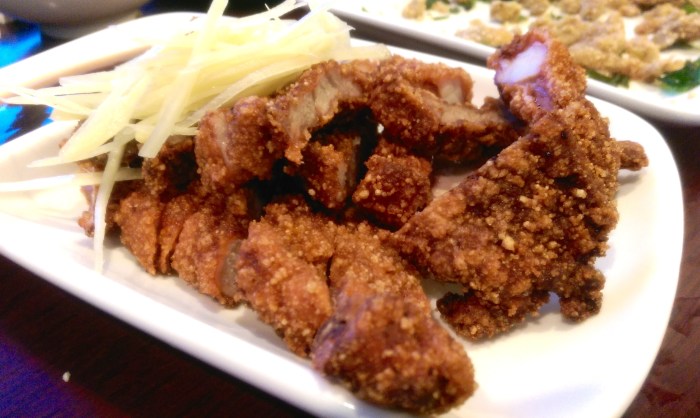
Taiwan has many street foods. A favorite at this restaurant is the (fried) red wine pork chop, which is pork chop marinated in red wine sauce, and then deep fried. It was served with ginger slices and a sweet brown sauce (not hoisin sauce).

2014-07-18 19.56.17

The red wine sauce makes the pork look similar to the char-siu pork (Chinese BBQ pork). However, the taste is distinct from char-siu pork. It’s somewhat lighter.

2014-07-18 19.56.09

This fried pork is similar to the Japanese tonkatsu, which is served with a thick, sweet brown sauce. However, I think I prefer this one over tonkatsu as it’s bold in flavor from the red wine sauce and I could eat it by itself, without the sweet brown sauce!

Taiwan: Fengli Kugua Ji

Restaurant: Taiwan Cuisine
City: Fremont, California

Whenever we have a family get together at a Chinese restaurant, soup is a must! At home, soup is usually served first. However, at restaurants, it may not be the first dish served, depending on how long it takes to cook.

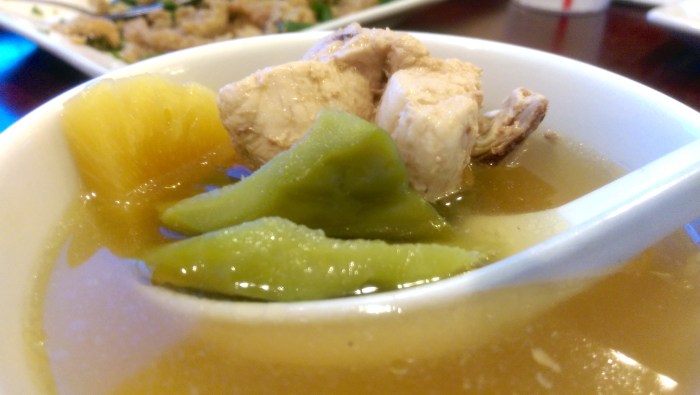
The soup we had was chicken soup with pineapple and bitter gourd. The soup is unique to Taiwan, and it was my first time having this particular soup! If you can’t handle bitterness, this soup isn’t for you. The bitter gourd makes the soup bitter, even though there’s a hint of sweetness from the pineapple.

2014-07-18 19.52.24

Here’s some info about the soup, from Food Culture in Taiwan:

Chicken soup with pineapple and bitter gourd—a Taiwanese-style soup—is made with free-range chicken, pineapple bean sauce, and bitter gourd. It is popular in restaurants specializing in free-range chicken dishes.

This dish was first available only at suburban restaurants featuring free-range chicken dishes, where the emphasis was on simplicity and the natural flavors of the ingredients. Many of such restaurants also offer wild game dishes unique to Taiwan.

In earlier times when Taiwan was still an agricultural society, pineapple was one of its top exports. While pineapple yields were large, however, cold storage equipment was not readily available. So as not to waste the pineapples, a number of processed pineapple products were invented, including pineapple bean sauce.

Nowadays, the pineapple used for pineapple cake filling and pineapple bean sauce is usually the Tainong No. 3 varietal, which has a more old-time flavor and a higher degree of acidity. Some businesses use Tainong No. 17 to make pineapple bean sauce, which is a combination of salt, fermented beans, sugar, and pineapple pickled for around six months. If the proportions are incorrect, the sauce may not produce juice or become moldy, both of which are desired ends. The flavor of fermented beans, which are the source of the sweetness, varies with the time and the fermentation process. Therefore, different businesses produce sauces with their own unique flavors, which can be used in soup or as a side dish with congee. Both sweet and salty, this sauce goes well with rice.